The short answer
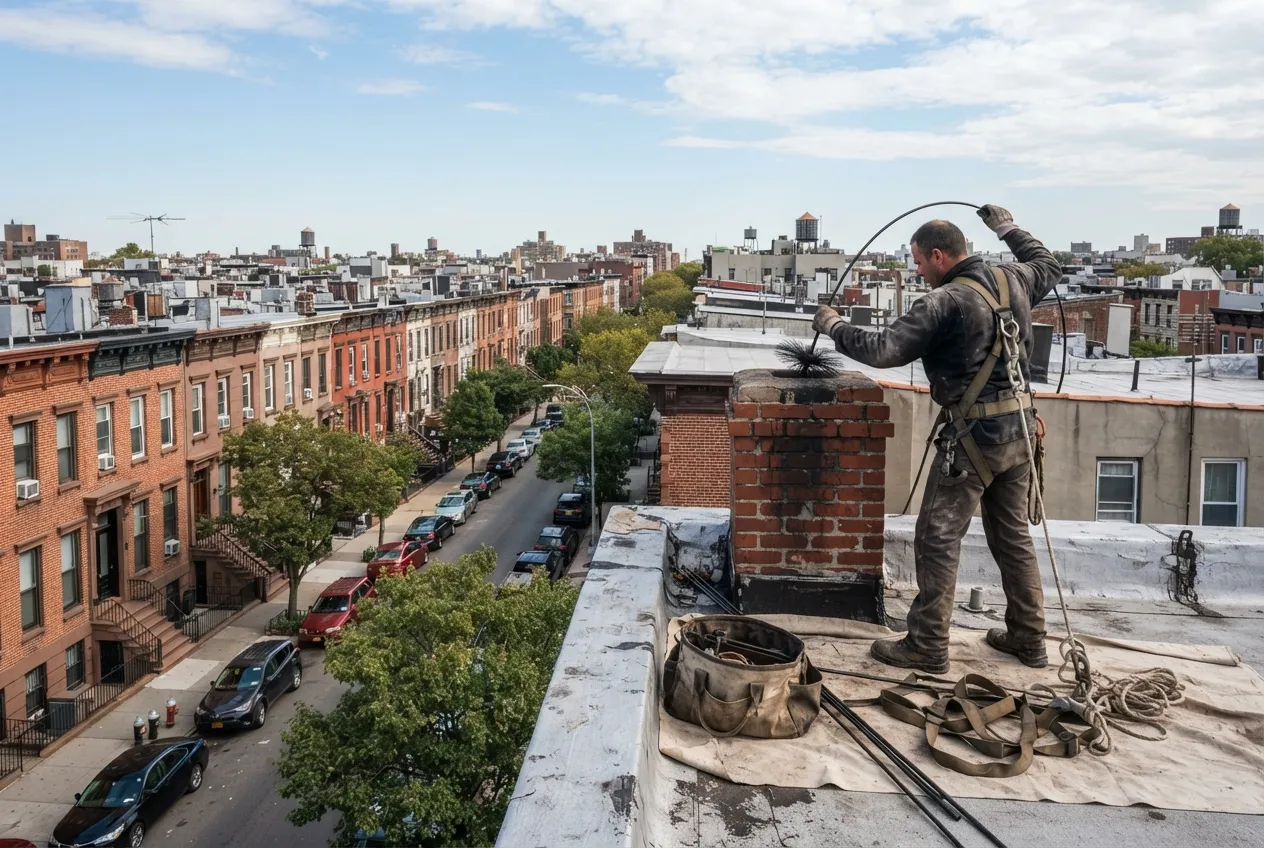
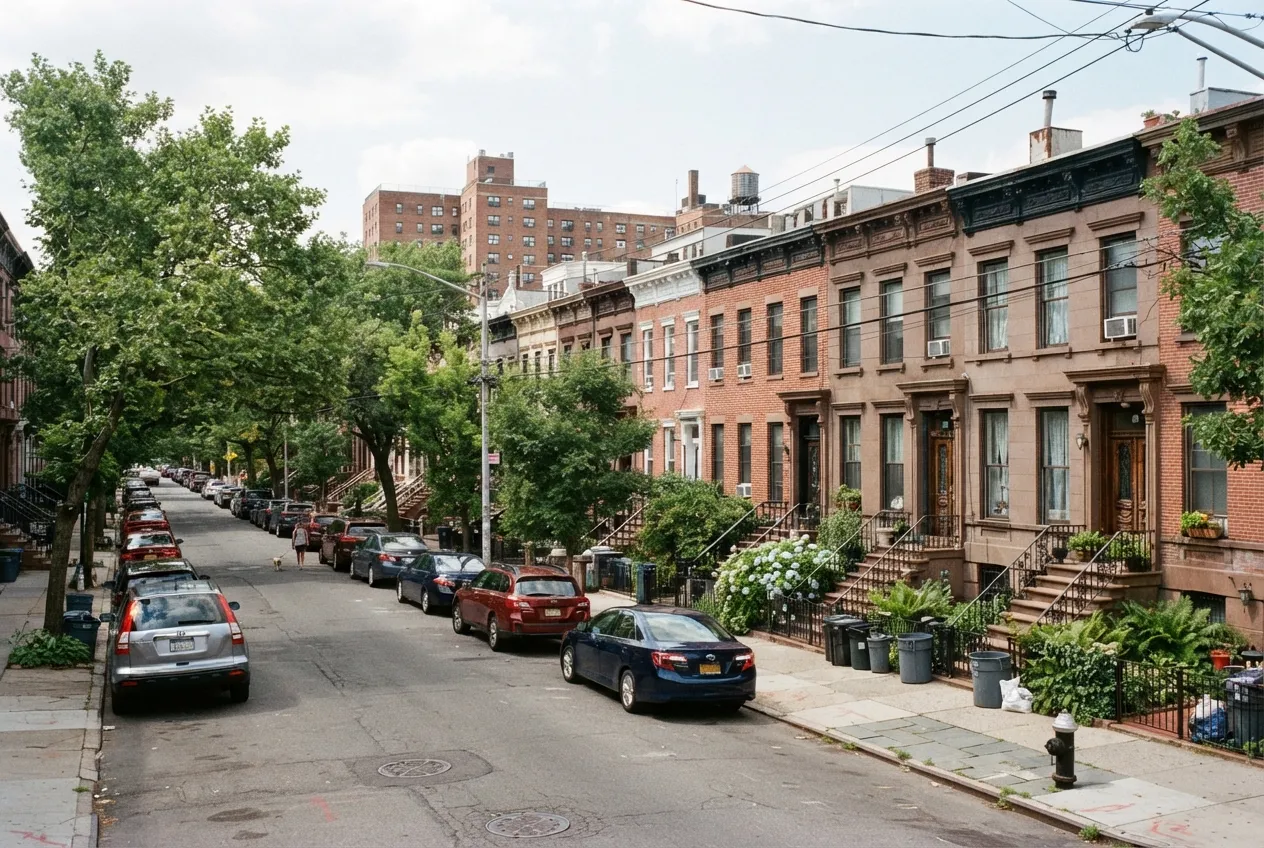
ApexHearth Chimney Services provides chimney sweeping, inspection, repair, liners, waterproofing and rebuilding, plus air duct and dryer vent cleaning, throughout Ditmas Park, Brooklyn. Our certified technicians work on the neighborhood's detached homes, rowhouses and pre-war apartment buildings, about two miles from our Brooklyn office.
Ditmas Park is about two miles northwest of our Brooklyn office, so it's a short trip for our certified technicians. The neighborhood mixes large detached homes, rowhouses and pre-war apartment buildings, and many of them still rely on masonry chimneys that have seen decades of use. Whether you heat with a fireplace, a wood stove or a gas boiler, the venting system needs regular attention. We handle chimney sweeping, inspections, repairs and liners, along with air duct and dryer vent cleaning. We work for homeowners and building owners across Ditmas Park and in nearby Flatbush, Midwood, East Flatbush, Flatlands and Madison.
Chimney Services for Ditmas Park's Older Homes
A lot of Ditmas Park housing was built when wood and coal fireplaces were standard. Plenty of those chimneys are still in use or have been adapted for gas appliances. Age shows up in predictable places: crumbling mortar joints, cracked crowns, rusted dampers and clay flue tiles that have shifted or split. We look at the whole system, from the firebox to the top of the stack, and explain what we find in plain terms before any work begins.
Our work in the neighborhood covers:
- Chimney sweeping to remove creosote, soot and blockages
- Chimney inspection at the level your situation calls for
- Chimney repair, including repointing and crown work
- Chimney rebuilding when the masonry is too far gone to patch
- Chimney liner installation for wood, gas and oil appliances
- Chimney cap and chase cover installation
- Chimney waterproofing for brick and stone
- Fireplace and damper repair
- Air duct cleaning
- Dryer vent cleaning
What Brooklyn Weather Does to Masonry
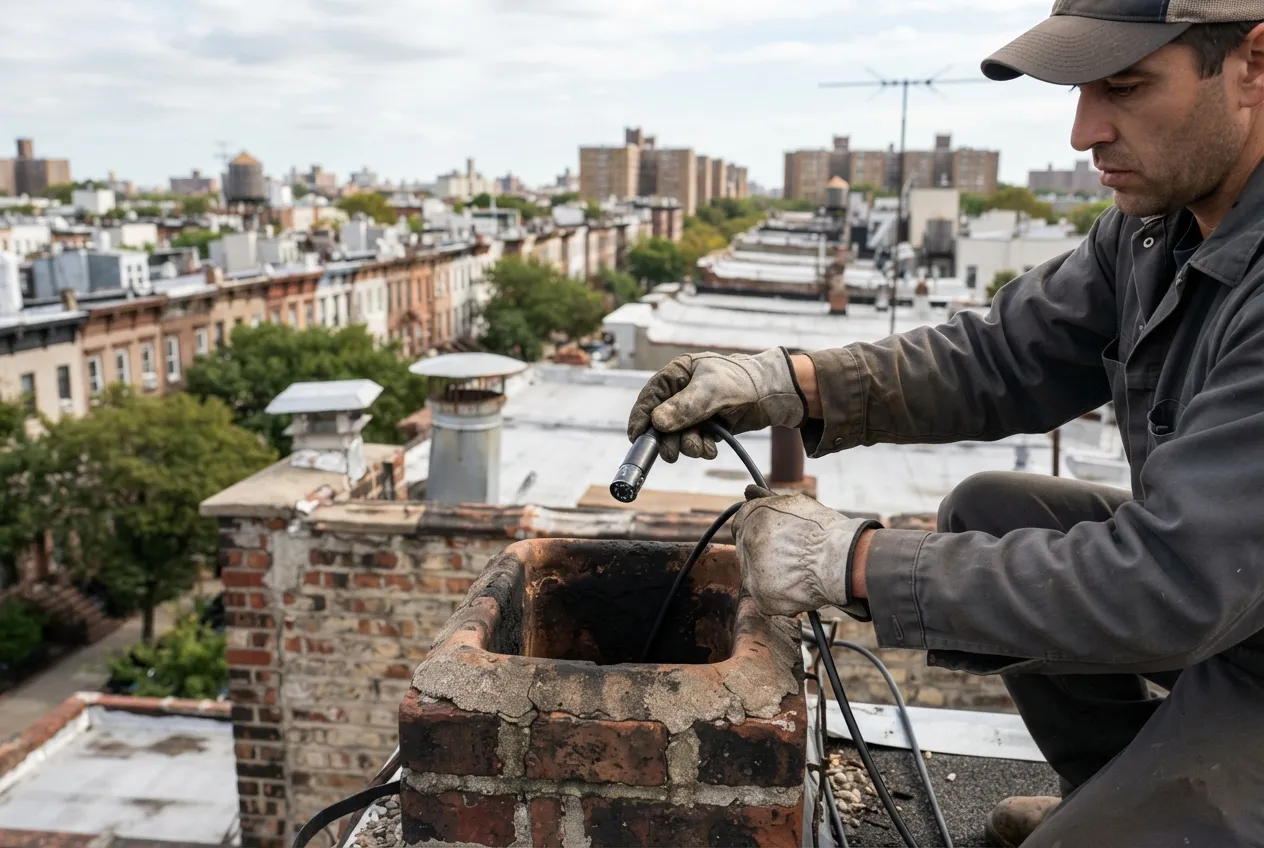
Brooklyn winters swing above and below freezing, often within the same week. Water that soaks into brick and mortar freezes, expands and widens small cracks a little more with each cycle. Coastal storms add wind-driven rain that pushes moisture sideways into exposed chimney faces. A missing or damaged cap lets rain fall straight down the flue.
In summer, humid air can bring out the smell of creosote from a fireplace that hasn't been swept. Damp, open flues also attract nesting birds and animals. A well-fitted cap, a sound crown and a breathable water repellent on the masonry address most of these problems before they turn into interior leaks or spalling brick. If damage has already spread, we'll tell you whether repair or partial rebuilding makes more sense.
Yearly Inspections and When You Need More
The NFPA 211 standard calls for chimneys, fireplaces and vents to be inspected once a year. Most visits are a Level 1 inspection, which applies when nothing about the system has changed. A Level 2 inspection is called for when you add a new appliance, switch fuels or sell a home. Level 3 is reserved for cases where a hidden hazard can only be reached by opening part of the chimney or the building.
If you're buying or selling in Ditmas Park, a Level 2 inspection gives everyone a clear picture of the chimney's condition. Fall is the busiest time for chimney work, so booking in late summer makes it easier to get the appointment you want.
Time for your annual chimney check?
Oil-to-Gas Conversions and Chimney Liners
Many Brooklyn buildings have switched from oil heat to gas, and others are planning to. When a New York City building converts its boiler from oil to gas, the chimney has to be evaluated as part of the work. A new liner is often needed, because gas exhaust produces acidic condensate that can corrode a masonry flue.
New York City's heat season runs from October 1 through May 31. During those months, building owners must keep apartments heated to the city's minimum temperatures. For owners of pre-war apartment buildings and multi-family homes, that makes late spring and summer the practical window for liner installation and other venting work. Doing it then means the boiler is ready before the season starts.
Air Duct and Dryer Vent Cleaning
According to the U.S. Fire Administration, failure to clean is the leading factor contributing to clothes dryer fires in homes. Lint builds up in the vent line, especially on long runs through older walls and basements. If your dryer takes longer than it used to or the laundry area feels unusually hot, the vent is due for cleaning.
For air ducts, we follow the guidance from the U.S. EPA. Cleaning makes sense when there's substantial visible mold growth, signs of vermin, or excessive dust and debris. The EPA also notes that duct cleaning hasn't been shown to prevent health problems, so we won't claim otherwise. We explain the process up front and don't push chemical treatments you don't need.