The short answer
You likely need a new chimney liner if your flue is cracked, crumbling or deteriorating, if your heating appliance has changed (for example an oil-to-gas conversion), or if the existing flue is the wrong size. We inspect the flue with a camera, clean it, then install and seal a properly sized liner from the appliance connection to the chimney top.
A chimney liner is the inner channel that carries smoke and exhaust gases up and out of your home. In many Brooklyn houses, that channel is decades-old clay tile or bare brick. It may be cracked, eroded or the wrong size for the boiler, furnace, water heater or fireplace it now serves. When the liner fails, heat and exhaust can reach the masonry and the wood framing around it, and gases can leak back into living space. ApexHearth Chimney Services installs new liners for homeowners in Brooklyn and nearby areas. Our certified technicians start by inspecting the flue so you know why a liner is recommended before any work begins.
Signs you need a chimney liner
Liner problems are usually hidden inside the chimney, but they tend to show up in ways you can notice from the inside or outside of the house. If you see any of the following, schedule an inspection before the next heating season. If your home recently switched from oil to gas, a liner evaluation should be part of that project even without warning signs.
- A smoke or creosote smell in the house, especially on humid days or when the fireplace or boiler is not running
- Poor draft: smoke rolling into the room, a fire that is hard to keep going, or an appliance that struggles to vent
- Pieces of clay tile, brick flakes or mortar collecting in the firebox or at the base of the flue
- White staining on the outside brick, which can point to moisture or condensation moving through the masonry
- Water in the firebox or dripping at the cleanout door after rain
What's included in a liner installation
Every job is sized to your chimney and appliance, but a standard liner installation covers the steps below. We walk through the plan with you before work starts, so you know what is being installed and why.
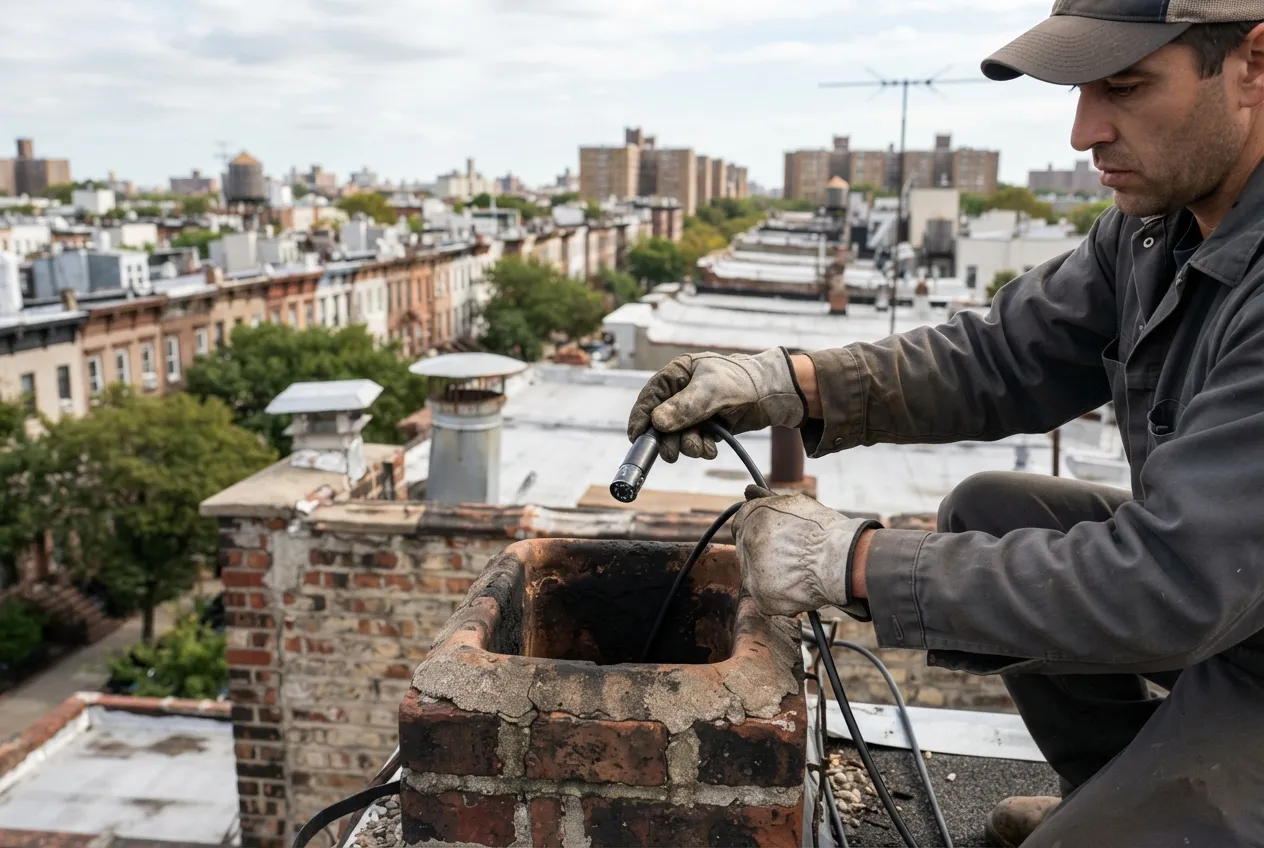
- Camera inspection of the existing flue to document cracks, gaps, offsets and deterioration
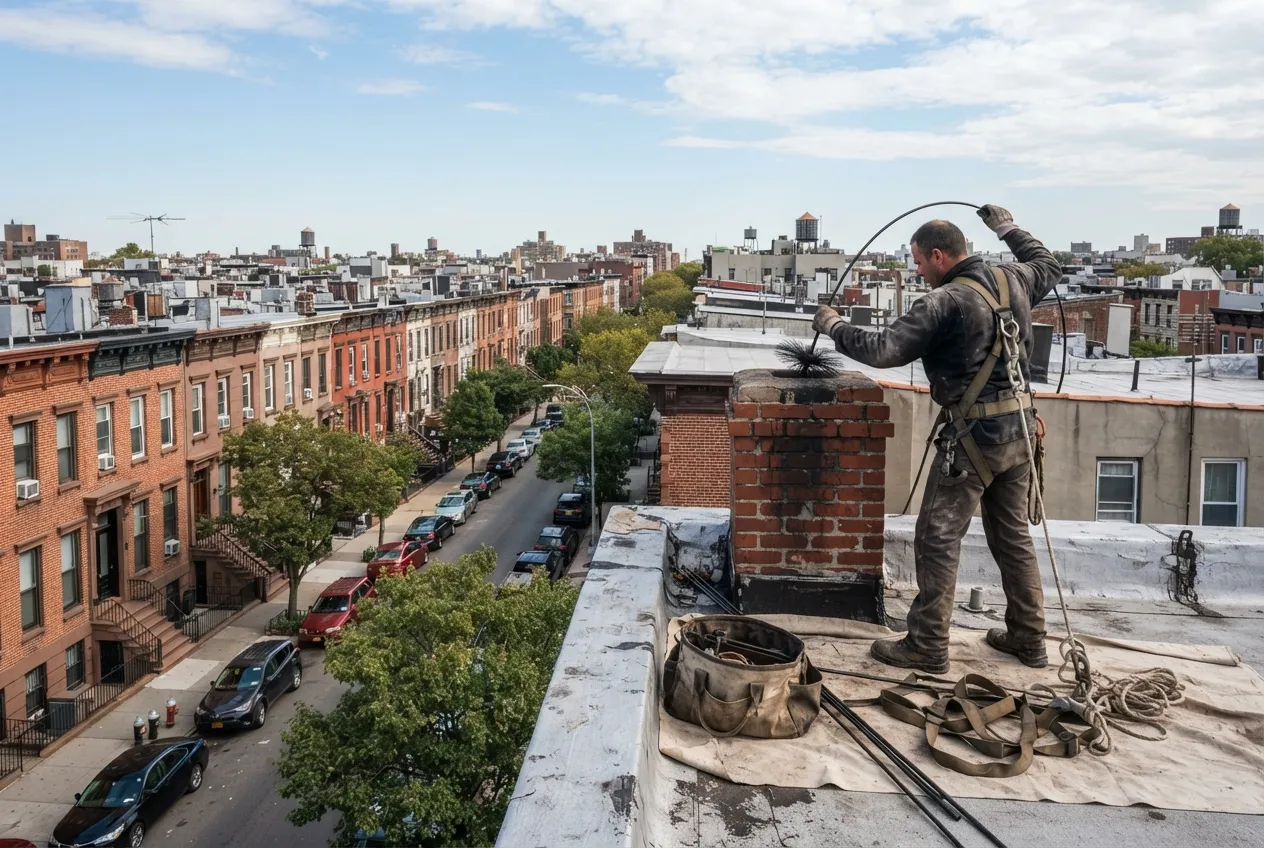
- Cleaning of the flue with rotary brushes to remove soot, creosote and loose debris
- Measurement of the flue and review of the appliance it serves to choose the correct liner size and type
- Removal of broken tile or obstructions where needed to fit the new liner
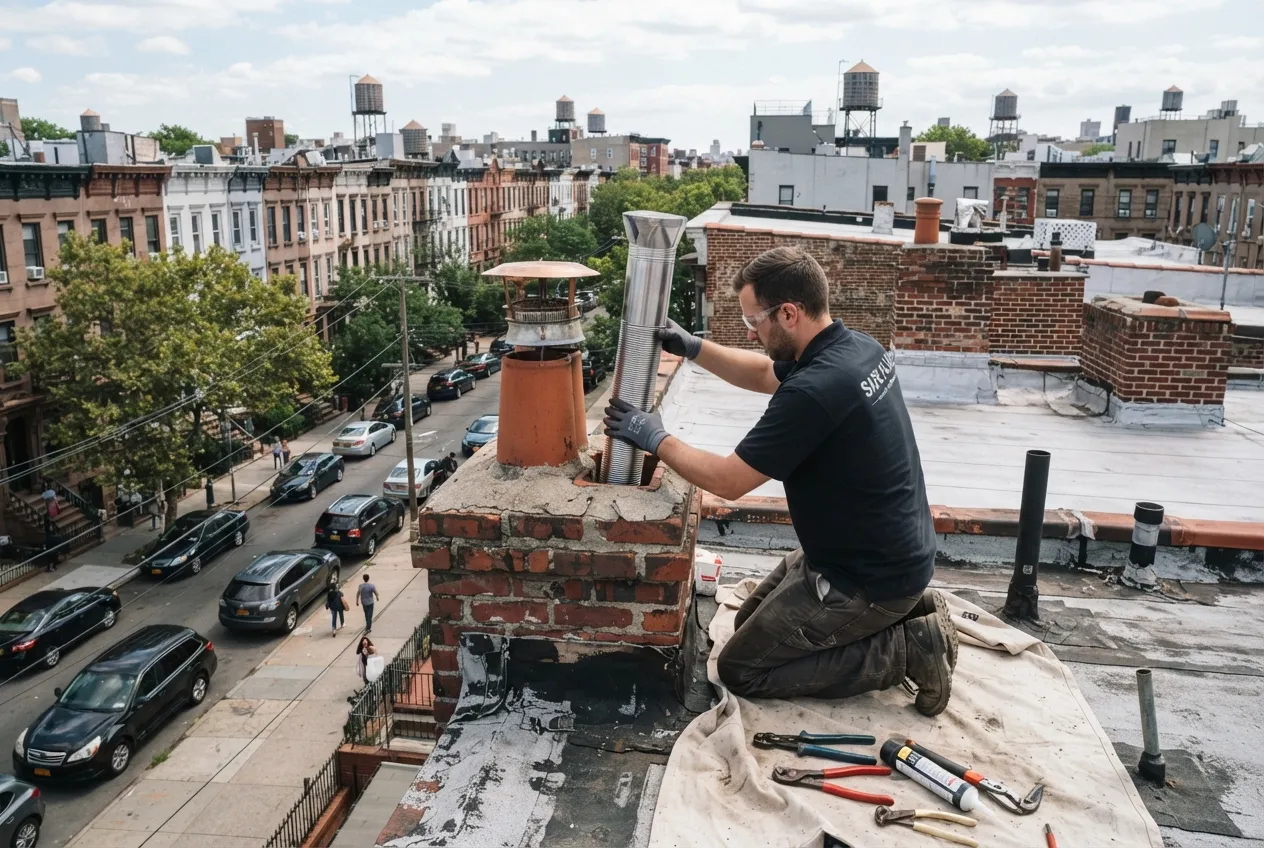
- Installation of a stainless steel liner, insulated where the chimney and appliance call for it
- Connection to the appliance at the bottom of the flue
- Top plate, sealing and a chimney cap at the top to keep out rain, debris and animals
- Final check of draft and connections, plus photos of the completed work
How our crew works inside your home and on the roof
Inside, the crew lays drop cloths from the door to the work area before bringing in any tools. When we open the flue or the appliance connection, we run HEPA vacuums to capture soot and dust at the source rather than letting it drift into the room. Rotary brushes clean the flue walls before the liner goes in, and a camera lets us see the full length of the chimney, including bends and offsets that can't be seen from either end.
On the roof, the crew sets up safe access and protects the roof surface around the chimney. The liner is lowered from the top, guided through the flue and secured at both ends. We seal the top plate and install the cap, then check that flashing and the crown are not leaving the new liner exposed to water. When we finish, we clean up inside and out and show you the camera footage and photos.
Time for your annual chimney check?
The standard we follow
Our work follows the NFPA 211 standard, which calls for chimneys, fireplaces and vents to be inspected once a year. Chimney professionals use three inspection levels. A Level 1 inspection fits a system that hasn't changed. A Level 2 inspection is called for when the system changes, such as a new appliance or a switch of fuel, or when the home is sold. A Level 3 inspection is needed when a hidden hazard can only be reached by opening part of the chimney or building. Most liner jobs begin with a Level 2 inspection, because the work itself is a change to the venting system.
Fuel conversions matter here in New York City. When a building converts its boiler from oil to gas, the chimney has to be evaluated as part of the work. A new liner is often needed because gas exhaust produces acidic condensate that can corrode a masonry flue. If you are planning a conversion, bring us in early so the liner is part of the plan rather than an afterthought.
What affects the cost of a chimney liner
Every chimney is different, so we quote after the inspection. The main factors are:
- Chimney height and how easy it is to reach the roof safely
- Fuel type and the appliance being vented, which determine the liner material and whether insulation is needed
- Flue size, shape and condition, including offsets, broken tile or obstructions that must be removed
- How much soot and creosote buildup has to be cleaned out first
- Whether a camera inspection shows related repairs, such as crown, cap or flashing work
How a visit works
First, we schedule an inspection at a time that works for you. During that visit we check the chimney, run a camera through the flue and explain what we find. If a liner is needed, you receive a written scope and quote covering the liner type, size and any related repairs.
On installation day, the crew protects your home, cleans the flue, installs and connects the liner, then seals and caps the top. We test the draft, clean up and review photos with you before we leave. New York City's heat season runs from October 1 through May 31, so scheduling liner work in late spring or summer helps make sure your heat is ready when you need it.
Chimney Liner Installation by city
- Chimney Liner Installation in Marine ParkLocal service & repairs
- Chimney Liner Installation in Mill BasinLocal service & repairs
- Chimney Liner Installation in Bergen BeachLocal service & repairs
- Chimney Liner Installation in FlatlandsLocal service & repairs
- Chimney Liner Installation in MadisonLocal service & repairs
- Chimney Liner Installation in CanarsieLocal service & repairs
- Chimney Liner Installation in MidwoodLocal service & repairs
- Chimney Liner Installation in East FlatbushLocal service & repairs
- Chimney Liner Installation in FlatbushLocal service & repairs
- Chimney Liner Installation in Sheepshead BayLocal service & repairs
- Chimney Liner Installation in Manhattan BeachLocal service & repairs
- Chimney Liner Installation in Gerritsen BeachLocal service & repairs