The short answer
Marine Park homes most often need a new chimney liner after a boiler conversion from oil to gas, when an inspection finds cracked or missing flue tiles, or when a new heating appliance is installed. ApexHearth inspects the flue first, then sizes and installs a liner matched to the appliance so exhaust vents safely.
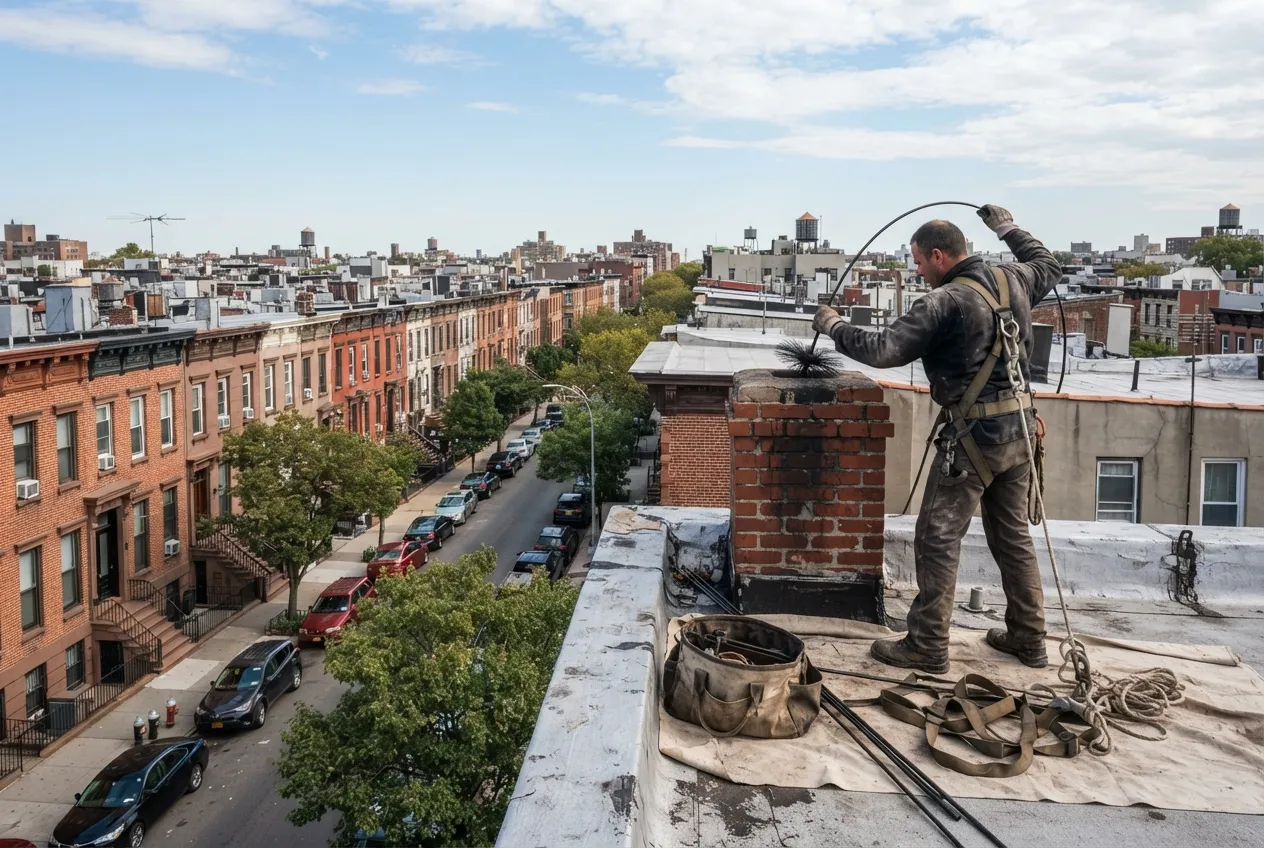
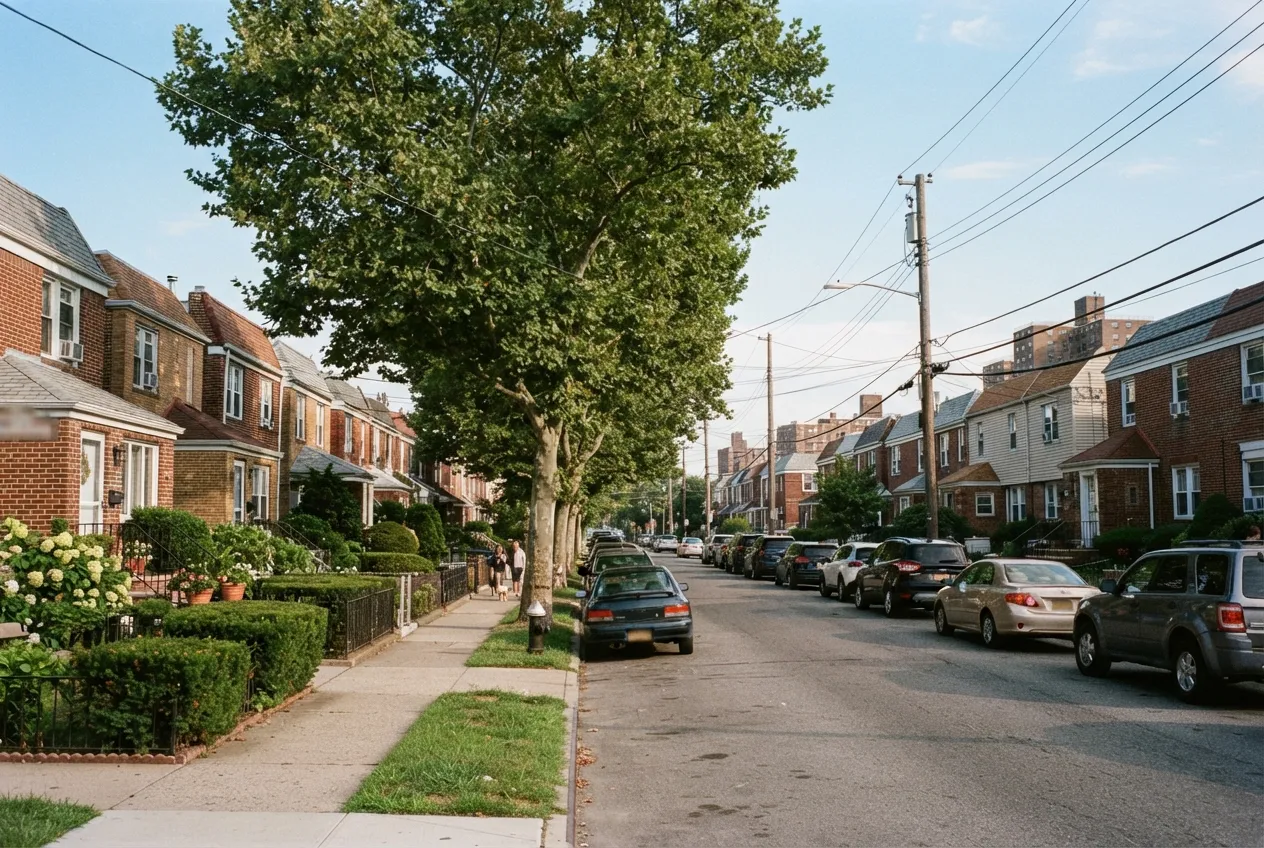
A chimney liner keeps hot exhaust, moisture and combustion byproducts inside the flue and away from the brick, mortar and wood framing around it. In Marine Park, many homes are detached or semi-attached houses and attached rowhouses with masonry chimneys that serve a boiler, a water heater, a fireplace, or some combination. Over decades, flue tiles crack, mortar joints wash out, and some older chimneys were built with no liner at all. ApexHearth Chimney Services installs new liners for homes in ZIP code 11234, about a mile southeast of our Brooklyn office. Our certified technicians inspect the flue first, explain what they found, and recommend a liner that fits the appliance it actually serves.
Why Marine Park Chimneys End Up Needing a Liner
Most liner jobs in the neighborhood start with one of a few situations. The most common is a heating change. When a New York City building converts its boiler from oil to gas, the chimney has to be evaluated as part of the work, and a new liner is often needed. Gas exhaust is cooler and produces acidic condensate, and that moisture can corrode a masonry flue that handled oil exhaust without trouble for years.
Other homes reach us after an inspection turns up damage: clay tiles that have cracked or shifted, gaps in the mortar between tiles, or a flue that was never lined. Some homeowners are replacing a water heater or boiler with a unit that needs a different flue size than the old one. In each case, the goal is the same: give the exhaust a sealed, correctly sized path out of the house.
- Boiler or water heater conversion from oil to gas
- Cracked, shifted or missing clay flue tiles
- A new appliance that needs a different flue size
- Signs of moisture: stains, damp walls near the chimney, flaking masonry
- Restoring a fireplace that has not been used in years
How We Install a Chimney Liner
Every job starts with a look inside the flue. Under the NFPA 211 standard, a Level 2 inspection is called for when the system changes, such as a new appliance or a switch of fuel, or when a home is sold. That usually includes a camera inspection so we can see the full height of the flue and confirm what condition it is in. If a hidden problem has to be reached by opening part of the chimney or building, that is a Level 3 inspection, and we will explain why before doing any of it.
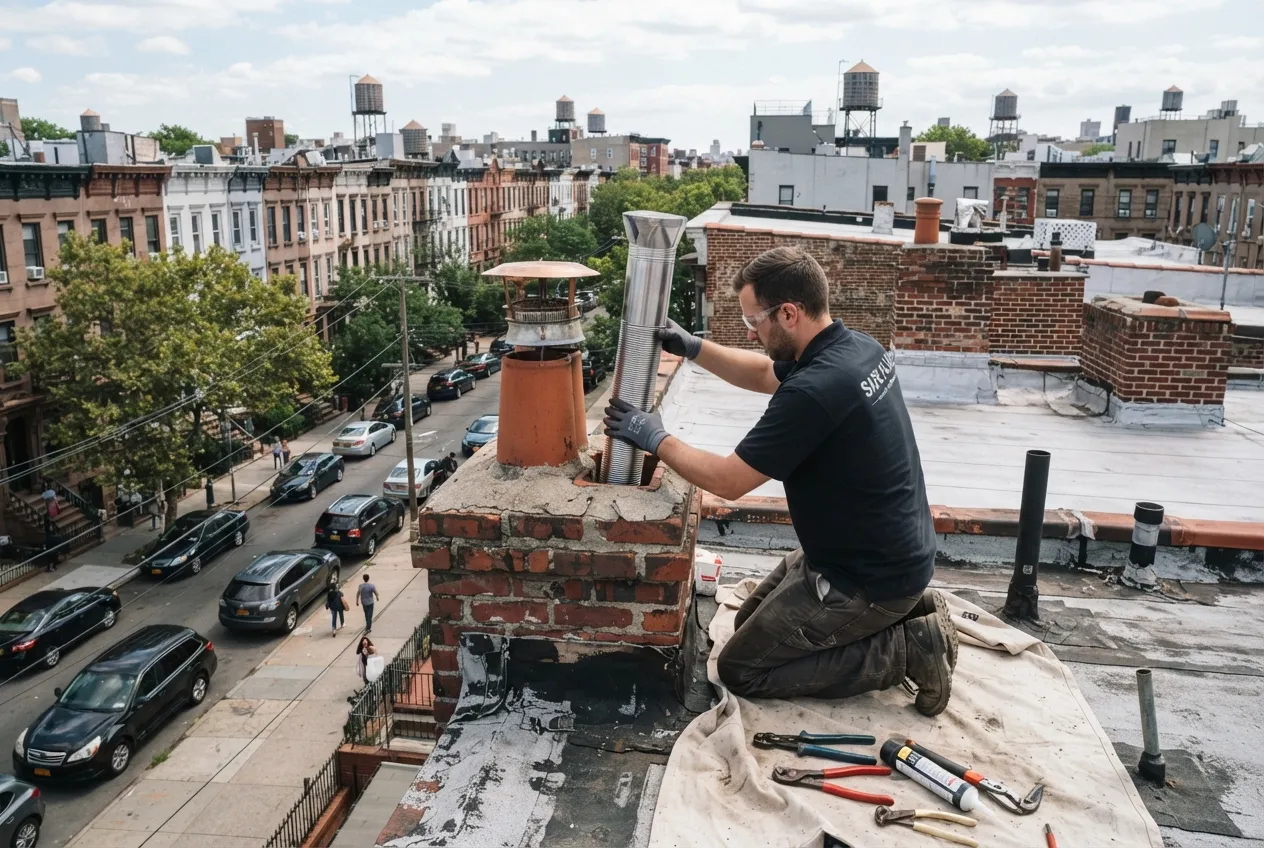
Once we know what the chimney needs, we match the liner to the appliance. Gas boilers and water heaters typically get a stainless steel liner sized to the appliance's venting requirements. Wood-burning fireplaces may call for a different stainless liner or other options depending on the flue shape and condition. We clean the flue, run the liner from the top of the chimney down to the appliance connection, seal and secure it at the top, and add a cap to keep out rain and animals. Before we leave, we check that the appliance is drafting properly and walk you through what we did.
Timing Around Heat Season
New York City's heat season runs from October 1 through May 31. If your home includes rental units, the boiler needs to keep apartments at the city's minimum temperatures during those months, and even in a single-family house, nobody wants the heat off in January. Liner work on a boiler flue means the boiler is shut down for part of the job, so scheduling matters.
Late spring and summer are the easiest times to plan an oil-to-gas conversion or a liner replacement. If a problem turns up mid-winter, we work to keep the shutdown as short as possible and coordinate with your heating contractor or plumber so the appliance can be reconnected and tested promptly.
Time for your annual chimney check?
Serving Marine Park and Nearby Neighborhoods
Because Marine Park is close to our office, scheduling an inspection or a follow-up visit is straightforward. We also install chimney liners in Mill Basin, Bergen Beach, Flatlands, Madison and Canarsie, where housing is similar: detached and semi-attached houses, rowhouses, and small multi-family buildings with masonry chimneys serving boilers and fireplaces.
After a liner is in, keep up with yearly inspections. The NFPA 211 standard calls for chimneys, fireplaces and vents to be inspected once a year, which helps catch loose caps, blockages or damage before they become bigger problems.
More services in Marine Park
- Chimney Sweep in Marine ParkLocal service & repairs
- Chimney Inspection in Marine ParkLocal service & repairs
- Chimney Repair in Marine ParkLocal service & repairs
- Air Duct Cleaning in Marine ParkLocal service & repairs