The short answer
A chimney inspection checks your fireplace, flue, and chimney structure for damage, blockages, and fire hazards, following the NFPA 211 standard's call for a yearly inspection. Our certified crew protects your home with drop cloths and HEPA vacuums, uses a camera when needed, and explains every finding before recommending any work.
Most chimney problems stay hidden until they cause trouble. A cracked flue tile, a loose cap, or a layer of glazed creosote can sit out of sight for years while you keep lighting fires or running the boiler. A chimney inspection from ApexHearth gives you a clear picture of what is happening inside and on top of your chimney, explained in plain language. Our certified technicians check the firebox, damper, smoke chamber, flue, crown, cap, and exterior masonry. Then we tell you what is in good shape, what needs attention soon, and what can wait. We work with homeowners across Brooklyn and nearby cities, in houses with wood-burning fireplaces, gas inserts, oil or gas boilers, and older masonry chimneys that have seen a lot of winters.
Signs You Need a Chimney Inspection
You don't have to wait for a problem to book an inspection. A yearly check is the standard recommendation. Still, some signs mean you should call sooner rather than later, especially before you light the first fire of the season or before the heat comes on in October.
If you notice any of the following, stop using the fireplace or appliance until the chimney has been looked at:
- A smoky or tar-like creosote smell, especially on humid days or when the air conditioning runs
- Poor draft: smoke rolls into the room instead of rising up the flue
- Debris, mortar bits, or brick or tile flakes collecting in the firebox
- White, chalky staining (efflorescence) on the exterior brick, which points to moisture moving through the masonry
- Scratching, chirping, or other animal noises inside the chimney
- Water dripping or pooling in the firebox after rain
What's Included in Your Inspection
Every inspection follows the same checklist, so nothing gets skipped. When we find something, we note where it is, how serious it is, and what fixing it would involve. When a camera is used, you get the photos or video too.
- Firebox: cracked firebrick, gaps in mortar joints, and heat damage
- Damper: opens, closes, and seals properly
- Smoke chamber and smoke shelf: buildup, rough parging, and debris
- Flue liner: cracks, missing or shifted tiles, gaps, and corrosion
- Creosote: type and depth of buildup along the flue
- Obstructions: nests, leaves, fallen masonry, and animal entry points
- Chimney cap and spark screen: condition and secure fit
- Crown and flashing: cracks, gaps, and signs of water getting in
- Exterior masonry: spalling brick, failing mortar, and leaning or loose sections
- Clearances to combustibles that can be seen without opening walls
- Appliance connections for inserts, stoves, and boilers that vent into the chimney
How Our Crew Works in Your Home and on the Roof
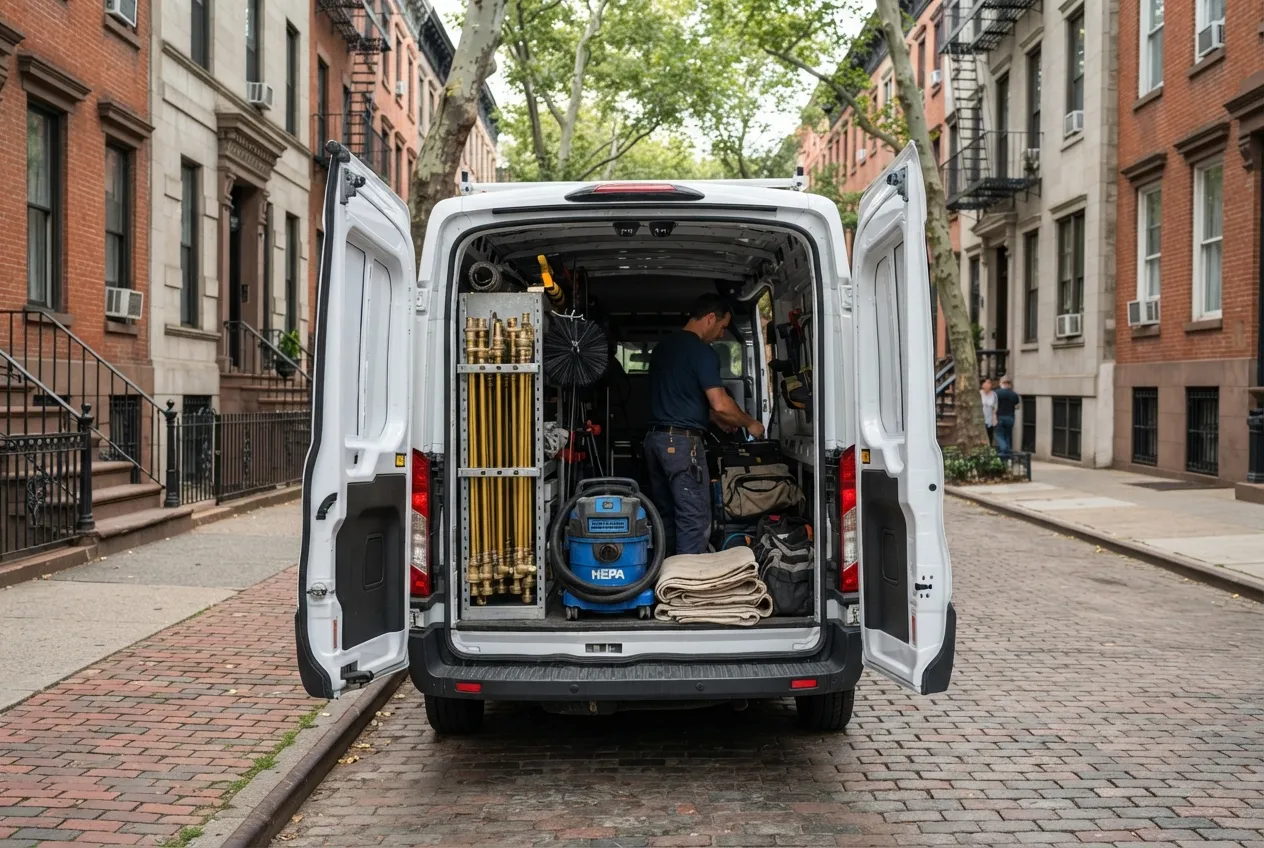
Inside, we lay drop cloths from the door to the fireplace before any tools come out. We cover the hearth and nearby furniture, and we keep HEPA vacuums running at the opening so soot and dust stay in the chimney, not in your living room. If heavy buildup blocks our view of the flue, we may recommend a sweeping with rotary brushes so the liner can be properly seen. We'll tell you before we do it.
When the liner can't be seen clearly from the firebox or the top, we run a camera through the flue. It shows cracks, gaps, and corrosion that a flashlight would miss, and you can see what we see.
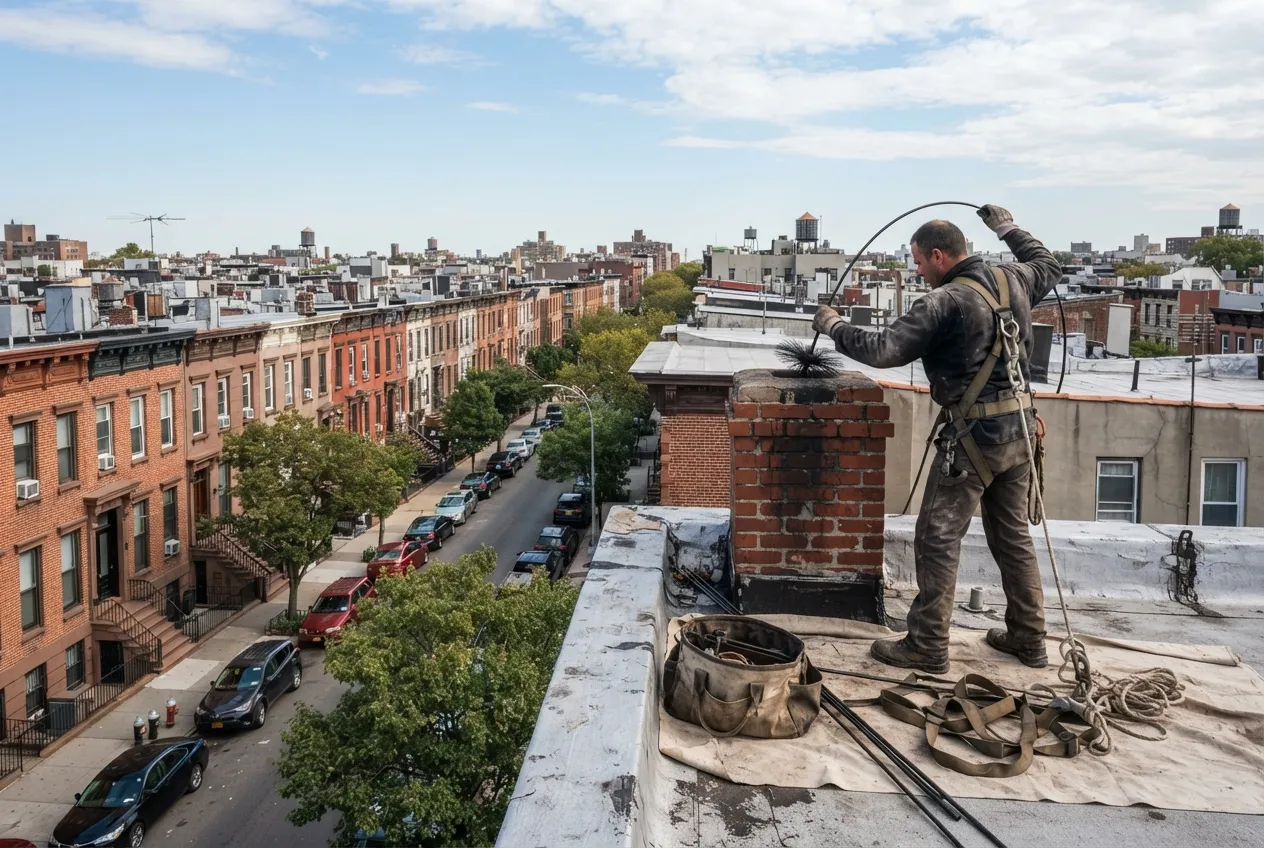
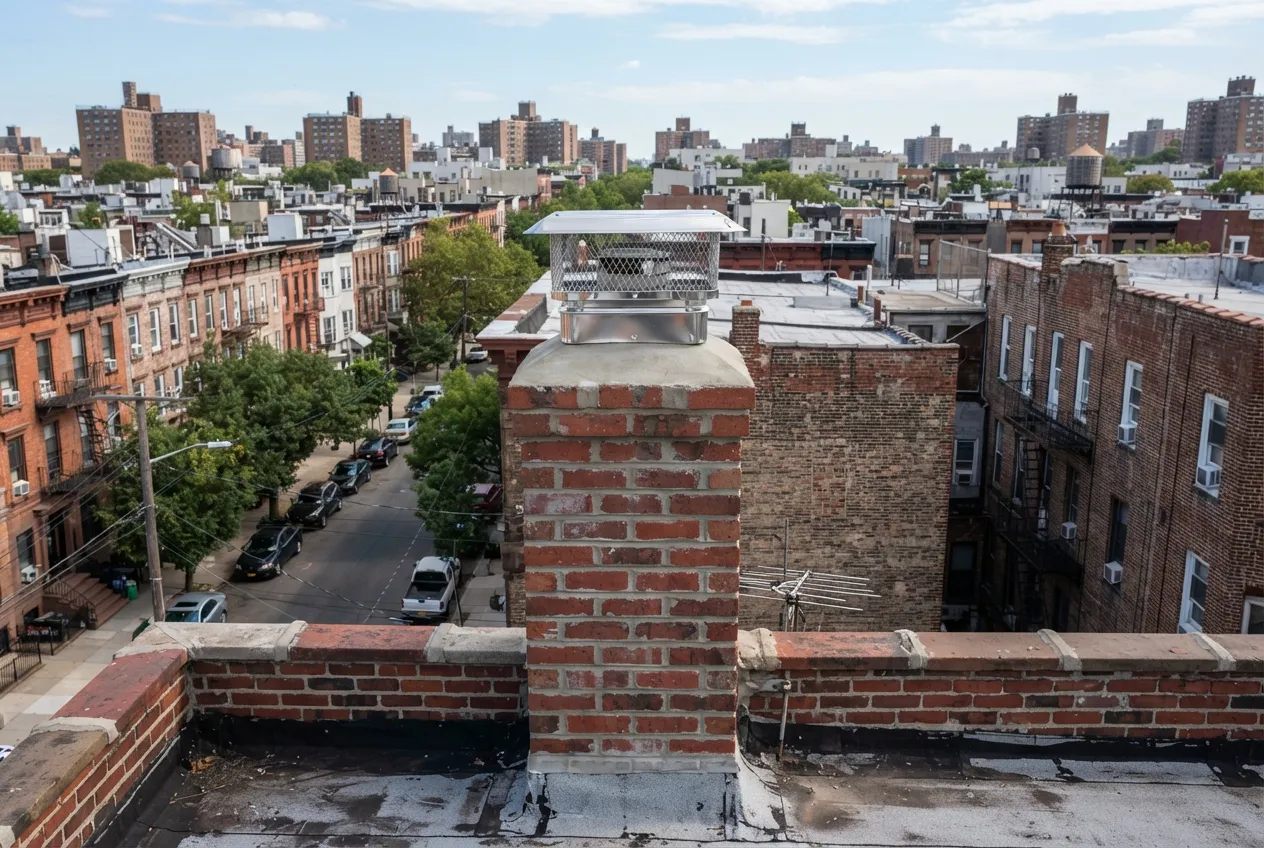
On the roof, we check the crown, cap, flashing, and upper brickwork. We use safe access for the building, and we won't climb in conditions that put the crew or your roof at risk. If the roof can't be reached safely that day, we'll reschedule that part rather than guess.
Time for your annual chimney check?
The Standard We Follow
We follow NFPA 211, the national standard that calls for chimneys, fireplaces, and vents to be inspected once a year. Chimney professionals use three inspection levels, and we'll tell you which one fits your situation before we start.
A Level 1 inspection is the routine yearly check when nothing about your system has changed. A Level 2 inspection is called for when something has changed, such as a new appliance or a switch in fuel, or when the home is being sold. A Level 3 inspection is reserved for cases where a hidden hazard can only be reached by opening part of the chimney or the building.
Fuel changes come up often in New York City. When a building converts its boiler from oil to gas, the chimney has to be evaluated as part of the work. A new liner is often needed, because gas exhaust produces acidic condensate that can corrode a masonry flue. Since the city's heat season runs from October 1 through May 31, late summer and early fall are the best times to find and fix problems before the heat has to stay on.
What Affects the Price
We'll explain what goes into your quote before any work starts. The main factors are:
- Chimney height and how easy it is to reach the roof safely
- Fuel type: wood, gas, or oil, and whether a boiler or insert vents into the flue
- Flue size, shape, and the condition of the liner
- How much creosote, soot, or debris has built up
- Whether a camera inspection is needed to see the full flue
- Whether repairs, a cap, or a new liner are recommended after the inspection
How a Visit Works
When you book, we ask a few questions about your chimney, your fuel type, and anything you've noticed. That helps us bring the right equipment and plan for the right inspection level. Please don't use the fireplace for at least a day beforehand so the firebox is cool when we arrive.
On the day of the visit, the crew sets up drop cloths and HEPA vacuums, inspects from the firebox, and then checks the top of the chimney from the roof. A camera is added where it's needed. Afterward, we walk you through what we found, show you photos or video, and give you a written summary. Any repairs are presented as recommendations with clear priorities, and you decide what happens next. Nothing is done without your approval.
Chimney Inspection by city
- Chimney Inspection in Marine ParkLocal service & repairs
- Chimney Inspection in Mill BasinLocal service & repairs
- Chimney Inspection in Bergen BeachLocal service & repairs
- Chimney Inspection in FlatlandsLocal service & repairs
- Chimney Inspection in MadisonLocal service & repairs
- Chimney Inspection in CanarsieLocal service & repairs
- Chimney Inspection in MidwoodLocal service & repairs
- Chimney Inspection in East FlatbushLocal service & repairs
- Chimney Inspection in FlatbushLocal service & repairs
- Chimney Inspection in Sheepshead BayLocal service & repairs
- Chimney Inspection in Manhattan BeachLocal service & repairs
- Chimney Inspection in Gerritsen BeachLocal service & repairs