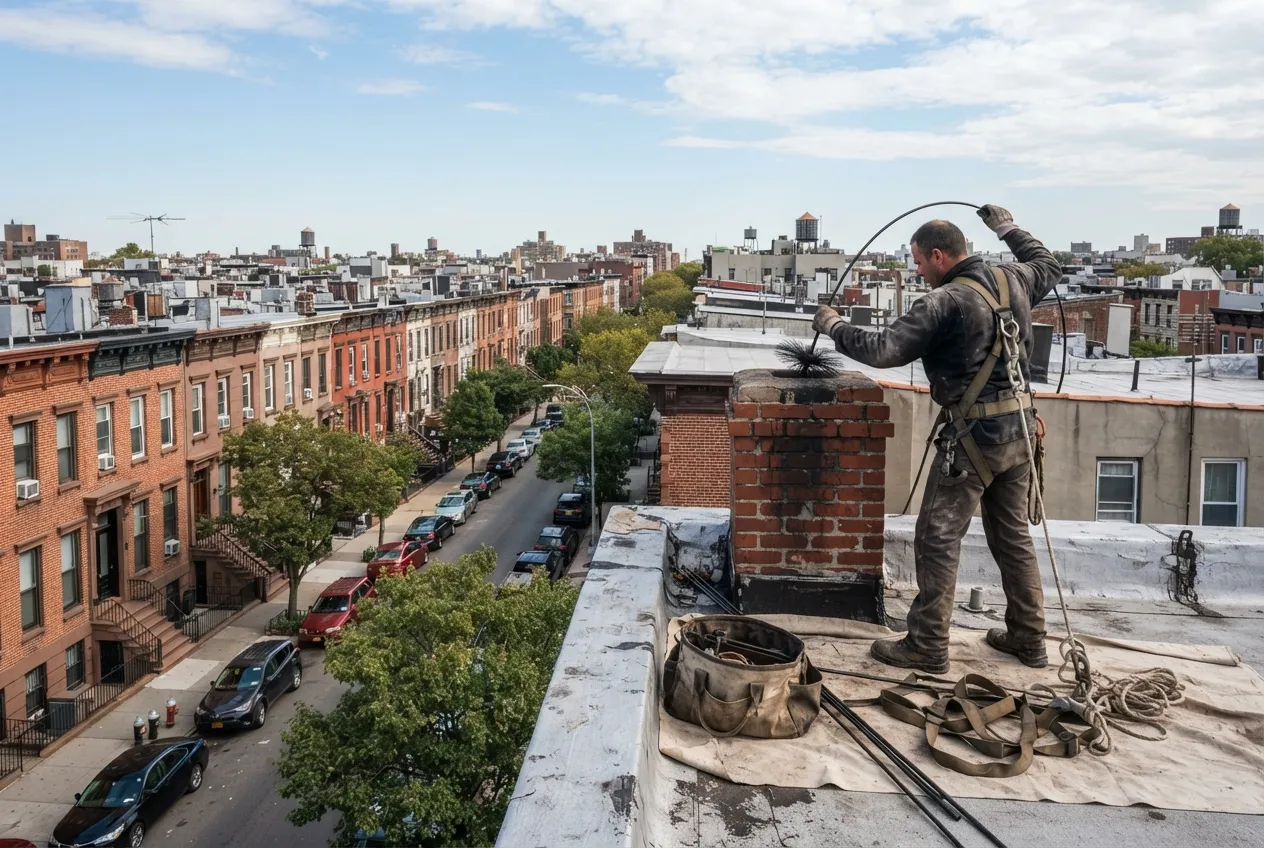
The short answer
Chimneys in Flatlands should be inspected once a year, as the NFPA 211 standard calls for. A more thorough inspection is needed when you change heating systems or sell the home. A certified ApexHearth technician checks the flue, liner, masonry and appliance connections, then explains what, if anything, needs work.
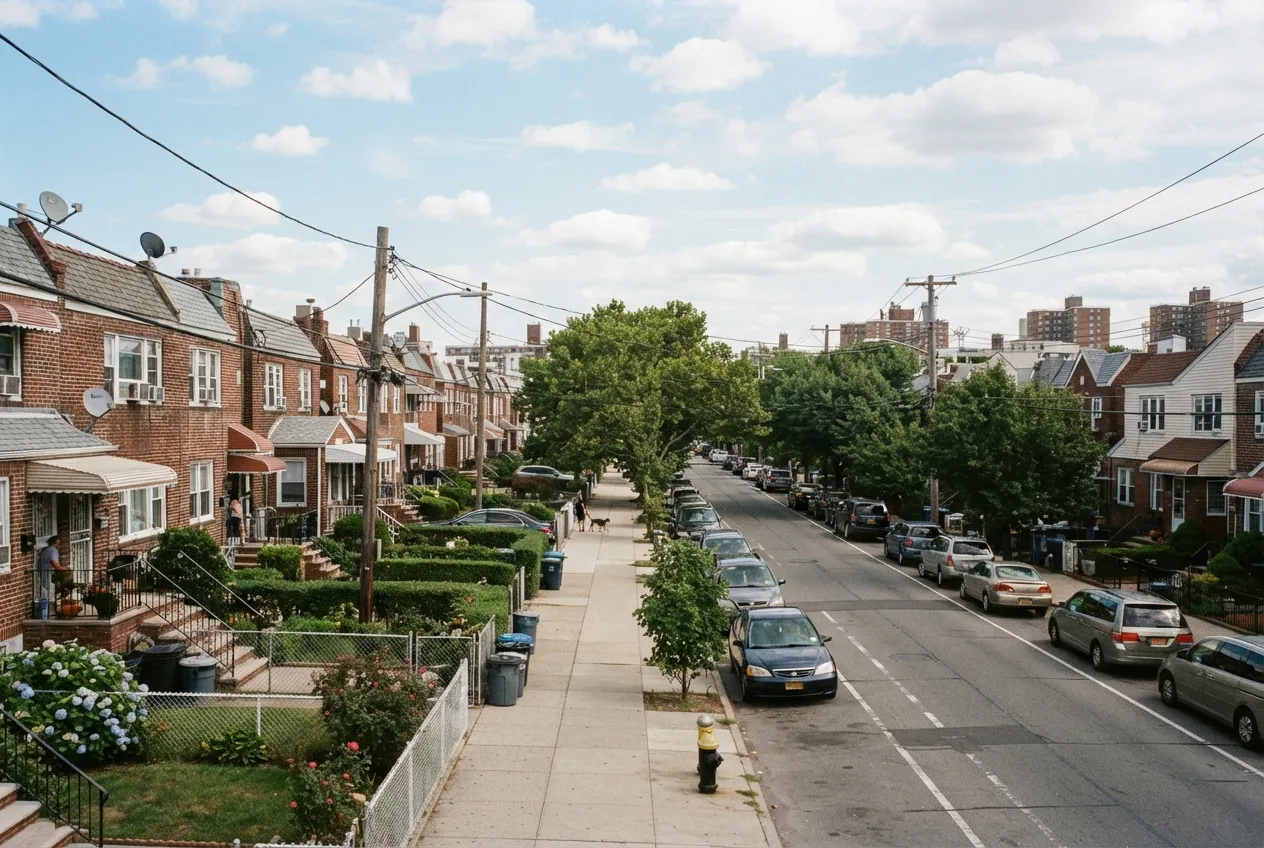
Flatlands is about a mile north of our Brooklyn office, so it is a short trip for one of our certified technicians to reach your home. Homes here include detached and semi-detached houses, attached rowhouses, two-family homes and smaller apartment buildings. In many of them, the chimney vents a boiler, furnace or water heater rather than a wood fire. That matters because a flue serving a heating appliance works every day of the cold season, whether or not anyone looks at it. A chimney inspection tells you what condition that flue is in, what is connected to it, and whether anything needs attention before it becomes a safety problem.
What a Chimney Inspection Covers
The NFPA 211 standard calls for chimneys, fireplaces and vents to be inspected once a year. An inspection is not the same as a cleaning. The goal is to find out what is there and whether it is working as it should. If the inspection finds buildup, we may recommend a cleaning afterward.
In attached rowhouses and semi-detached homes, chimneys often run through shared walls. A cracked or deteriorating flue can affect more than one household, so a careful look is worth it.
The inspection covers:
- The chimney crown, cap and exterior masonry, including cracked or missing mortar
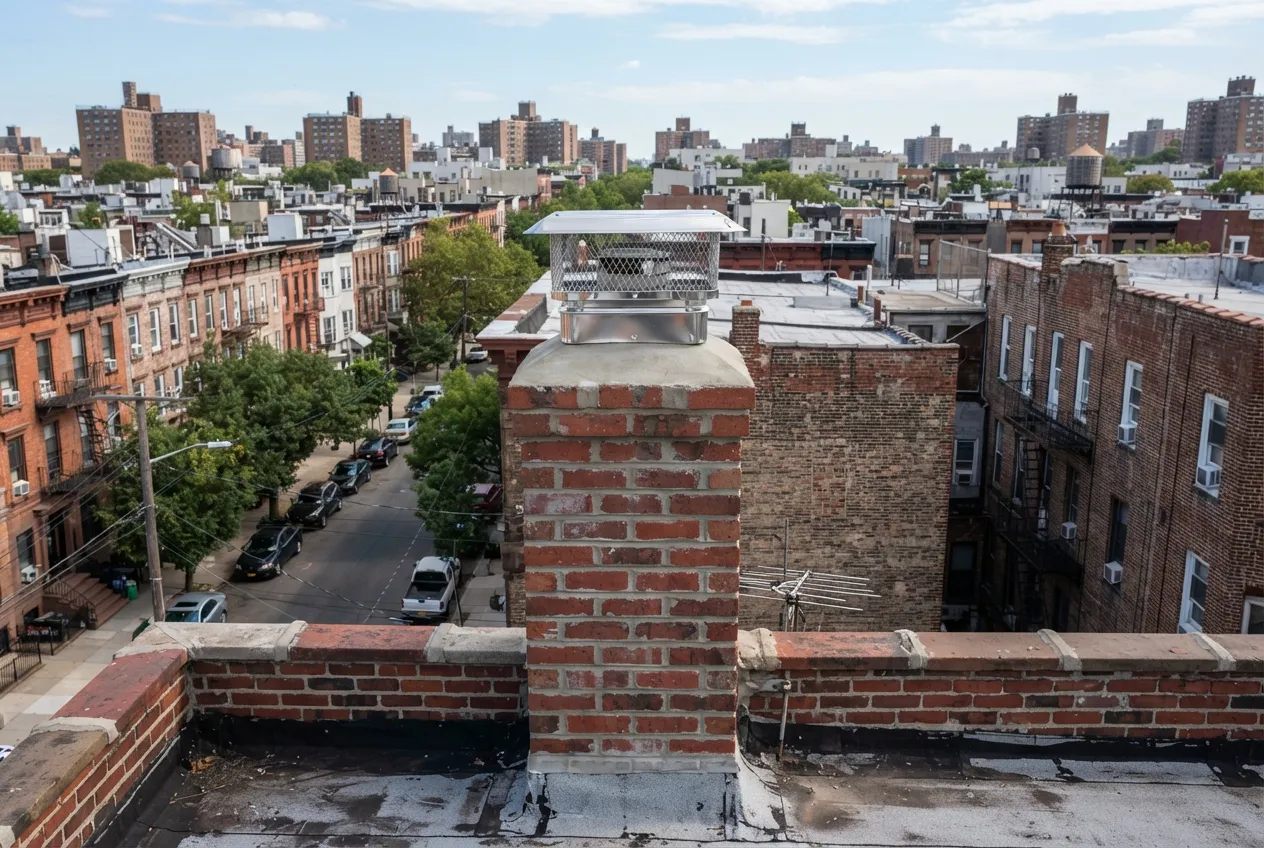
- The flue liner, checked for cracks, gaps, corrosion and blockages such as nests or debris
- The smoke chamber, damper and firebox on fireplaces that are in use
- The connection between your boiler, furnace or water heater and the chimney
- Signs of water getting in, such as staining, rust or crumbling brick
The Three Inspection Levels and Which One You Need
Chimney professionals use three levels of inspection:
Level 1 is the standard yearly check for a system that has not changed and is used the same way as before.
Level 2 is called for when something changes, such as a new boiler or a switch from oil to gas. It also applies when the home is sold. It typically includes a camera inspection along the full length of the flue.
Level 3 is for cases where a hidden hazard can only be reached by opening part of the chimney or the building. We recommend it only when earlier findings point to a problem that cannot be seen any other way.
If you are buying or selling a house in Flatlands, ask for a Level 2 inspection. It gives both sides a clear record of the flue's condition at the time of sale.
Oil-to-Gas Conversions in Flatlands Homes
Many homes in Flatlands and nearby Marine Park and Mill Basin were built with oil heat, and some owners are now converting to gas. When a New York City building converts its boiler from oil to gas, the chimney has to be evaluated as part of the work.
A new liner is often needed. Gas exhaust produces acidic condensate that can corrode a masonry flue, even one that served an oil boiler without trouble.
We inspect the existing flue, note its size and condition, and tell you plainly whether it can serve the new appliance or needs a liner. Getting this done early keeps the conversion from stalling partway through.
Time for your annual chimney check?
Timing Your Inspection Around Heat Season
New York City's heat season runs from October 1 through May 31. If you own a two-family home or a small apartment building, you must keep apartments heated to the city's minimum temperatures during those months. A boiler that cannot vent safely may have to be shut down, which puts you in a difficult spot with tenants.
Late summer and early fall are the most practical times to book, because problems found then can be fixed before the boiler runs full time. If heat season has already started, an inspection is still worthwhile. That is especially true if you notice soot, unusual odors, or a boiler that keeps shutting off.
What You Get After the Visit
After the inspection, the technician walks you through what they found and gives you a written summary, with photos when they help explain a finding. Each issue is described in plain language, along with what we recommend and how soon it should be handled.
Some findings are urgent, such as a blocked flue or a liner with gaps near a gas appliance. Others, such as early mortar wear on the crown, can be planned for. You decide what to do next.
We serve all of ZIP code 11210, along with Marine Park, Mill Basin, Bergen Beach, East Flatbush and Canarsie.
More services in Flatlands
- Chimney Sweep in FlatlandsLocal service & repairs
- Chimney Repair in FlatlandsLocal service & repairs
- Air Duct Cleaning in FlatlandsLocal service & repairs
- Chimney Liner Installation in FlatlandsLocal service & repairs