The short answer
If you notice water in the firebox, animal noises in the chimney, debris falling into the fireplace or rust on a metal chase top, your chimney cap or chase cover likely needs to be replaced or installed. ApexHearth's certified technicians inspect the top of the chimney, measure each flue, and install a properly sized cap or chase cover that keeps out water, debris and animals.
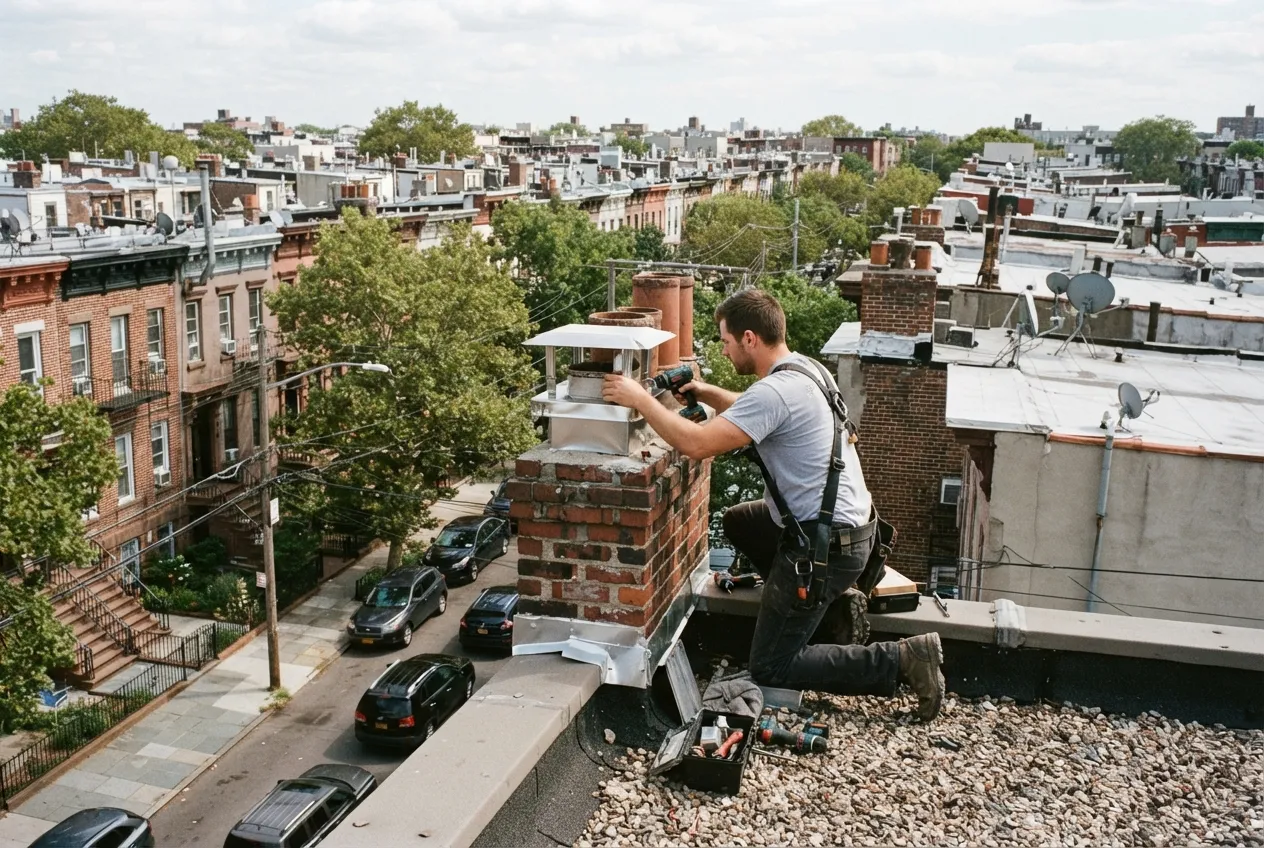
A chimney is an open hole in your roof. A chimney cap sits over the top of the flue and uses a hood and mesh screen to keep out rain, leaves, birds and animals. A chase cover is the metal top on a framed chimney chase, the boxed-in enclosure that houses the flue on a factory-built fireplace. It sheds water away from the chase and the framing inside it. When either part is missing, rusted or bent, water and animals get into the chimney and the house. ApexHearth installs and replaces caps and chase covers for homeowners in Brooklyn and nearby neighborhoods. That includes brownstones with several flues on a flat roof and frame houses with a prefabricated fireplace. This page covers the signs that yours needs attention, what the work includes, how our crew works and how a visit goes.
Signs you need it
Most cap and chase cover problems show up inside the house before anyone looks at the roof. Watch for these signs:
Some of these signs, especially water and white staining, can also come from a cracked crown, failed flashing or worn mortar joints. That is why we look at the whole top of the chimney before we recommend a part.
- Water in the firebox, or a damp, musty smell from the fireplace after rain
- Scratching, chirping or fluttering sounds in the chimney, usually from birds, squirrels or raccoons
- Leaves, twigs, nesting material or flakes of brick and mortar in the firebox
- Poor draft or smoke rolling back into the room, which can mean the flue is partly blocked
- White staining on the outside brick, a sign that water is moving through the masonry
- Rust streaks running down the chase or siding below a metal chase cover
- A cap that is missing, leaning or loose after a storm, or mesh that is torn, rusted or clogged
What's included
Every cap or chase cover job is built around your chimney's actual size and condition. A standard visit includes:
- Inspection of the chimney top: crown, flue tile or liner end, flashing and visible brick
- Measuring each flue, or the full top of the chase, so the new part fits without being forced
- Removing the old cap or chase cover, plus any nests or debris at the top of the flue
- Installing a cap with a mesh screen sized for your flue and fuel type, or one multi-flue cap that covers several flues at once
- For chase covers, a cover shaped to shed water, with a drip edge that sends runoff away from the chase walls
- Fastening and sealing the new part to the masonry or chase framing
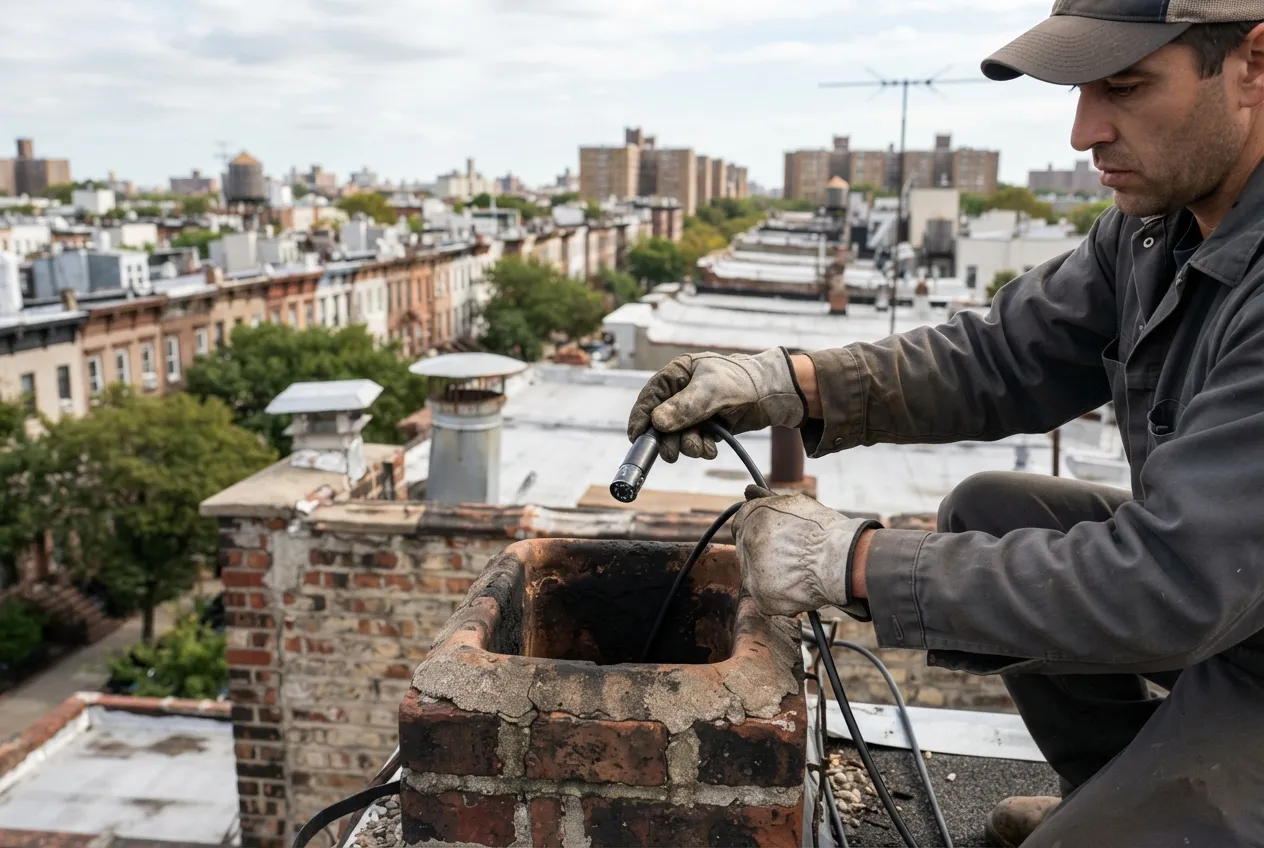
- A camera check of the flue when there are signs of nesting or water damage below the top
- Before-and-after photos and written notes on anything else we found
How the crew works on the roof and inside your home
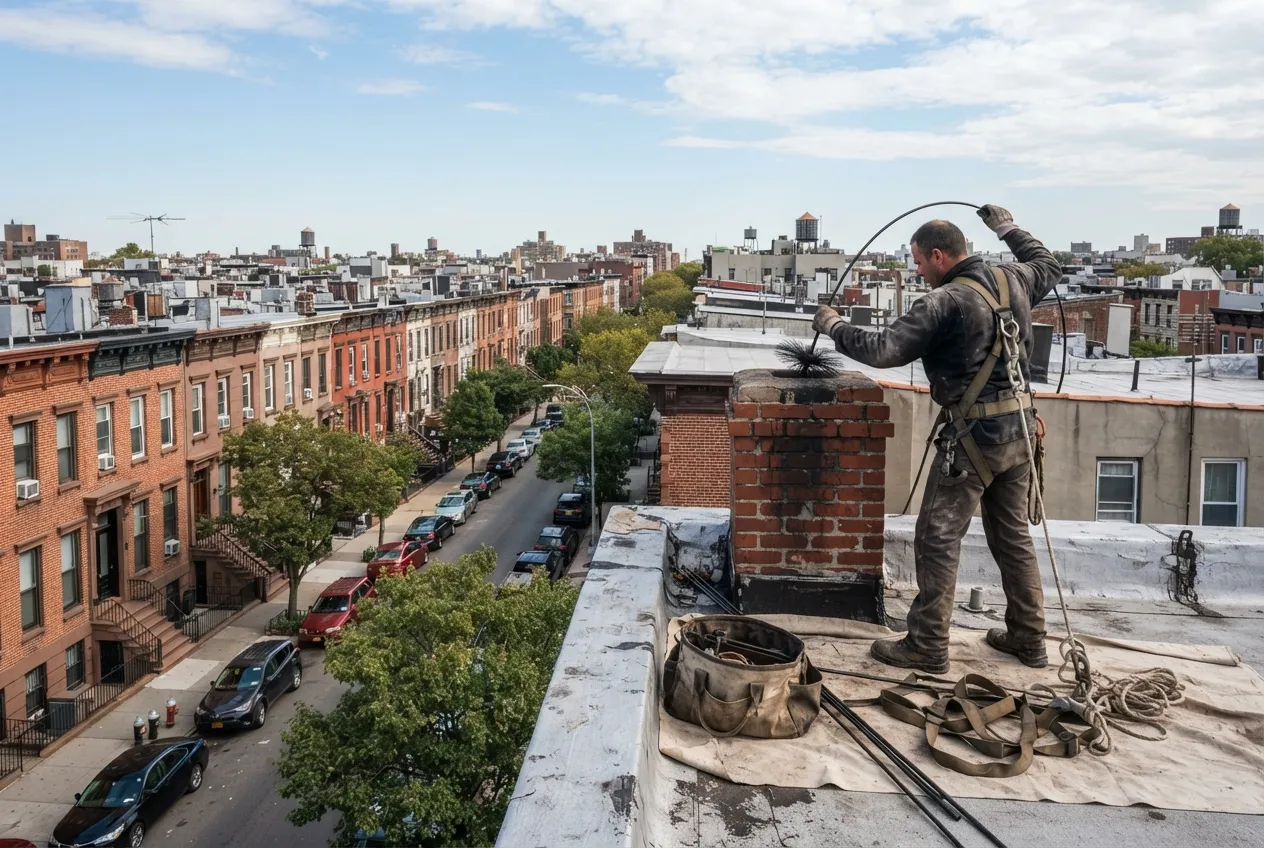
On the roof, the crew sets up safe access first. That might be a ladder, a roof hatch or a bulkhead door, depending on the building. Tools and old parts are secured so nothing falls onto your roof, your yard or a neighbor's property. We remove the old part and clean the top of the flue. If the crown is cracked, we tell you before installing anything over it. New caps are usually stainless steel, because galvanized metal tends to rust and stain the brick over time.
Some jobs mean clearing a nest or sweeping the flue, so the crew also works inside your home. They lay drop cloths from your door to the fireplace and seal the fireplace opening. HEPA vacuums run while they work to keep soot and dust out of the room, and rotary brushes clear creosote, nesting material and debris from the flue walls. When we can't see the whole flue from the top or bottom, we run a camera through it and show you the footage.
If an animal is still living in the chimney, we make sure it is gone before we install a cap. A new cap should never trap an animal inside the flue. If wildlife removal is needed first, we will tell you.
Time for your annual chimney check?
The standard we follow
We follow NFPA 211, the standard that calls for chimneys, fireplaces and vents to be inspected once a year. It defines three inspection levels. Level 1 is for a chimney where nothing has changed, and most cap replacements fit within it. Level 2 applies when the system changes, such as a new appliance or a switch of fuel, or when the home is sold. Level 3 is for a hidden hazard that can only be reached by opening part of the chimney or building.
Fuel changes matter for caps. When a New York City building converts its boiler from oil to gas, the chimney has to be evaluated as part of the work. A new liner is often needed, because gas exhaust produces acidic condensate that can corrode a masonry flue. The cap has to fit that new liner, so we coordinate the two.
Timing matters too. The city's heat season runs from October 1 through May 31. Booking cap and chase work before fall helps you avoid problems once the heat is on.
What affects the price
We give you a quote after seeing the chimney. These are the main factors:
- Chimney height and roof access, such as a flat roof with a hatch versus a steep pitched roof
- Fuel type, which determines the style of cap and mesh the flue needs
- Flue size and condition, including how many flues share the chimney and whether they are standard sizes
- Chase size and shape, for custom-fit chase covers
- How much buildup or nesting material has to be cleared
- Whether a camera inspection, crown repair or liner work is needed
How a visit works
You contact us and describe what you are seeing: water, noises, rust or a missing cap. We schedule a visit, and the technician inspects the chimney top and measures each flue or the chase. You get a clear explanation of what we found, along with photos and a quote before any work begins.
Standard caps can often be installed the same day. Custom multi-flue caps and chase covers are made to the measurements we take, then installed on a second visit. Before leaving, the crew cleans up the work area and walks you through the before-and-after photos.