The short answer
Dryer vent cleaning clears lint from the whole duct, from the back of the dryer to the outside hood or roof cap, so the dryer can exhaust heat and moisture properly. According to the U.S. Fire Administration, failure to clean is the leading factor contributing to home clothes dryer fires, so a clogged vent is worth fixing promptly.
A clothes dryer pushes hot, damp air and fine lint through a duct to the outside of your home. Over time, lint settles along that path: at the back of the dryer, inside the turns, and at the exterior hood. There it slows airflow and gives heat something to ignite. In Brooklyn homes, dryer vents are often longer and more complicated than they should be. Some run across a basement ceiling to the rear wall of a rowhouse. Others climb through several floors to the roof, or sit behind a laundry closet added during a renovation. ApexHearth cleans the full length of the vent, from the dryer connection to the outdoor opening. When we finish, we tell you plainly what we found and what condition the duct is in.
Signs you need it
Most homeowners notice a dryer vent problem through the dryer itself before they ever look at the duct. If one or more of these sound familiar, have the vent checked rather than adding another cycle.
- Loads take more than one cycle to dry, or clothes come out hot but still damp
- The top or sides of the dryer, or the laundry room itself, get unusually hot while it runs
- A burning or scorched smell when the dryer is on
- Lint piling up around the outside vent hood, or a flap that barely opens while the dryer runs
- Bird or animal noises near the vent opening, or nesting material visible at the hood
- A crushed, kinked or lint-caked hose behind the dryer
- Extra humidity or condensation in the laundry area
- You don't know when the vent was last cleaned
What's included in a dryer vent cleaning
Every visit covers the entire exhaust path, not just the part you can reach from the laundry room.
- Turning off the dryer and moving it out carefully, with attention to the gas connector on gas units
- Disconnecting and inspecting the transition hose between the dryer and the wall, and flagging foil or plastic accordion hose that crushes easily and traps lint
- Cleaning the lint screen housing and the cavity below it
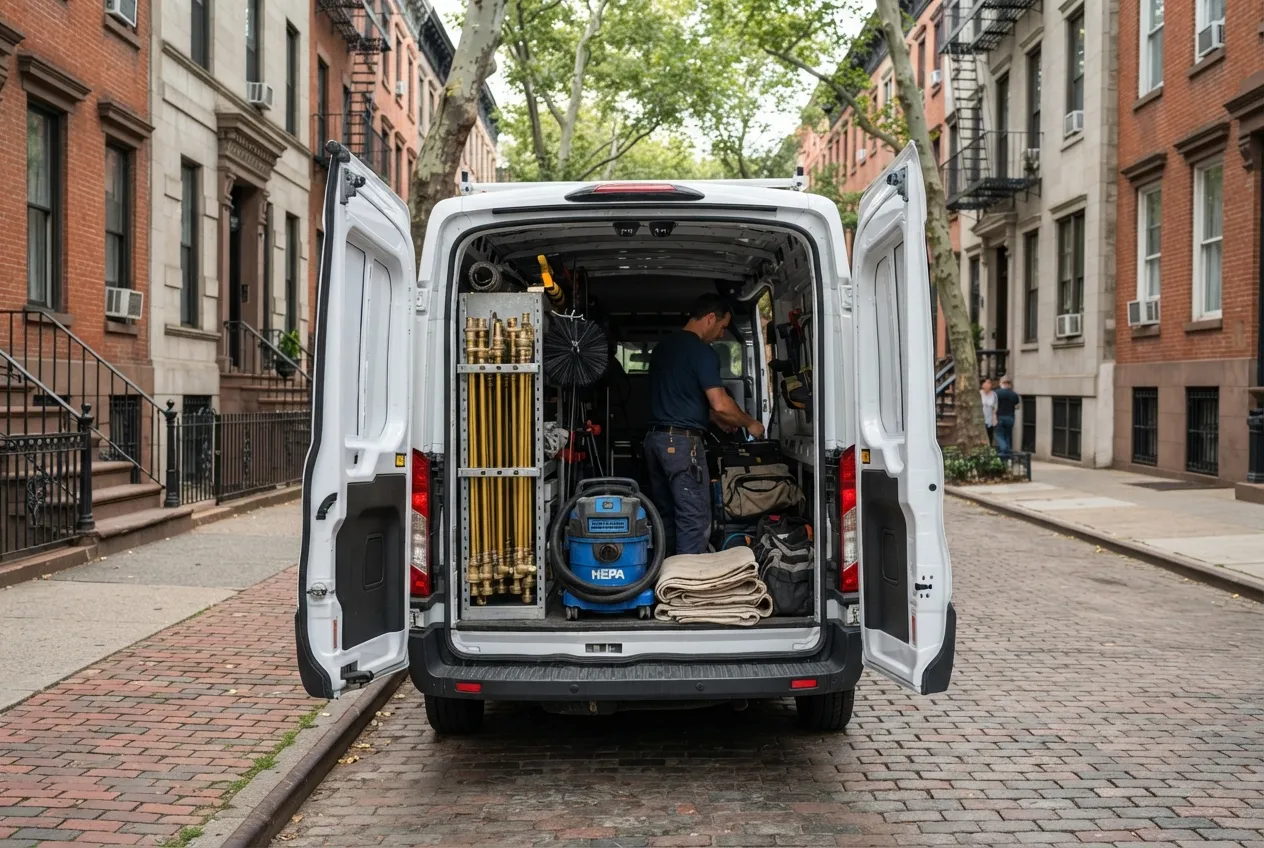
- Brushing the full length of the duct with rotary brushes on flexible rods
- Collecting loosened lint with a HEPA vacuum at the open end of the duct
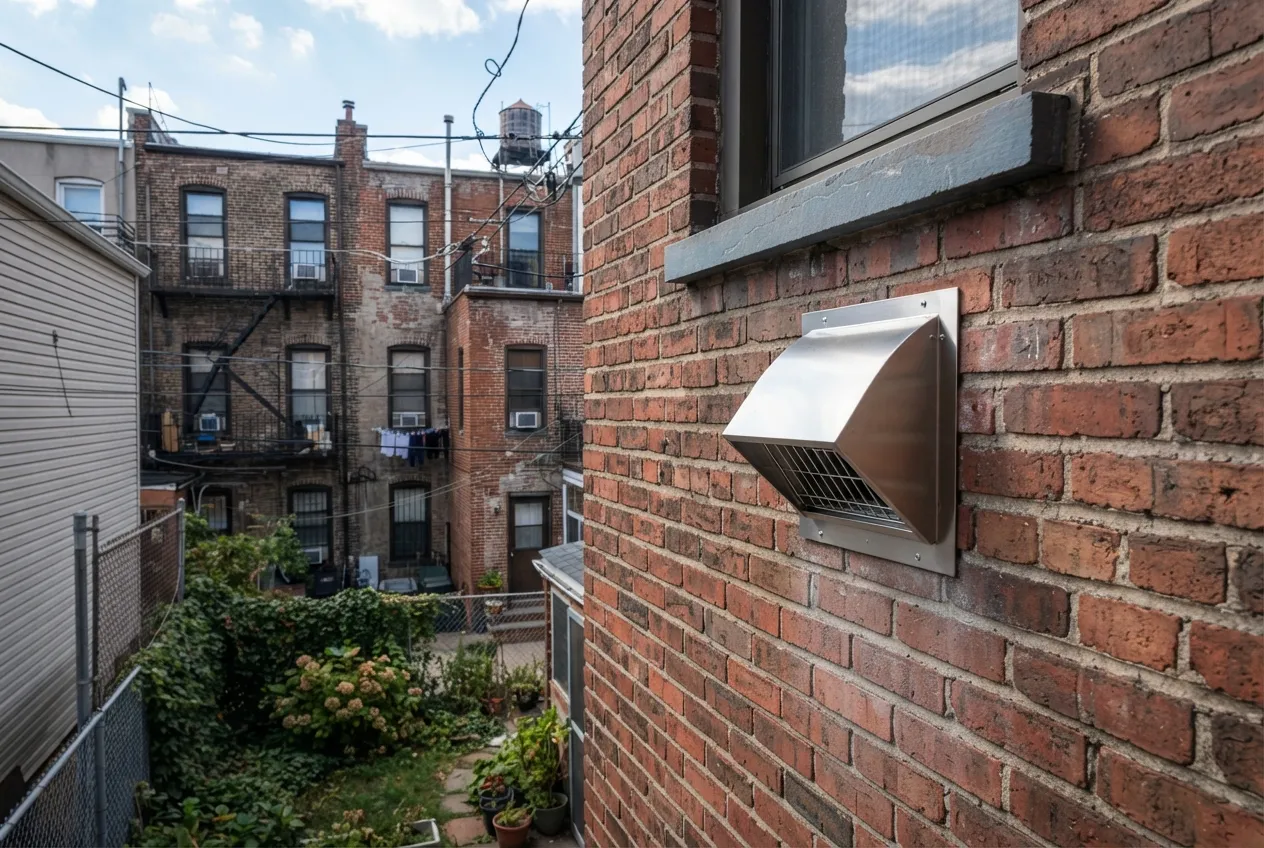
- Clearing the exterior hood or roof cap, removing any nests, and checking that the damper opens and closes freely
- Camera inspection of long or concealed runs where needed
- Reconnecting the dryer, running it, and confirming strong airflow at the outside opening
- A plain summary of what we removed and any problems we saw
How our crew works inside your home and on the roof
Inside, the crew lays drop cloths from the entry to the laundry area and wears shoe covers. Before any brushing starts, we connect a HEPA vacuum to the open end of the duct so loosened lint is pulled into the machine instead of drifting into your home. We then run rotary brushes through the duct on flexible rods. The brushes scrub lint from the walls of the duct and work through elbows without tearing the duct apart.
Many Brooklyn vents are hidden inside walls, ceilings or soffits. For those, we use a camera to see blockages, crushed sections and disconnected joints that brushing alone wouldn't reveal. If a run is too long to clean well from one end, we brush from both the inside and the outside so the two passes meet.
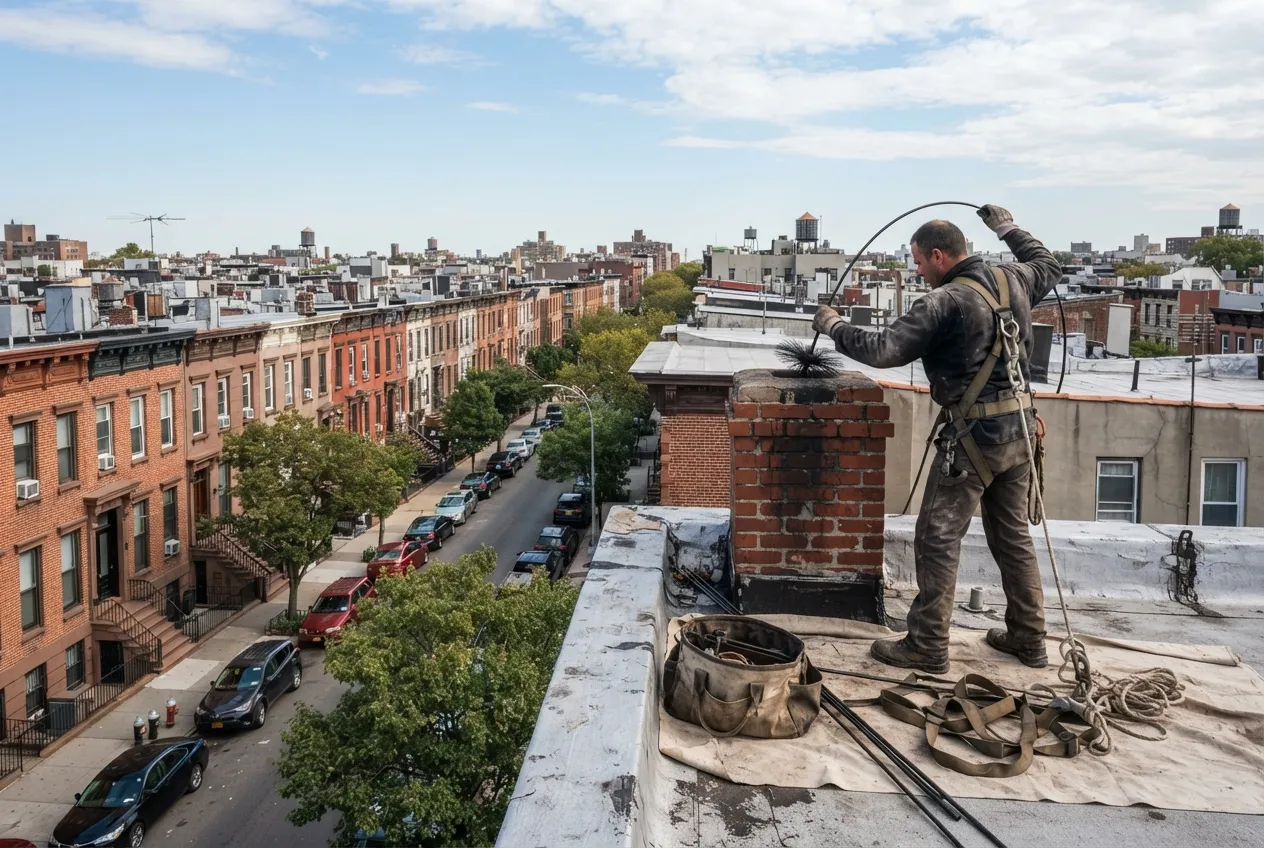
When a vent ends on the roof, a certified technician goes up only if there is safe access. Up top, the technician clears lint and debris from the cap and checks for screens that catch lint and block airflow. Wall terminations get the same check from the yard or from a ladder.
Time for your annual chimney check?
Why cleaning matters
According to the U.S. Fire Administration, failure to clean is the leading factor contributing to clothes dryer fires in homes. The lint screen catches most of the lint, but not all of it. What gets past the screen builds up in the duct, where it restricts airflow. That makes the dryer run hotter and longer. A clean vent lets the dryer move heat and moisture out of the house the way it was designed to.
Chimney inspection standards such as NFPA 211 cover chimneys, fireplaces and vents for fuel-burning appliances, not dryer exhaust ducts. For dryer vents, our practical advice is to have the vent looked at about once a year. Check sooner if you notice any of the warning signs above, if you do a lot of laundry, or if the vent run is long.
What affects the price
We quote after we understand your setup, because dryer vents vary a lot from home to home. The main factors are:
- Where the vent ends, and the height and roof access if it terminates on the roof
- Total length of the duct and how many turns it makes
- Gas or electric dryer, which affects how the unit is disconnected and moved
- Duct size, material and condition, including crushed or disconnected sections
- How much lint and debris has built up, and whether there are nests
- Whether a camera inspection is needed to see a concealed run
- Any repair, such as replacing a transition hose, a damaged section of duct or the exterior hood
How a visit works
When you call, we ask where your dryer sits, where the vent exits the building, and what you've noticed. That helps us bring the right equipment and set expectations.
On the day of the visit, the crew walks the vent path with you, protects the floor, and cleans the duct from the dryer to the outside. After the cleaning, we run the dryer and check airflow at the termination before we pack up.
Before leaving, we show you what came out of the vent, explain anything we found, and tell you whether any part of the duct should be repaired or replaced. We give you that recommendation in plain terms. Any repair is your decision.