The short answer
Fireplace and damper repair fixes the parts that keep smoke going up the flue and cold air out of the room: the damper, firebrick, mortar joints, smoke chamber and hearth. ApexHearth inspects first, shows you what failed, and repairs it following the NFPA 211 standard.
A fireplace has four main parts: a firebox that holds the fire, a damper that opens and closes the flue, a smoke chamber that funnels smoke upward, and a flue that carries it out of the house. When one part wears out, the others stop working the way they should. A rusted damper that won't seal lets cold air into the room all winter. Cracked firebrick or failed mortar joints expose the masonry behind them to direct heat. A warped or misaligned damper can send smoke back into the living room. ApexHearth Chimney Services repairs fireplaces and dampers for homeowners in Brooklyn and nearby neighborhoods, from original masonry fireplaces in older rowhouses to newer prefabricated units. Our certified technicians find what failed, explain it in plain terms, and fix it with as little mess as possible.
Signs you need it
Most fireplace and damper problems show up gradually. Homeowners usually notice one of these first:
Any one of these is worth checking before your next fire. Some turn out to be minor adjustments. Others point to damage that should be repaired before the fireplace is used again.
- A smoky or creosote smell in the room, especially on humid days or when the heat is running
- Poor draft: smoke spills out of the opening when you light a fire, or the fire struggles to stay lit
- Debris, loose mortar or flakes of brick collecting on the firebox floor
- White, chalky staining on the brick, which means moisture is moving through the masonry
- Water or rust stains in the firebox after rain
- A damper handle that is stuck, loose, or won't stay closed
- Cold drafts coming from the fireplace when it isn't in use
- Scratching or chirping above the damper, which can mean birds or animals have gotten into the flue
What's included
Every fireplace and damper repair starts with an inspection of the parts involved, so the repair matches the actual problem. Depending on what we find, the work can include:
If we find something outside the original scope, we tell you before going further. We don't do extra work without your approval.
- Inspection of the firebox, damper, smoke shelf and lower flue, with photos of what we find
- Cleaning the damper area and smoke shelf so repair surfaces are clear of soot and creosote
- Repairing or replacing a throat damper, including the frame, handle and pivot points
- Installing a top-sealing damper at the top of the chimney when the original damper can't be saved or won't seal
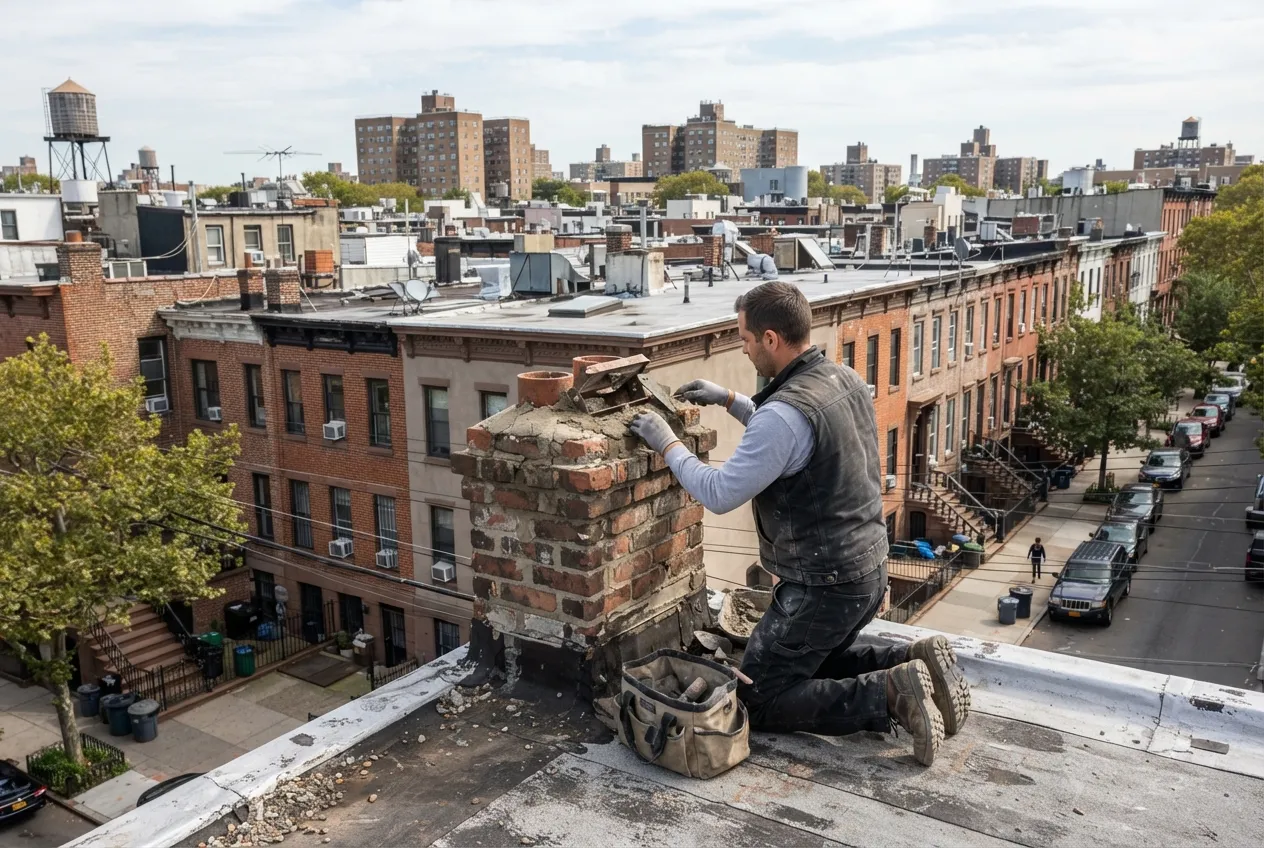
- Replacing cracked or crumbling firebrick and repointing failed joints with refractory mortar
- Repairing or smoothing a rough or deteriorated smoke chamber
- Repairing a cracked or loose hearth extension
- Checking the chimney cap and crown for the water entry that often causes damper rust and white staining
- A written summary of the work done and anything else we noticed
How we work inside your home and on the roof
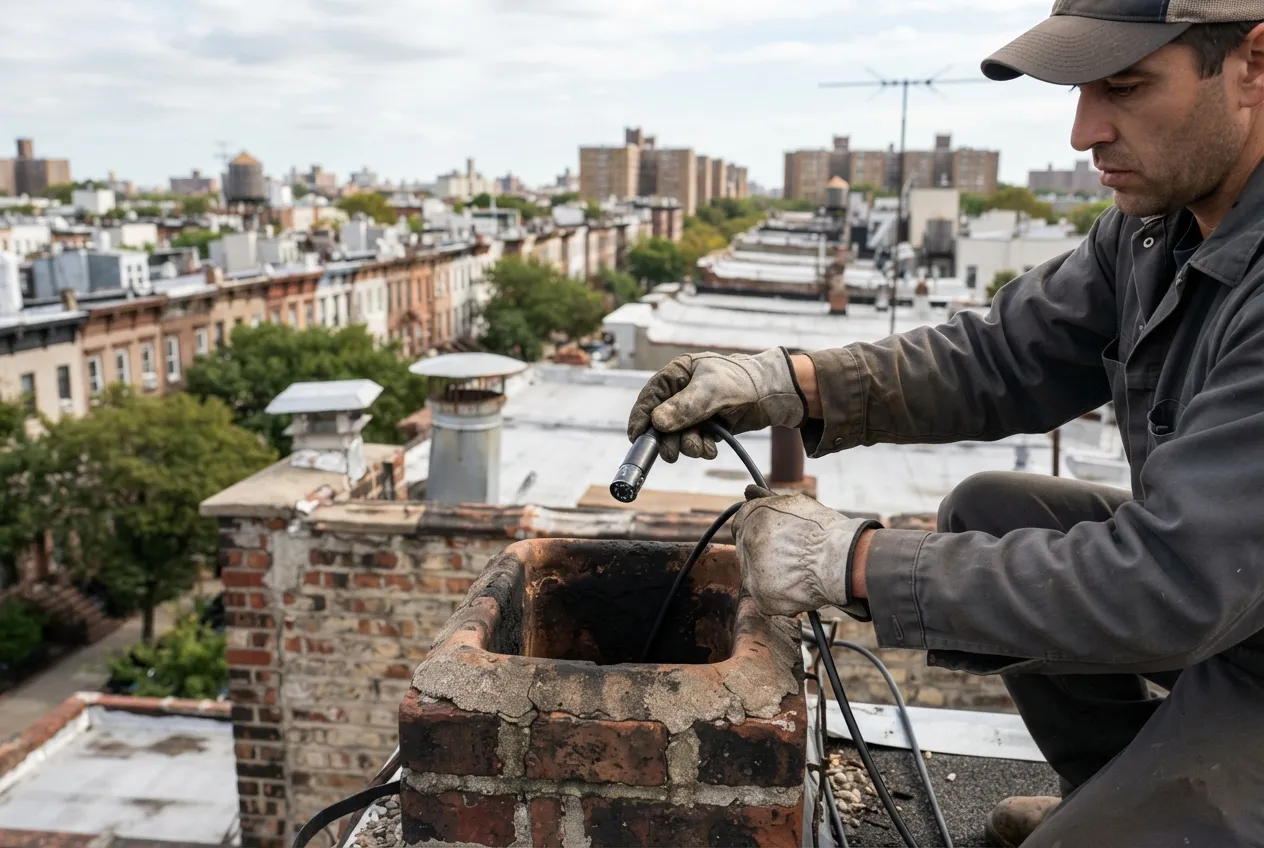
Inside, the crew lays drop cloths from your entry to the fireplace and covers the hearth and nearby furniture. We seal off the fireplace opening while we clean, so soot stays in the firebox instead of drifting into the room. HEPA vacuums run throughout the job to capture fine dust. We use rotary brushes to clean the smoke shelf and lower flue before any repair, because new mortar won't bond to soot or creosote. When the problem sits higher than we can see from the firebox, we run a camera up the flue to check the damper frame, smoke chamber and liner.
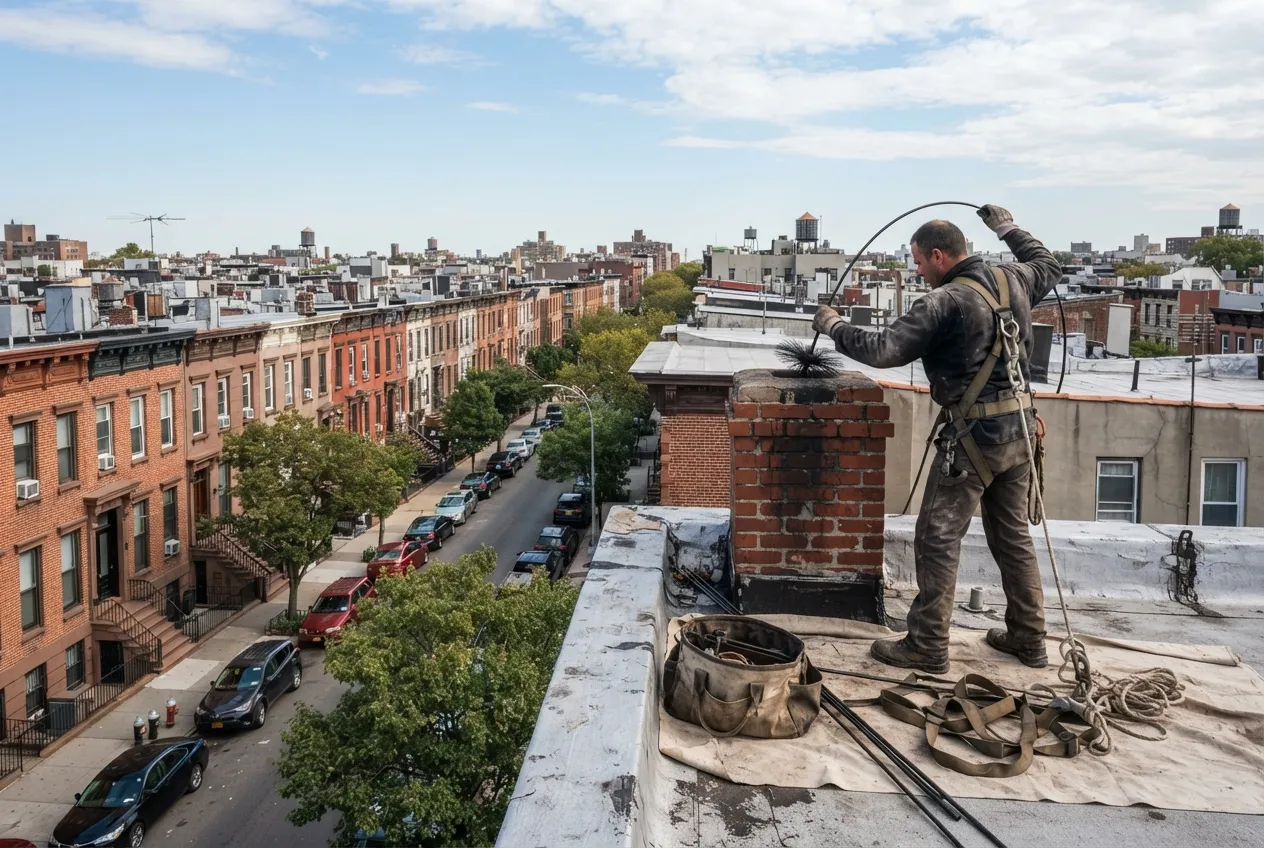
On the roof, technicians work with proper ladders and fall protection. They check the crown, cap and flashing, and they install top-sealing dampers from above when that is the right fix. Before we leave, we clean the work area, haul away old parts and debris, and walk you through what was done.
Time for your annual chimney check?
The standard we follow
Our work follows NFPA 211, the national standard for chimneys, fireplaces and vents. It calls for these systems to be inspected once a year. Yearly inspections are how many damper and firebox problems get caught while they are still small.
Chimney professionals use three inspection levels. A Level 1 inspection is for when nothing about the system has changed. A Level 2 inspection is called for when the system changes, such as a new appliance or a switch of fuel, or when the home is sold. A Level 3 inspection is needed when a hidden hazard has to be reached by opening part of the chimney or building. Most damper and firebox repairs begin with a Level 1 inspection. We recommend a higher level only when what we find calls for it.
What affects the price
Every fireplace is different, so we give you a quote after we've seen yours. The main factors are:
We explain each part of the quote, including what is optional, before any work begins.
- Chimney height and roof access, especially for top-sealing dampers installed from above
- Fuel type: wood-burning, gas logs, or a fireplace that has been converted
- Flue size and condition, which affect damper sizing and fit
- How much soot and creosote has to be cleaned off before the repair
- Whether a camera inspection is needed to see the damper frame or smoke chamber
- How extensive the repair is: an adjustment, a replacement part, or rebuilding firebrick and the smoke chamber
How a visit works
Book a visit and tell us what you've noticed. We confirm an arrival window. Please don't use the fireplace for at least a day beforehand, so the firebox is cool when we arrive.
On the day of the visit, the technician inspects the fireplace, shows you photos, and explains your options. If the repair is straightforward and the parts are on the truck, we can often finish it during the same visit. Larger jobs, such as replacing firebrick or fitting a custom damper, are scheduled as a follow-up. Many Brooklyn homeowners book in late summer or early fall so the fireplace is ready before New York City's heat season begins on October 1.