The short answer
Air duct cleaning makes sense when you see substantial dust or debris, renovation dust, signs of pests, visible mold or weak airflow at your vents. ApexHearth's certified technicians clean supply and return runs under negative pressure with HEPA vacuums and rotary brushes, check the results with a camera, and make no health claims.
Forced-air heating and cooling systems push a lot of air through ductwork hidden in walls, floors and ceilings. Over time that ductwork can collect household dust, construction debris, pet hair and sometimes nesting material from mice or birds. ApexHearth cleans residential air ducts for homeowners in Brooklyn and nearby communities, from older homes with retrofitted systems to newer houses with central air. We focus on what you can see and check: visible dust and debris, renovation dust, signs of pests, lingering odors and weak airflow at the registers. Here is what to look for, what we do, and how a visit goes.
Signs you need it
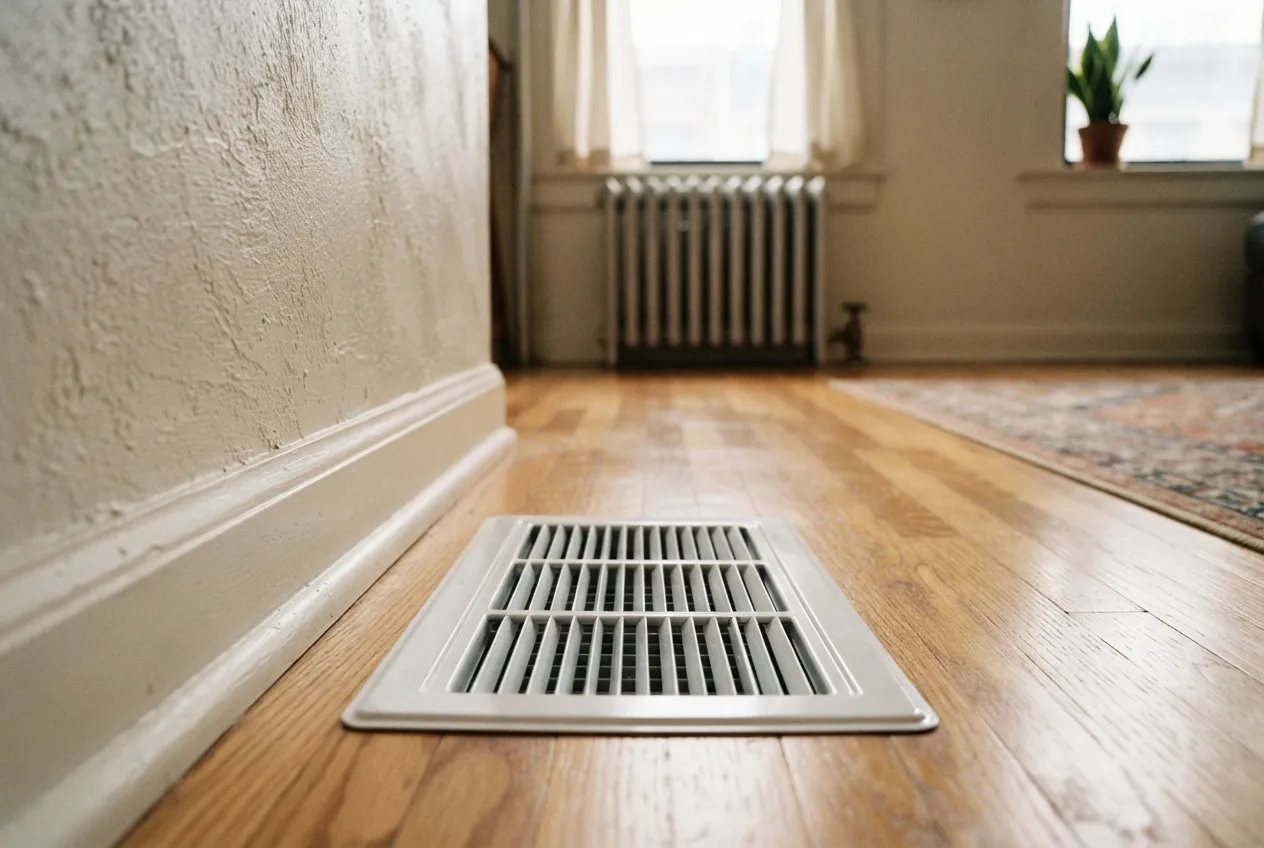
Duct problems usually show up at the vents. You don't need to open the system to notice most of them.
Recent renovation deserves special attention. Sanding, demolition and drywall work pull fine dust into open returns, and it keeps circulating after the job ends. If you see what looks like mold, the moisture source also has to be fixed, or the growth will come back after cleaning.
- Dust blowing from supply vents when the system turns on
- Gray buildup on register grilles that returns soon after you wipe it
- Visible debris, insulation bits or drywall dust inside vent openings
- Scratching, rustling or chirping in the ductwork, or droppings near returns
- A musty, stale or burnt-dust odor when the heat or air starts
- Weak airflow in some rooms compared with others
- Visible mold growth on duct surfaces or around registers
What's included
Every standard cleaning covers the following:
- A walk-through with you, noting rooms with dust, odor or airflow complaints
- A camera look inside representative supply and return runs before cleaning
- Drop cloths at each register and around the air handler
- Removal and washing of register covers and return grilles
- Negative-pressure cleaning with a HEPA-filtered vacuum connected to the system
- Agitation of supply and return runs with rotary brushes and air tools
- Cleaning of the return plenum and accessible supply plenum
- A visual check of the blower compartment and coil area, with notes on what we see
- Filter replacement sized to your system
- A post-cleaning camera check with before-and-after photos
- A short written summary of findings, such as disconnected runs, crushed flex duct or pest entry points
How the crew works in your home and on the roof
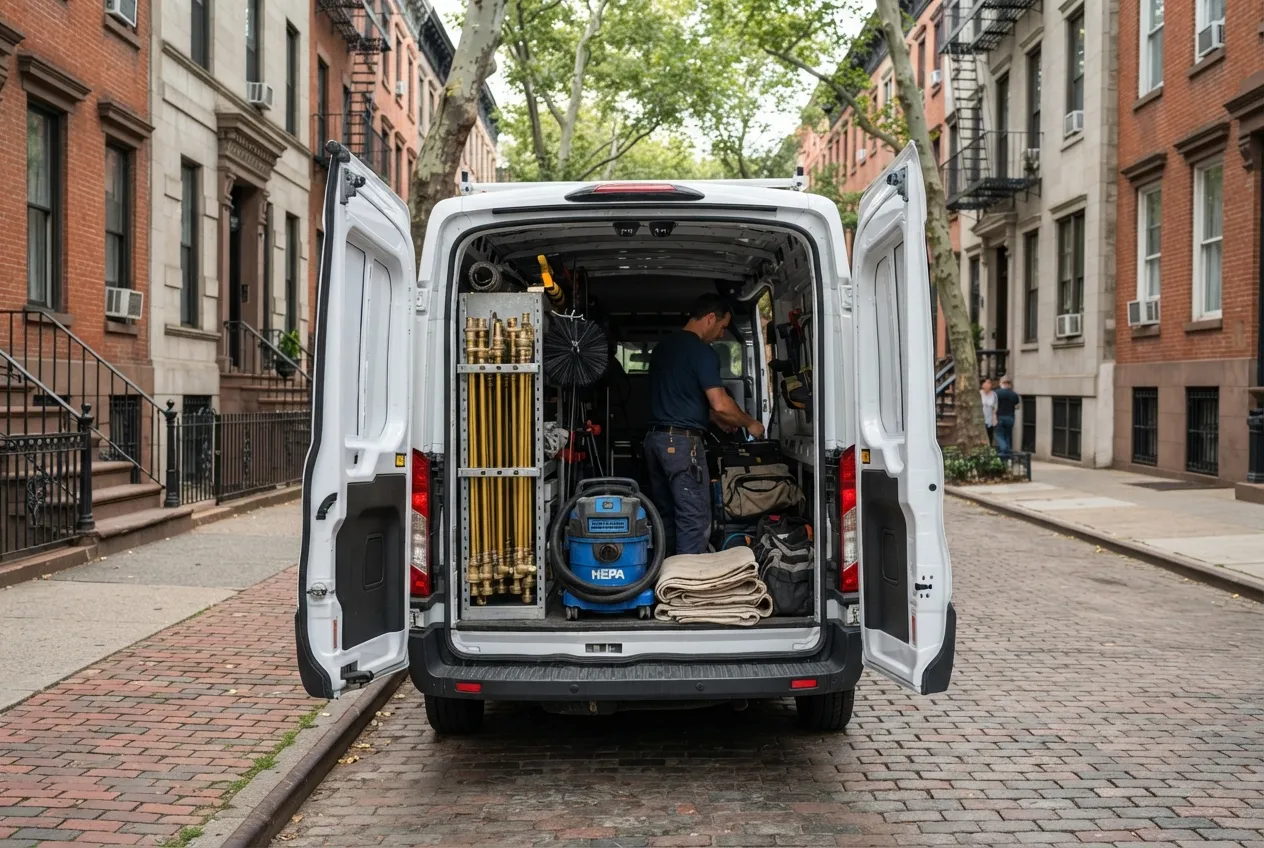
Our certified technicians start by laying drop cloths along the path from the door to the air handler and under each register. They wear shoe covers inside and seal registers they aren't working on so loosened dust doesn't escape into rooms.
The main tool is a HEPA-filtered vacuum connected to the trunk line, which keeps the ductwork under negative pressure. While it runs, the crew works rotary brushes and air whips through each branch, pushing debris toward the vacuum instead of into the house. A camera goes in before and after so you can see the difference.
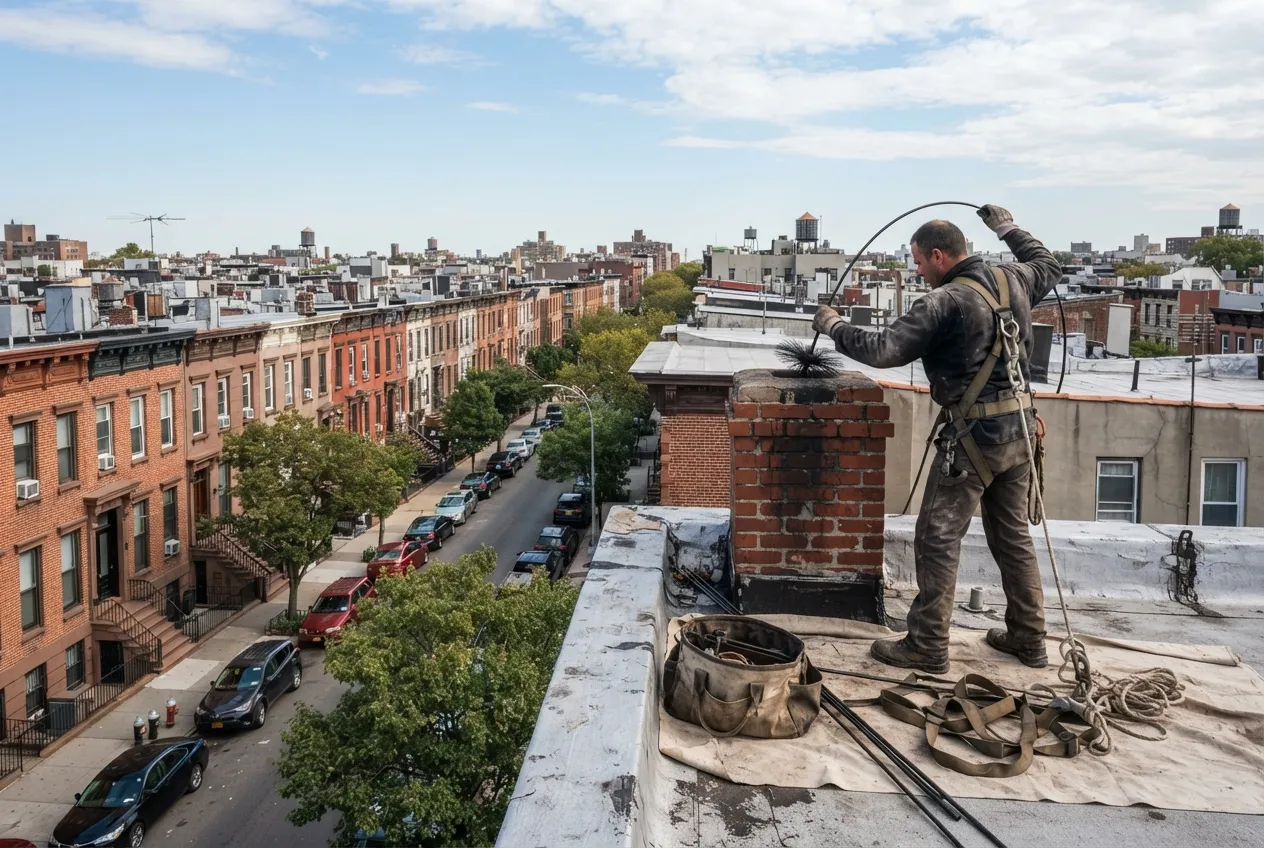
Most duct work happens indoors, but some homes have rooftop condensers, air handlers or exhaust runs that end on the roof. When that applies, a technician checks access first, sets up a ladder suited to the building, and inspects the termination for nests, clogged screens and damaged caps. If a roof isn't safe to walk, we'll say so and discuss other options.
Time for your annual chimney check?
The guidance we follow
Unlike chimneys, where the NFPA 211 standard calls for a yearly inspection, residential ductwork has no fixed cleaning schedule. We follow the U.S. EPA's guidance, which advises cleaning when there is substantial visible mold growth, vermin, or excessive dust and debris. If we look inside and your ducts are in reasonable shape, we'll tell you.
The EPA also says duct cleaning has not been shown to prevent health problems, so we don't make health claims. It warns homeowners to research the process before responding to very cheap advertised offers and to be careful with chemical treatments. We don't add biocides, sanitizers or sealants as a routine step. If one is ever worth discussing, we explain what it is and why, and you decide.
What affects the price
We quote after seeing the system or reviewing photos, and you approve the quote before work starts. The main factors:
- The number of supply and return vents and how many floors the ductwork serves
- System type and where the air handler sits, such as a basement, attic, closet or roof
- Access, including tight basements, finished ceilings, attic hatches, roof access and building height
- Duct material, size and condition, whether sheet metal, flex duct or duct board
- How much buildup there is, especially after renovation or pest activity
- Whether an extended camera inspection or repairs are needed, such as resealing joints or replacing crushed flex duct
How a visit works
When you call or book online, we ask about your system, the number of vents, and what you've noticed. Photos of registers and the air handler help us prepare.
On the day, the crew arrives, walks through with you, and confirms the plan and quote. After protecting the work areas, they run the pre-cleaning camera check, clean the system, wash the grilles and replace the filter.
Before leaving, the technician reviews the before-and-after photos with you, points out anything that needs repair, and cleans up the work areas. Many homeowners schedule before cooler weather arrives, when the heat starts running daily.
Air Duct Cleaning by city
- Air Duct Cleaning in Marine ParkLocal service & repairs
- Air Duct Cleaning in Mill BasinLocal service & repairs
- Air Duct Cleaning in Bergen BeachLocal service & repairs
- Air Duct Cleaning in FlatlandsLocal service & repairs
- Air Duct Cleaning in MadisonLocal service & repairs
- Air Duct Cleaning in CanarsieLocal service & repairs
- Air Duct Cleaning in MidwoodLocal service & repairs
- Air Duct Cleaning in East FlatbushLocal service & repairs
- Air Duct Cleaning in FlatbushLocal service & repairs
- Air Duct Cleaning in Sheepshead BayLocal service & repairs
- Air Duct Cleaning in Manhattan BeachLocal service & repairs
- Air Duct Cleaning in Gerritsen BeachLocal service & repairs