

The short answer
Mill Basin homeowners should consider air duct cleaning when there is visible mold growth, signs of pests, or heavy dust and debris inside the ducts. ApexHearth inspects first, cleans only when the condition calls for it, and shows you what we found.
Many homes in Mill Basin heat and cool through ductwork. That includes detached houses with central air, semi-detached homes that added forced-air systems during renovations, and brick rowhouses with a furnace or air handler in the basement. ApexHearth Chimney Services cleans these duct systems from our Brooklyn office, about a mile northwest of the neighborhood. Every visit starts with an inspection of the ducts. We tell you plainly whether cleaning is worth doing, because many systems don't need it.
When Duct Cleaning Is Worth It
The U.S. Environmental Protection Agency advises cleaning air ducts under a few specific conditions. It also notes that duct cleaning has not been shown to prevent health problems, so we don't sell it as a health treatment. We use the same conditions to decide whether your system needs cleaning:
- Substantial mold growth you can see inside the ducts or on other parts of the heating and cooling system
- Signs of vermin, such as droppings, nesting material or insects in the ductwork
- Excessive dust and debris, especially if it blows out of the supply registers when the system runs
- Leftover construction dust after a renovation, sanding or demolition work
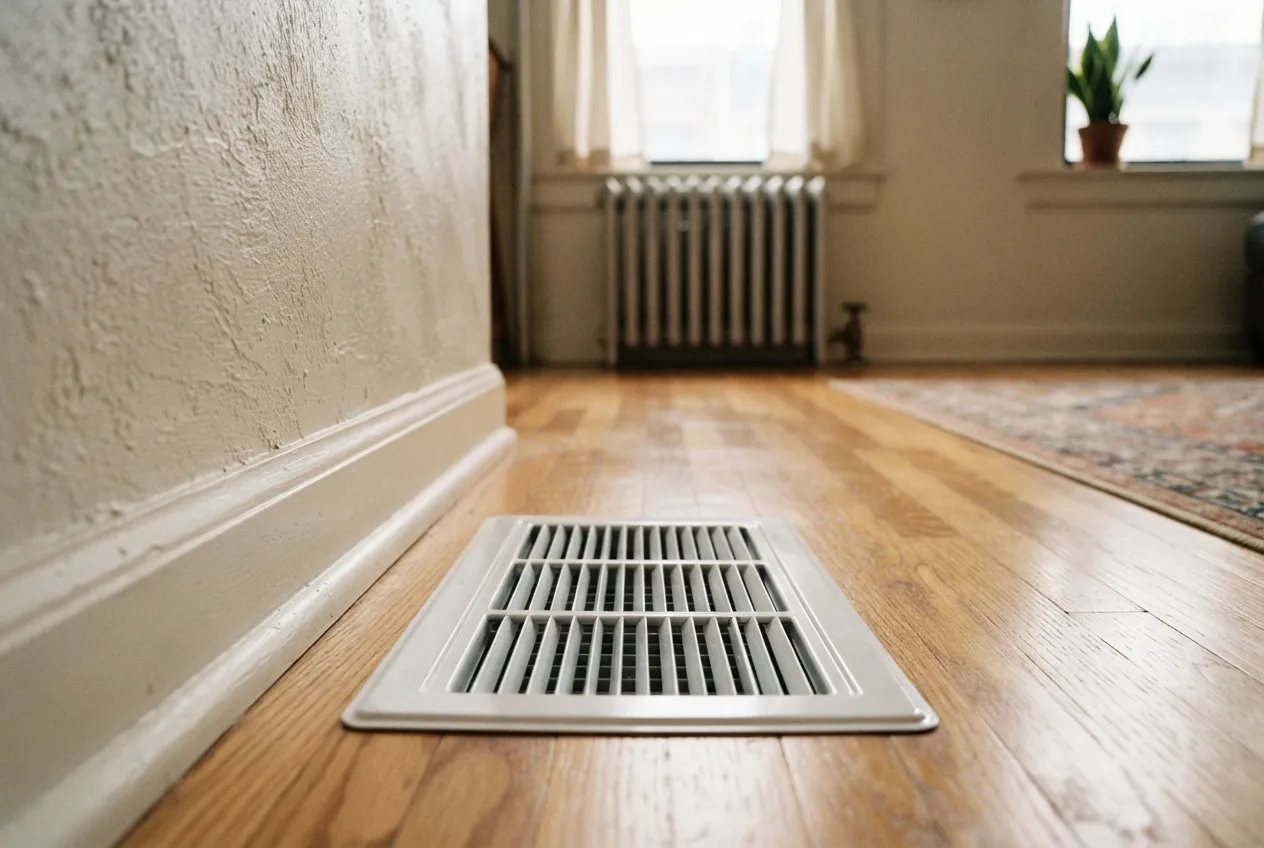
How Ductwork Fits Mill Basin Homes
Housing in Mill Basin is varied. Larger detached homes often run ducts through an attic, a basement and the wall cavities between them. Some systems were extended as owners added rooms or finished a basement, which can leave long runs, tight bends and sections that are hard to reach. In attached homes, the duct runs are usually shorter, but the air handler often sits in a basement where dust and stored items build up around the return.
Because the neighborhood sits close to the water, some homes deal with more humidity, especially in basements. Damp conditions near ducts can encourage mold. When we inspect, we check insulated duct sections, the area around the coil, and the drain pan. If the source of the moisture isn't addressed, mold is likely to come back after cleaning, so we point out what we see.
What a Cleaning Visit Includes
We clean the whole system, not just the registers you can see. Cleaning only some components can release dust into parts of the house that were fine before. A typical visit looks like this:
- A camera inspection of supply and return ducts before any work begins
- Protecting floors and furniture near registers and the air handler
- Putting the ducts under negative pressure with a collection unit so loosened debris is pulled out of the house, not into it
- Agitating the duct walls with brushes and air tools to free stuck-on dust
- Cleaning registers, grilles, the blower area and accessible coil surfaces
- Before-and-after photos so you can see the difference
Time for your annual chimney check?
Dryer Vents Deserve a Look Too
If your laundry is in a basement or on an upper floor, the dryer vent may run a long way before it reaches the outside. According to the U.S. Fire Administration, failure to clean is the leading factor contributing to clothes dryer fires in homes. Lint builds up in long or crushed vent lines, and the dryer has to run longer to dry each load.
We can check and clean the dryer vent during the same visit. Warning signs include clothes that take more than one cycle to dry, a hot laundry room, a burning smell, or lint collecting around the outside vent flap.
Timing Your Cleaning Around the Heating Season
New York City's heat season runs from October 1 through May 31. Most Mill Basin homes with forced-air heat depend on their ducts every day during those months. Early fall, before the system starts running hard, is a good time to clean, and so is late spring before central air takes over.
We also recommend against chemical treatments unless there is a clear reason for them. The EPA urges caution with biocides and sealants sprayed inside ducts. If we think a treatment is needed, we explain what it is and why, and you decide.
More services in Mill Basin
- Chimney Sweep in Mill BasinLocal service & repairs
- Chimney Inspection in Mill BasinLocal service & repairs
- Chimney Repair in Mill BasinLocal service & repairs
- Chimney Liner Installation in Mill BasinLocal service & repairs