The short answer
Chimney waterproofing protects brick and mortar from rain and freeze-thaw damage with a breathable water repellent. ApexHearth's certified technicians inspect, clean, and repair the chimney first. Then they seal the crown and coat the exposed masonry so rain stays out while moisture vapor can still escape.
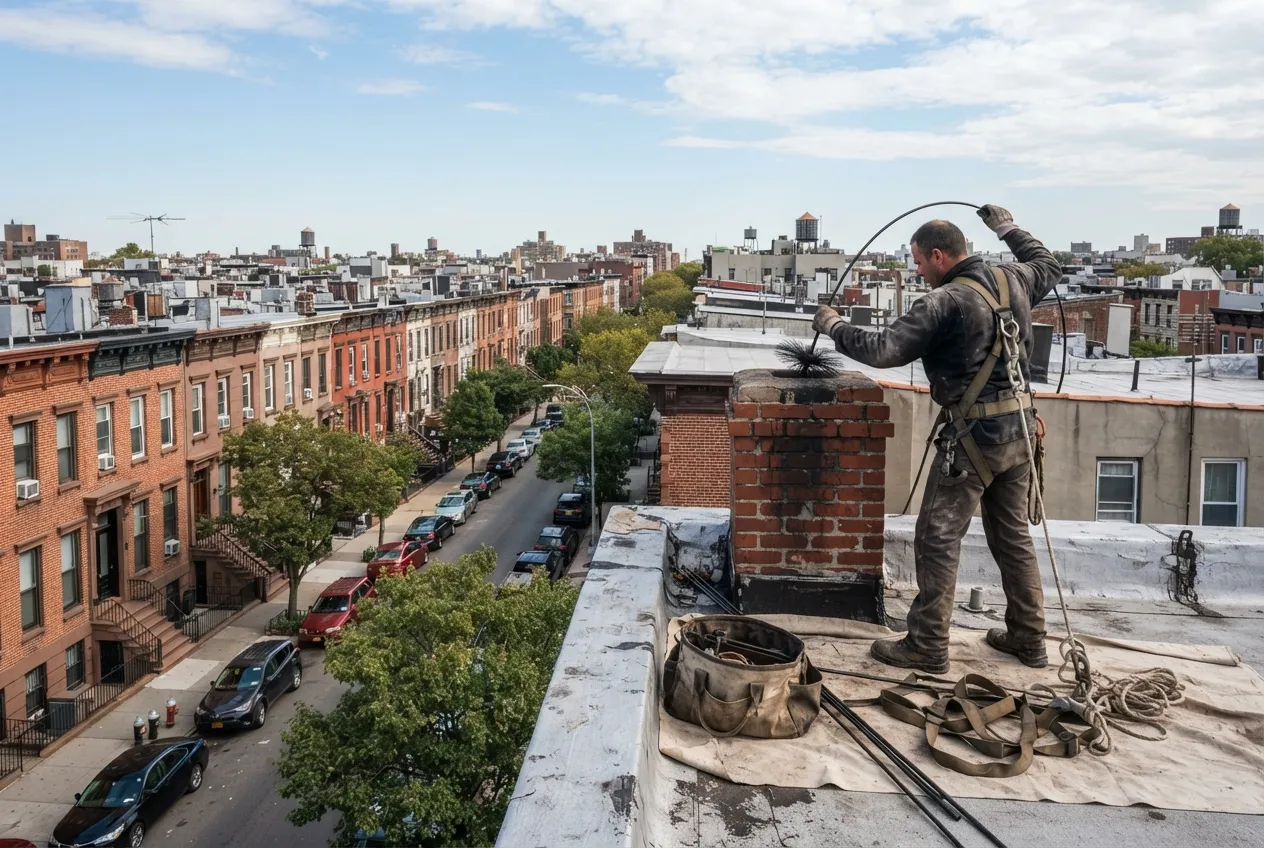
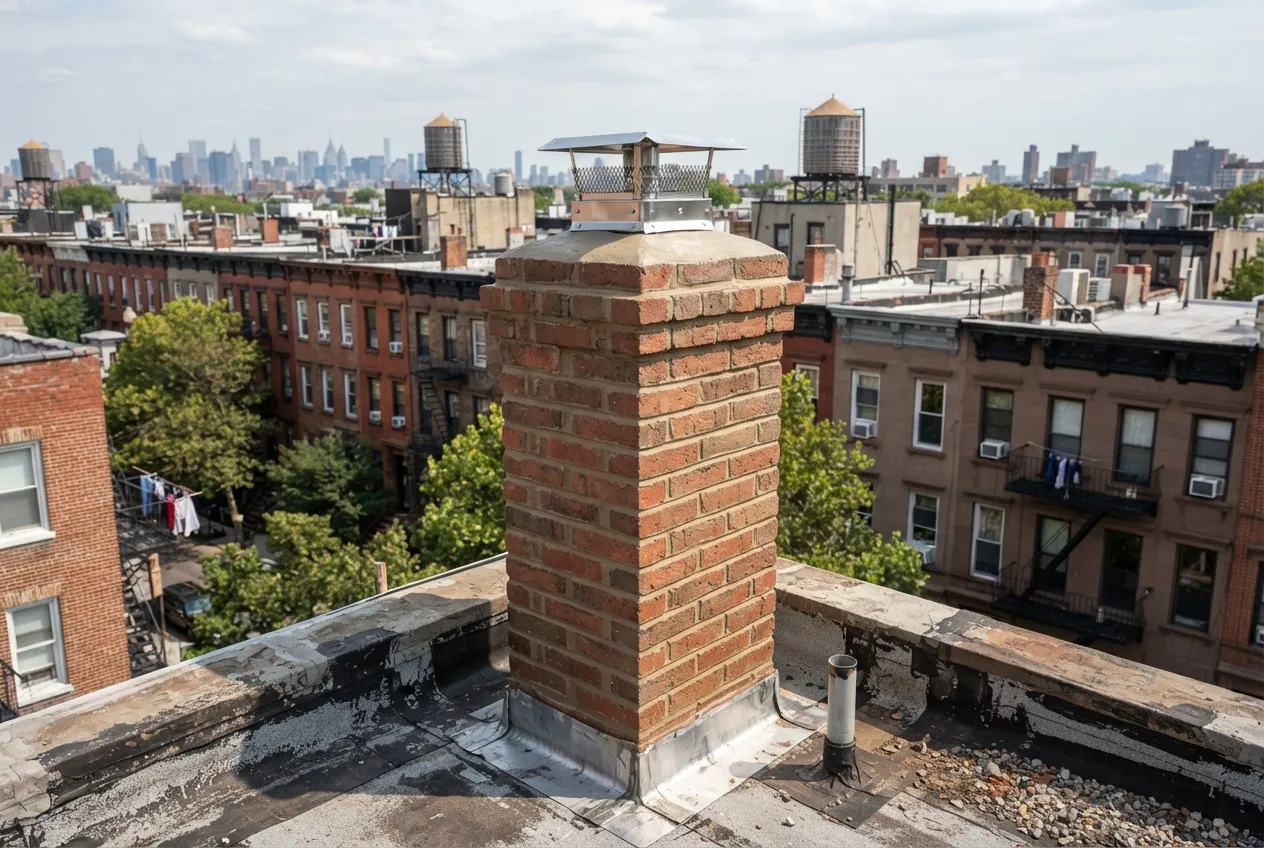
Brick and mortar soak up water. Every rainstorm, snowmelt, and freeze-thaw cycle in a Brooklyn winter pushes moisture into your chimney. Over time that water breaks down the masonry, rusts the damper, and stains the ceilings and walls next to the stack. Chimney waterproofing from ApexHearth stops most of that water at the surface while still letting the brick breathe. Our certified technicians clean and inspect the chimney first, then repair what needs repair. Only after that do we apply a vapor-permeable water repellent made for masonry. We work on row houses, brownstones, detached homes, and small multifamily buildings across Brooklyn and nearby neighborhoods.
Signs you need it
Water damage in a chimney usually builds up slowly. Many owners notice the signs only after a heavy storm or a long wet spell, when the problem has already been developing for a while. If you see any of the following, have the chimney checked before the next round of freezing and thawing.
- White, chalky staining on the brick outside or inside the house, which shows that water is moving through the masonry and leaving salts behind
- Water, puddles, or rust-colored drips in the firebox after rain
- Brick flakes, crumbled mortar, or bits of flue tile landing in the firebox
- A stronger smoke or creosote smell on humid or rainy days, because moisture in the flue makes old deposits smell worse
- Brick faces that are cracking, popping off, or crumbling, especially near the top of the stack
- Water stains or peeling paint on ceilings or walls beside the chimney
- A rusty damper or a firebox that stays damp
What's included
Waterproofing only works on a clean, sound chimney. Sealing over cracks or failed mortar traps the problem inside, so every job starts with an assessment and the prep work it needs.
- Inspection of the chimney exterior, crown, cap, flashing, and flue
- Sweeping the flue so the inspection is accurate and the system is ready to use
- Cleaning the brick surface to remove dirt, loose material, and white salt deposits
- Sealing hairline cracks in the crown with a flexible crown sealant
- Identifying damaged mortar joints, spalled brick, or a broken crown, and repairing them before sealing once you approve
- Checking where the chimney meets the roof and resealing flashing that has separated
- Applying a vapor-permeable masonry water repellent to the full exposed stack
- Checking the chimney cap, and replacing or installing one if it is damaged or missing
- Photos of what we found and a written summary of the work
How we work inside your home and on the roof
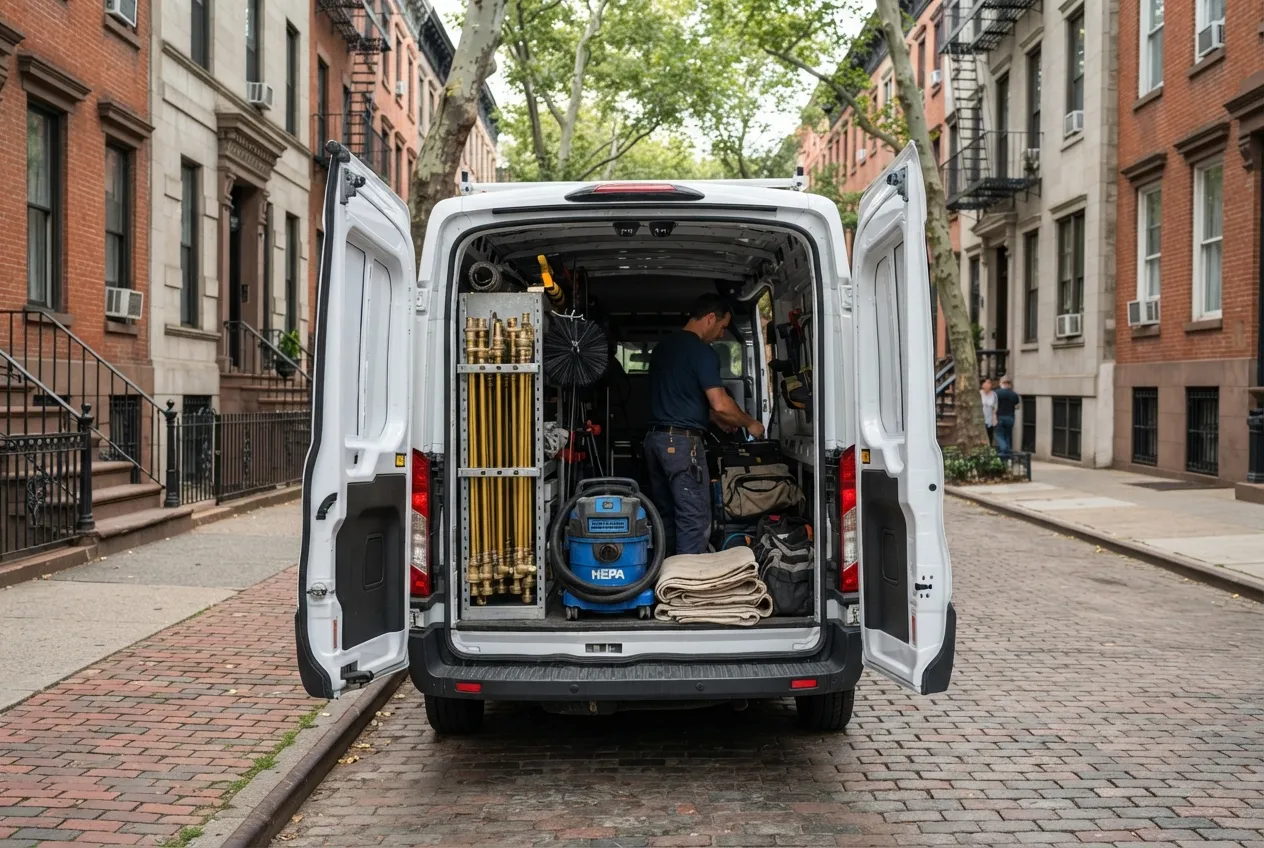
Inside, the crew lays drop cloths from your door to the fireplace and covers the fireplace opening before any sweeping starts. Rotary brushes clean the flue walls, and a HEPA vacuum runs the whole time to keep soot and dust in the chimney and out of your living space. If the condition of the flue is in question, we run a camera up the liner. You can then see any cracks, gaps, or water damage on screen instead of taking our word for it.
On the roof, technicians set ladders and equipment to protect gutters, roofing, and neighboring property. That matters on the shared rooflines common to Brooklyn row houses. Before applying any product, we mask the surrounding roofing, windows, and trim. We apply water repellent only to dry masonry in suitable weather. If rain is coming, we reschedule rather than seal wet brick, because a coating applied to damp masonry does not perform as it should.
The products we use are vapor-permeable, and that is important. The brick can still release moisture vapor from inside, so water does not get trapped behind a sealed surface. Ordinary paint or a non-breathable coating can trap that moisture and make spalling worse.
Time for your annual chimney check?
The standard we follow
The NFPA 211 standard calls for chimneys, fireplaces, and vents to be inspected once a year, and we tie waterproofing into that inspection. Chimney professionals use three inspection levels, and the right level depends on your situation:
Most waterproofing visits start with a Level 1 inspection. Water damage can point to a bigger problem, such as a deteriorated flue or damage hidden behind a wall. If we find signs of one, we explain why a more detailed inspection is warranted before going any further.
- Level 1, when nothing about the system has changed
- Level 2, when the system changes, for example a new appliance or a switch of fuel, or when the home is sold
- Level 3, when a hidden hazard has to be reached by opening part of the chimney or the building
What affects the price
We give you a written quote after we have seen the chimney. The main factors are:
- Chimney height and how hard it is to reach the roof safely
- The fuel the chimney serves, since gas, oil, and wood each affect the flue differently
- Flue size and condition, including whether the liner is cracked or corroded
- How much buildup is on the brick and in the flue, including salt staining and soot
- Whether a camera inspection is needed
- Whether repairs such as repointing, crown work, flashing, or a new cap have to happen first
How a visit works
Here is what to expect from booking to cleanup.
Waterproofing needs dry days, so spring through early fall is the easiest time to schedule it. New York City's heat season starts October 1, and booking before then means the chimney serving your heating system is ready before you need it.
- You book a visit and tell us what you have noticed, such as leaks, staining, or falling debris
- A technician arrives, protects the work area, and inspects the chimney from inside and on the roof
- We show you photos or camera footage and explain what we found
- You approve the scope of work and the quote before any work begins
- We clean, make the repairs you approved, and apply the water repellent in dry weather
- We clean up, walk you through the results, and send a written summary