The short answer
Chimney repair fixes damaged masonry, crowns, flashing, dampers and flue liners so your chimney vents safely and stops letting water in. Common warning signs are lingering smoke or creosote smells, poor draft, brick flakes or water in the firebox, and white staining on the brick. We inspect first, explain what we find, and repair only what the chimney needs.
Brick and mortar take a beating in Brooklyn. Freeze-thaw cycles, wind-driven rain, and years of heating exhaust all wear a chimney down. When it starts to fail, the first clues usually show up inside the house: a smell that won't go away, a stain on the wall, a few flakes of brick on the hearth. ApexHearth's certified technicians find where the problem starts, show you what they see, and repair the chimney so it vents safely and keeps water out. We work on homes across Brooklyn and nearby cities, from rowhouses with shared chimney stacks to detached houses with stand-alone masonry chimneys.
Signs You Need Chimney Repair
Most chimney damage starts small and spreads over a few seasons, usually because water is getting into the masonry. Catching it early often means a smaller repair. If you notice any of the following, it's worth having the chimney looked at before the next time you use the fireplace or heating system.
- A smoke or creosote smell that lingers after a fire, or shows up in humid weather when the fireplace isn't in use
- Poor draft: smoke rolling into the room, or fires that are hard to start and keep going
- Flakes of brick, crumbs of mortar, or pieces of flue tile collecting in the firebox
- White, chalky staining on the brick inside or outside, which means water is moving through the masonry
- Water in the firebox, rust on the damper, or damp spots on walls and ceilings near the chimney
What Our Chimney Repair Includes
Every repair starts with an inspection, because the spot where you see damage isn't always where it begins. A leak in the firebox might come from a cracked crown, loose flashing, or a missing cap. Once we know the cause, the repair can cover any of the following, depending on what your chimney needs.
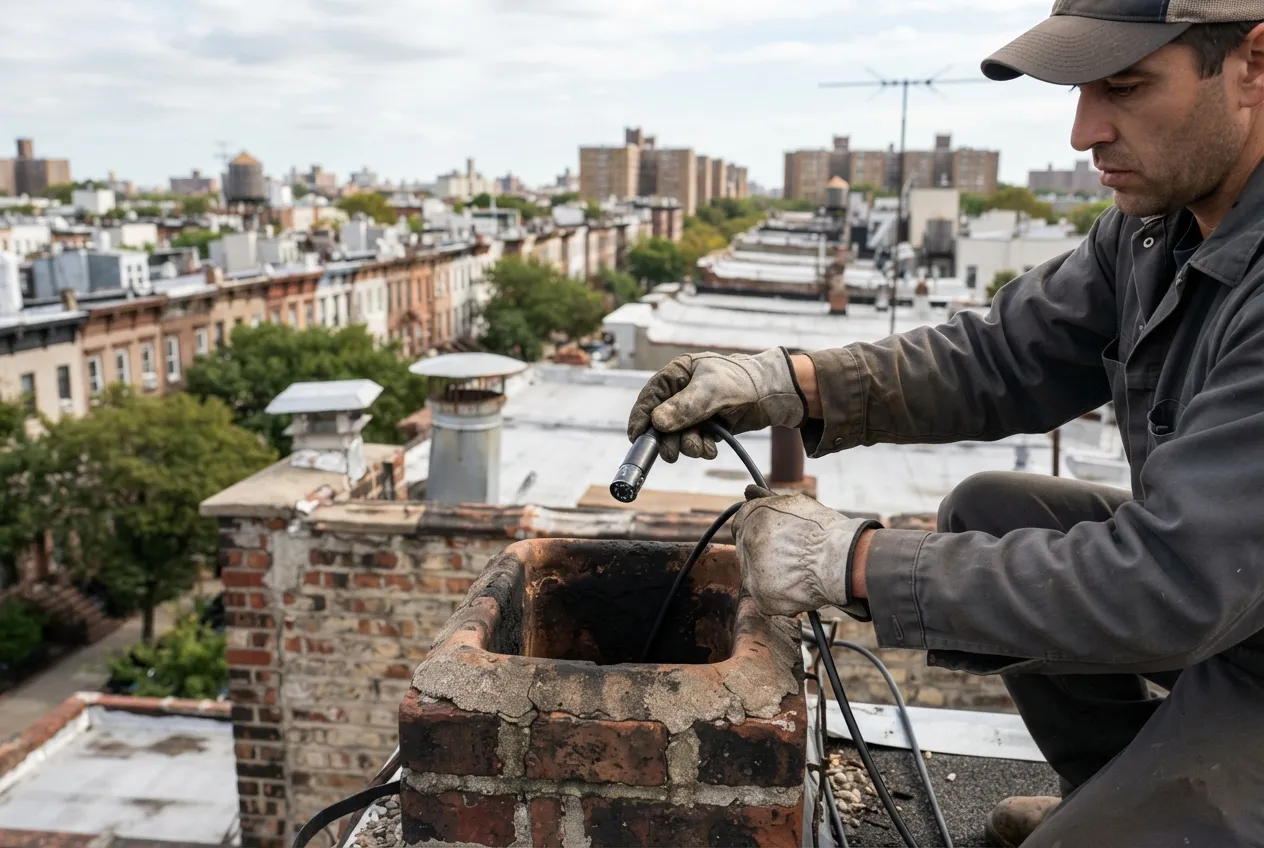
- Inspection of the firebox, damper, smoke chamber and flue, with a camera run through the flue when the liner can't be seen directly
- Exterior check of the crown, cap, flashing and brickwork
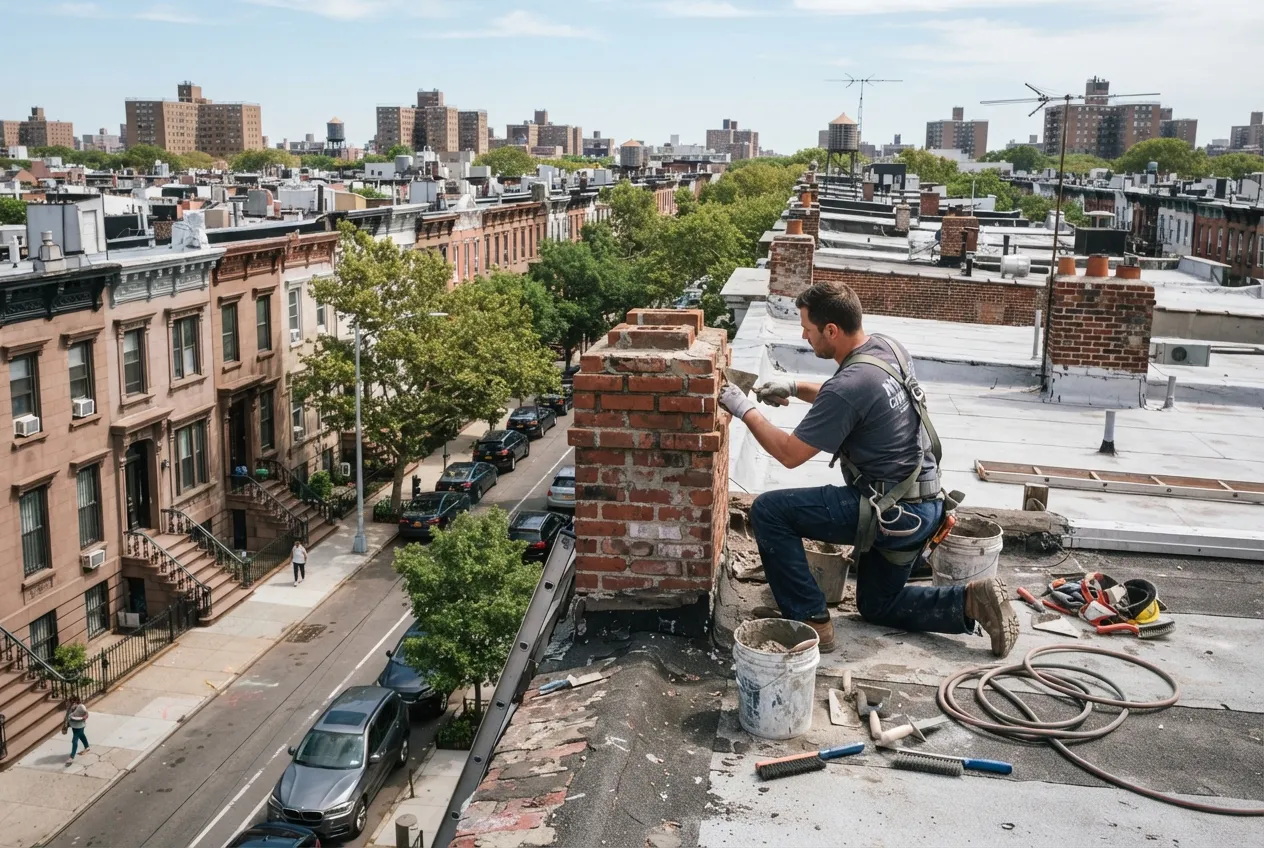
- Repointing of cracked, soft or missing mortar joints
- Replacement of spalled or broken bricks
- Crown repair or rebuild so water drains off the top of the chimney
- Chimney cap installation or replacement to keep out rain, debris and animals
- Flashing repair where the chimney meets the roof
- Damper repair or replacement
- Firebox repair using fire-rated materials
- Flue liner repair, or relining when the existing liner is cracked or isn't suited to your appliance
- Photos and written notes showing what we found and what we fixed
How Our Crew Works Inside Your Home and on the Roof
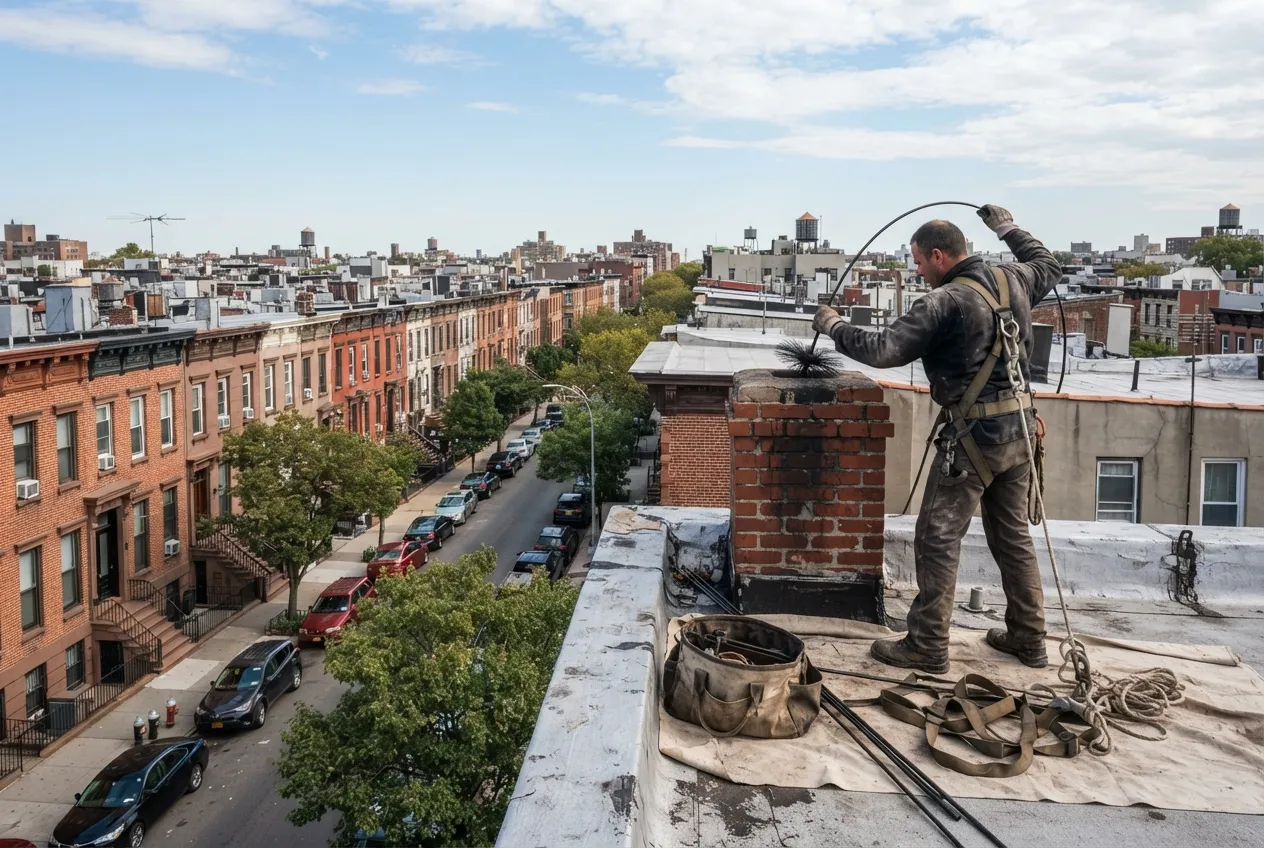
Inside, we lay drop cloths from the entry door to the hearth before any tools come out, and we seal the fireplace opening so soot and mortar dust stay in the chimney. HEPA vacuums run while we work to catch fine dust at the source. When the flue needs to be cleared before we can judge its condition, we use rotary brushes to remove buildup, then run a camera up the flue to check the liner joints and tiles. You can watch the footage with us.
On the roof, we set up safe access, protect the roofing around the chimney, and keep loose materials secured so nothing falls onto the street or a neighbor's property. Mortar and brick debris is bagged and carried out, not left in gutters or on the roof. Before we leave, we vacuum the work area, fold the drop cloths inward, and walk through the finished repair with you.
Time for your annual chimney check?
The Standard We Follow
Our work follows NFPA 211, the national standard for chimneys, fireplaces and vents. It calls for chimneys to be inspected once a year, and it shapes how we decide how far an inspection needs to go.
Chimney professionals use three inspection levels. A Level 1 inspection fits when nothing about the system has changed. A Level 2 inspection is called for when the system changes, such as a new appliance or a switch of fuel, or when the home is being sold. A Level 3 inspection is used when a hidden hazard has to be reached by opening part of the chimney or the building. We'll tell you which level your situation calls for and why.
Fuel changes matter in New York City. When a building converts its boiler from oil to gas, the chimney has to be evaluated as part of the work, and a new liner is often needed. Gas exhaust produces acidic condensate that can corrode a masonry flue that held up fine with oil.
What Affects the Price
Every chimney is different, so we price repairs after we've seen the chimney. You get a written estimate before any repair work begins. These are the main factors:
- Chimney height and how easy it is to reach the roof safely
- Fuel type: wood, gas or oil, which affects the kind of wear and the right liner
- Flue size and the condition of the existing liner
- How much creosote or soot buildup has to be cleared before repairs
- Whether a camera inspection is needed to see inside the flue
- How much masonry, crown, flashing or liner work the chimney actually needs
How a Visit Works
You tell us what you've noticed and what kind of heating or fireplace you have, and we set a time. When the crew arrives, they protect the work area, inspect the chimney inside and out, and explain what they found in plain terms, with photos or camera footage. You get a written estimate and decide what to do. Small repairs can often be done the same day. Larger work, like a crown rebuild or relining, is scheduled as a separate visit.
New York City's heat season runs from October 1 through May 31, when building owners must keep apartments heated to the city's minimums. If you own a multifamily building, plan liner and masonry work so it doesn't leave tenants without heat. Many owners schedule that work before October.
Chimney Repair by city
- Chimney Repair in Marine ParkLocal service & repairs
- Chimney Repair in Mill BasinLocal service & repairs
- Chimney Repair in Bergen BeachLocal service & repairs
- Chimney Repair in FlatlandsLocal service & repairs
- Chimney Repair in MadisonLocal service & repairs
- Chimney Repair in CanarsieLocal service & repairs
- Chimney Repair in MidwoodLocal service & repairs
- Chimney Repair in East FlatbushLocal service & repairs
- Chimney Repair in FlatbushLocal service & repairs
- Chimney Repair in Sheepshead BayLocal service & repairs
- Chimney Repair in Manhattan BeachLocal service & repairs
- Chimney Repair in Gerritsen BeachLocal service & repairs