The short answer
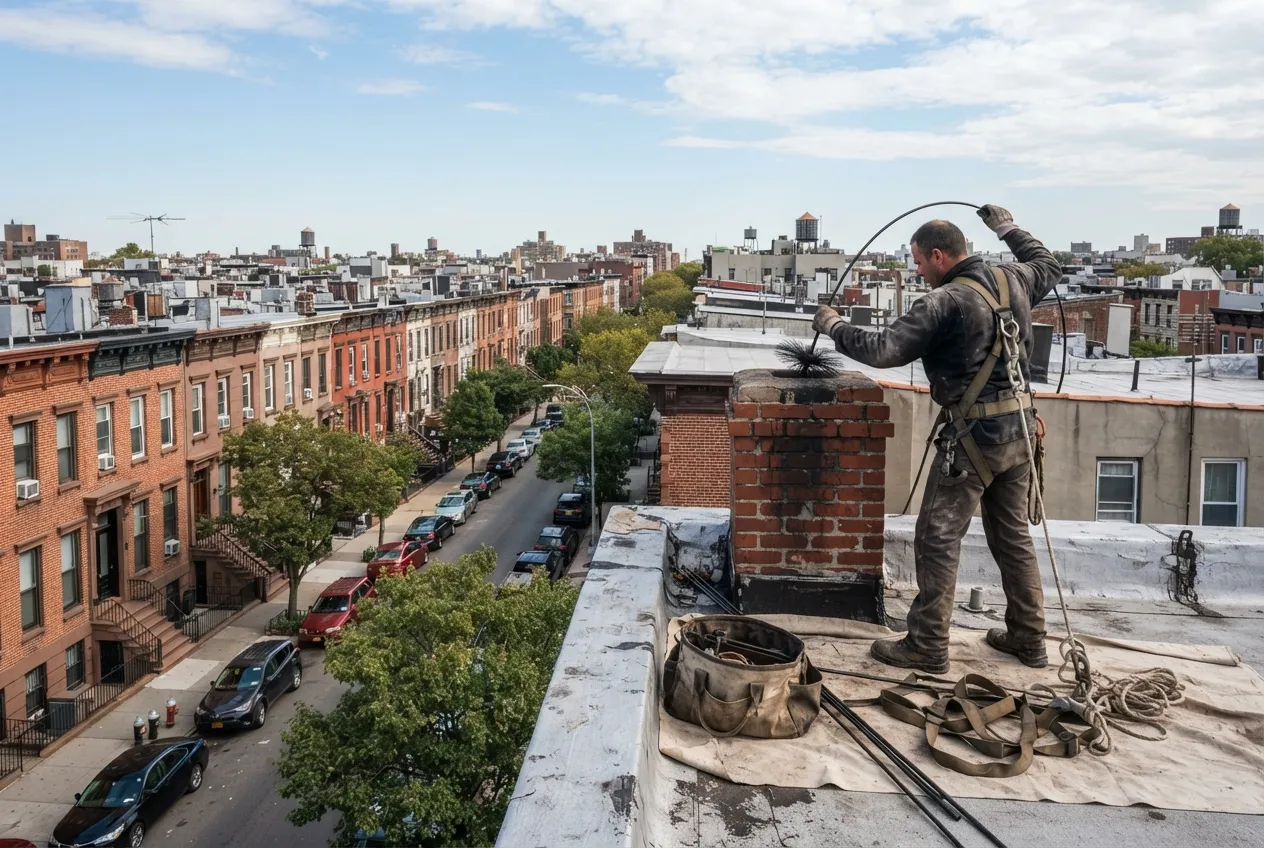
ApexHearth repairs chimneys in East Flatbush, from repointing and crown replacement to flashing, caps and new flue liners. We start with an inspection to find the cause, then explain which repairs matter for safety and which can wait. When you can, schedule larger work outside the heating season.
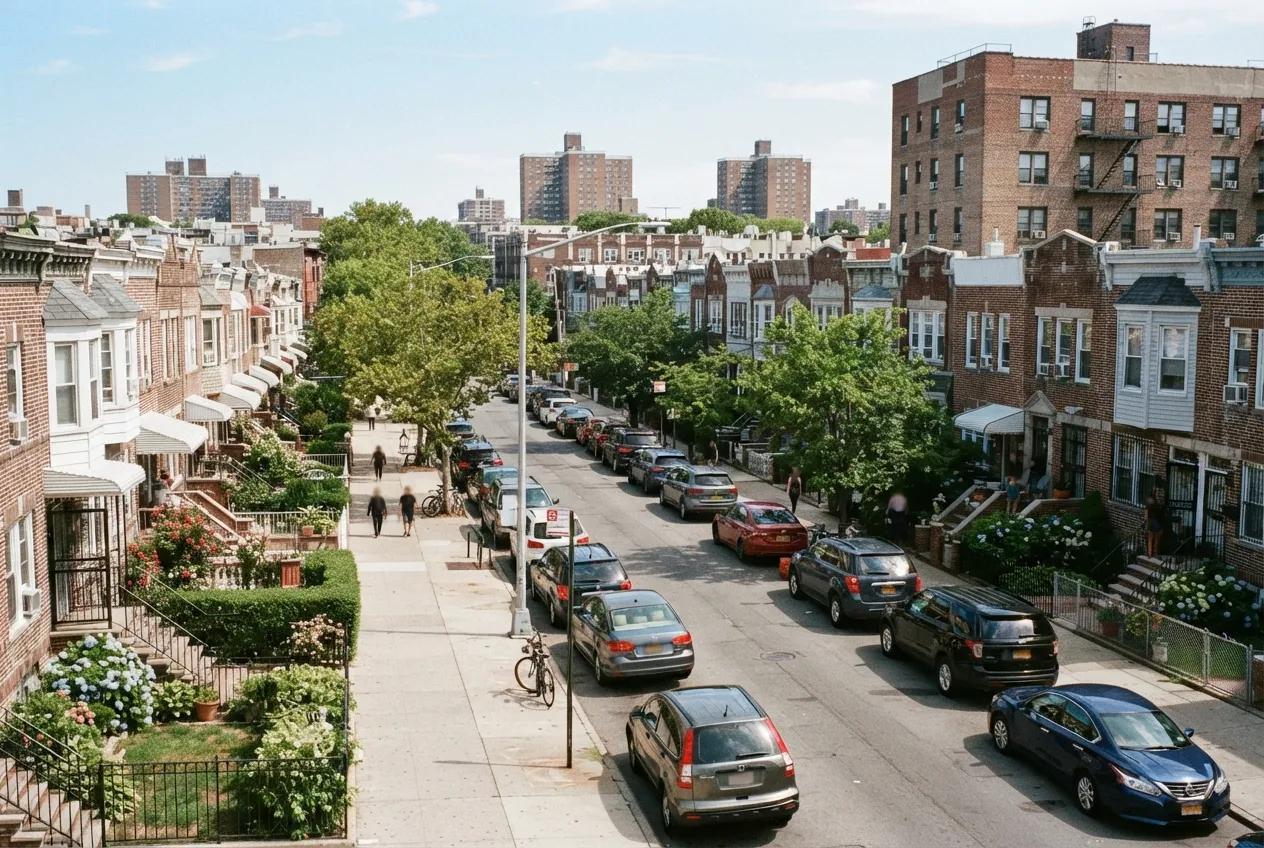
Many homes in East Flatbush were built with brick chimneys that have now been through decades of New York winters. Whether you live in an attached rowhouse, a detached house, or a pre-war apartment building, the chimney takes a beating from rain, freeze-thaw cycles, and the heat and moisture of the appliances venting through it. ApexHearth Chimney Services repairs chimneys across East Flatbush, and our Brooklyn office is about two miles away, so it's easy for us to get a certified technician to your home. This page explains what typically goes wrong, how we figure out the right repair, and when to schedule it.
Chimney Problems We See in East Flatbush Homes
Most chimney damage starts small. Water gets into a hairline crack, freezes, expands, and widens the gap. Over a few seasons that turns into loose brick, stains on interior walls, or debris falling into the firebox or the boiler connection. On rowhouses, chimneys are often shared or closely spaced along the roofline, so a problem on one chimney can affect the neighbors' roof and walls too.
Watch for brick fragments on the roof or in the yard, white staining on the outside of the chimney, water marks near the chimney inside the house, or a musty smell from the fireplace. Any of these is a good reason to have the chimney looked at before winter.
- Cracked or crumbling mortar joints that need repointing
- Spalling brick, where the face of the brick flakes or pops off
- A cracked or eroded chimney crown that lets water into the masonry
- Missing or rusted chimney caps that let in rain, birds and squirrels
- Failed flashing where the chimney meets the roof, a common cause of ceiling leaks
- Cracked, gapped or corroded flue liners
Oil-to-Gas Conversions and Flue Liners
Many older Brooklyn homes and apartment buildings originally heated with oil. When a New York City building converts its boiler from oil to gas, the chimney has to be evaluated as part of the work. A new liner is often needed, because gas exhaust produces acidic condensate that can corrode a masonry flue from the inside.
If your building has already converted, signs of a liner problem include crumbling material at the base of the chimney, rust stains, or damp spots on walls next to the flue. If you're planning a conversion, bring us in early. That way the chimney work fits into the boiler timeline instead of holding it up.
How We Diagnose the Right Repair
We start with an inspection rather than a guess. The NFPA 211 standard calls for chimneys, fireplaces and vents to be inspected once a year, and chimney professionals use three inspection levels. A Level 1 inspection fits when nothing about the system has changed. A Level 2 inspection is used when the system changes, such as a new appliance or a switch of fuel, or when the home is sold. A Level 3 inspection is used when a hidden hazard has to be reached by opening part of the chimney or building.
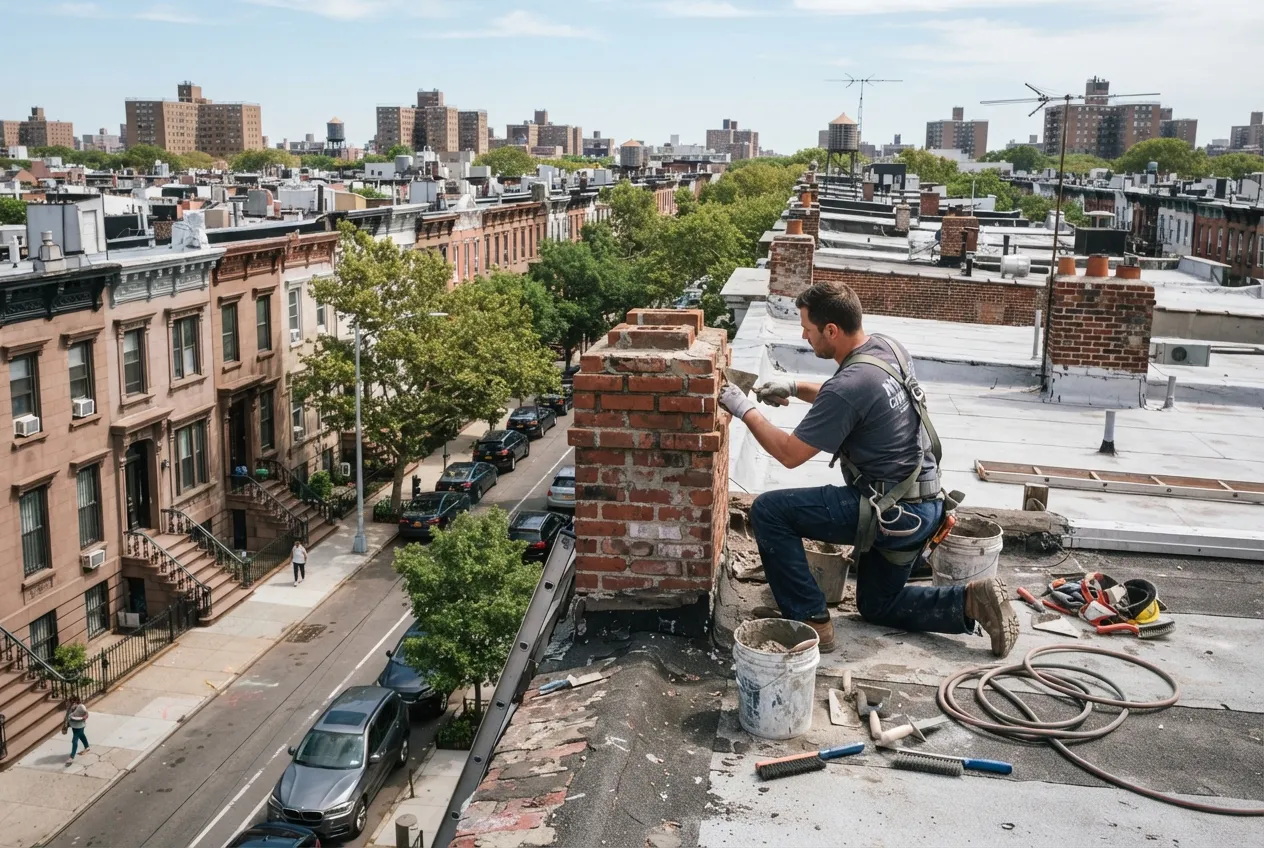
After the inspection, we walk you through what we found. We explain which repairs address safety, which prevent more water damage, and which can wait. Common repairs include repointing, rebuilding the top of the chimney above the roofline, replacing a crown, installing a cap, resealing flashing, and relining the flue.
Time for your annual chimney check?
Plan Repairs Around Heat Season
New York City's heat season runs from October 1 through May 31. During that time, building owners must keep apartments heated to the city's minimum temperatures. For landlords and owners of multi-family buildings in East Flatbush, a chimney that can't safely vent the boiler is more than an inconvenience. Masonry work also goes best in milder weather, because mortar needs reasonable temperatures to cure properly.
Late spring and summer are the easiest times to schedule larger repairs like rebuilds and relining. If you find a serious problem in the middle of winter, stop using the appliance and contact us. Serious problems include a blocked flue, a fallen piece of liner, or smoke or exhaust backing up into the home. Make sure working carbon monoxide alarms are installed in the home.
Serving East Flatbush and Nearby Neighborhoods
We work throughout East Flatbush in ZIP code 11203. We also handle chimney repair in nearby Flatlands, Flatbush, Canarsie, Marine Park and Mill Basin. Your home might be a brick rowhouse, a detached house, or a pre-war apartment building with a tall masonry chimney. Either way, our certified technicians will explain what your chimney needs in plain terms before any work begins.
More services in East Flatbush
- Chimney Sweep in East FlatbushLocal service & repairs
- Chimney Inspection in East FlatbushLocal service & repairs
- Air Duct Cleaning in East FlatbushLocal service & repairs
- Chimney Liner Installation in East FlatbushLocal service & repairs