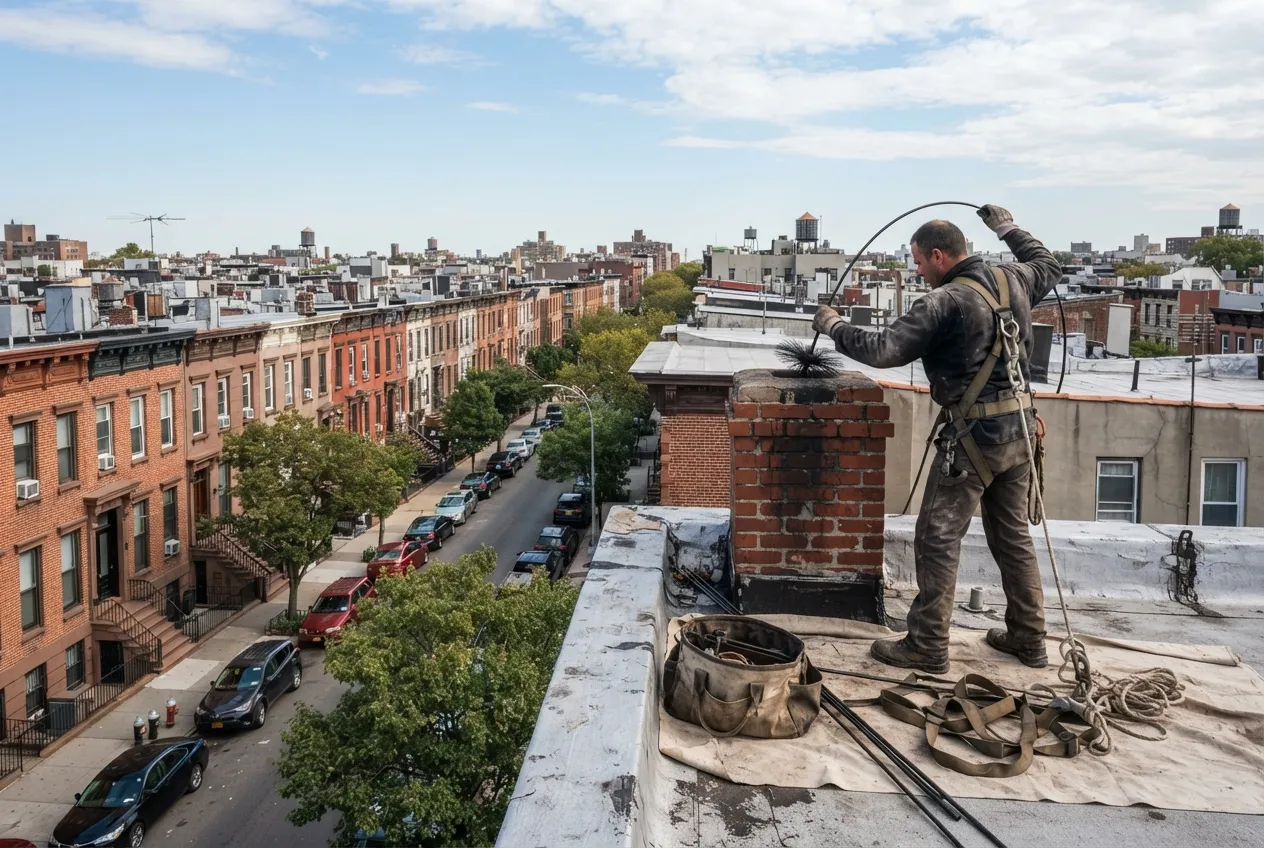
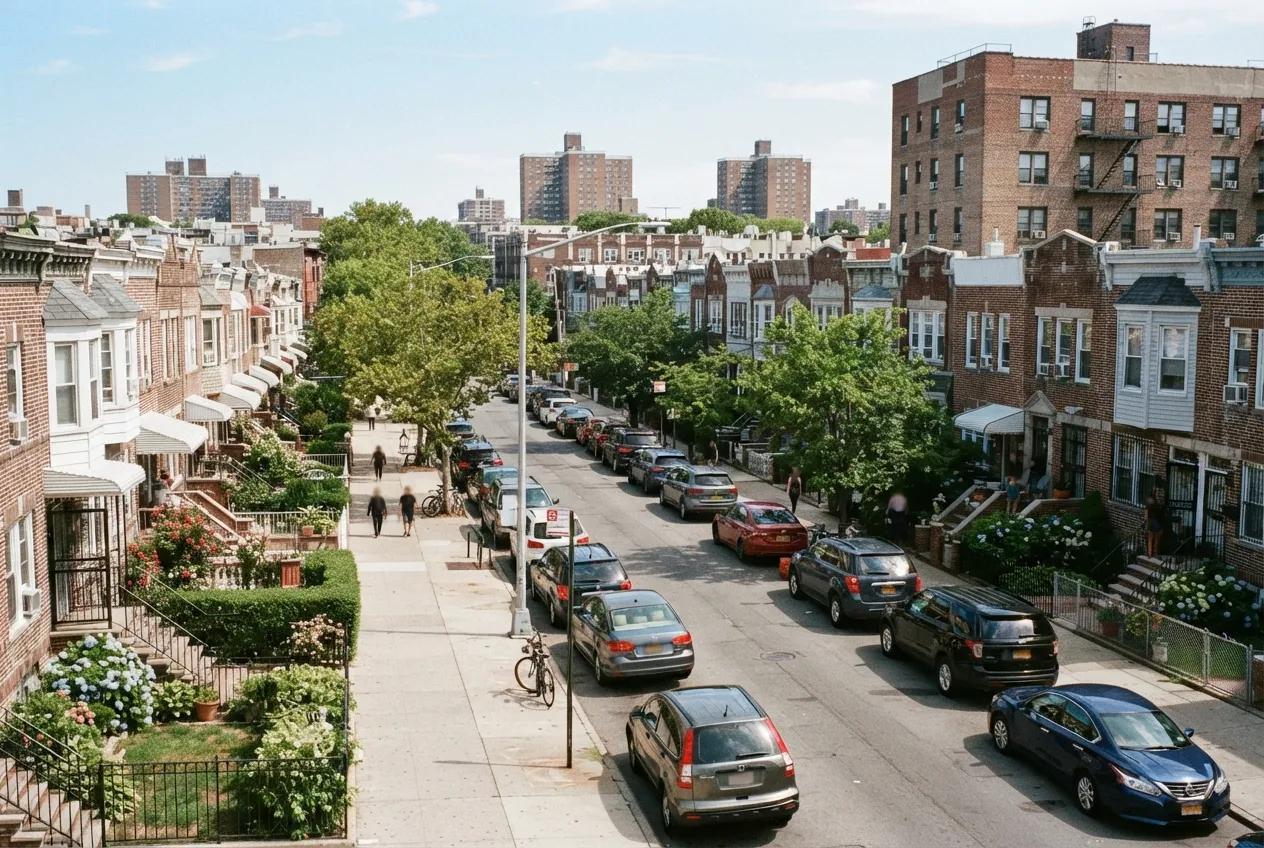
The short answer
A new chimney liner is usually needed when the existing flue is cracked or deteriorated, or when a boiler or furnace is converted from oil to gas, because gas exhaust creates acidic condensate that can corrode a masonry flue. ApexHearth's certified technicians inspect the chimney first, recommend a liner sized for your appliance, and install it in East Flatbush and nearby Brooklyn neighborhoods.
Many homes in East Flatbush were built with masonry chimneys that have now served several generations of furnaces, boilers and fireplaces. Over time, the flue inside those chimneys can crack, crumble or corrode, and a damaged flue can let heat, smoke or exhaust gases reach parts of the house they shouldn't. ApexHearth Chimney Services installs chimney liners for rowhouses, detached homes and small apartment buildings across East Flatbush (11203). Our office is about 2 miles south in Brooklyn. This page explains when a liner is needed, what the options are, and how the work fits around your heating needs.
Why Liners Matter in East Flatbush Homes
East Flatbush has a mix of attached rowhouses, detached and semi-detached homes, and pre-war apartment buildings. Many of these buildings have older brick chimneys with clay tile flues, or in some cases no tile lining at all. When those flues crack or the mortar joints wear away, heat and combustion gases can escape into the surrounding brickwork, and in attached homes, toward shared walls.
A liner gives exhaust a sealed, correctly sized path from the appliance to the top of the chimney. That helps the heating system draft properly, keeps acidic moisture off the masonry, and makes the chimney easier to inspect and clean in the years ahead.
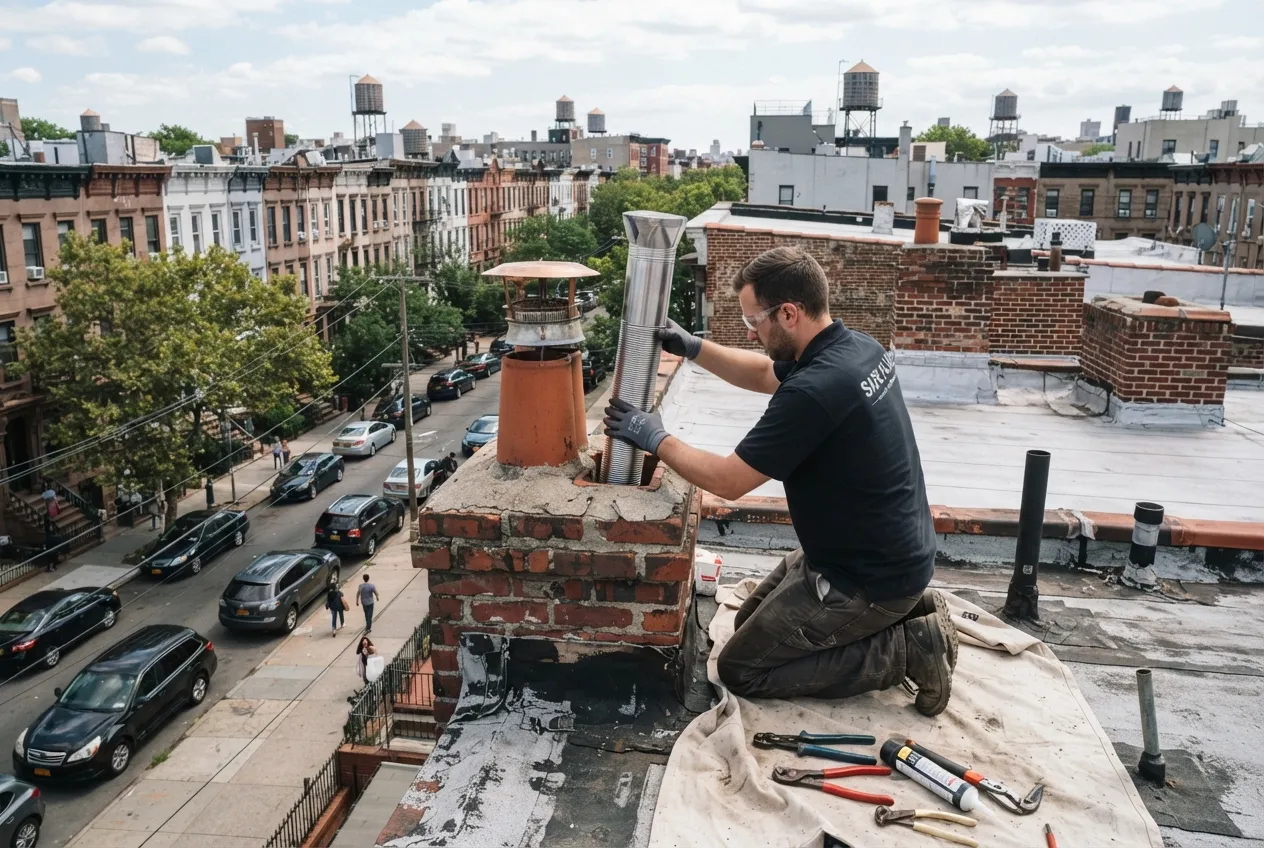
Oil-to-Gas Conversions and Your Chimney
Many East Flatbush owners have switched their boilers from heating oil to natural gas. When a New York City building converts from oil to gas, the chimney has to be evaluated as part of the work, and a new liner is often needed. Gas exhaust produces acidic condensate, and over time that moisture can eat into a masonry flue that was built for oil.
If you are planning a conversion, it helps to have the chimney evaluated early so the liner can be scheduled alongside the boiler work instead of holding it up. If your conversion is already done and the chimney was never looked at, an inspection is a sensible next step.
Signs Your Chimney May Need a New Liner
Some liner problems are only visible with a camera inspection, but there are warning signs homeowners can watch for:
- Pieces of clay tile, flakes or crumbled mortar collecting at the base of the chimney or cleanout
- White staining or damp patches on the chimney, inside or outside
- Water collecting at the bottom of the flue during the heating season
- A boiler, furnace or water heater that has trouble drafting, or exhaust odors near the appliance
- A recent or planned change of fuel or appliance
- A chimney fire, even a small one, that may have cracked the flue tiles
Time for your annual chimney check?
Liner Options We Install
The right liner depends on what is venting into the chimney, the shape and condition of the flue, and the layout of the house. For most gas and oil heating appliances, we recommend a stainless steel liner sized to match the appliance's output. Stainless steel handles acidic condensate well and can be fed down flues that are not perfectly straight, which is common in older Brooklyn chimneys.
Wood-burning fireplaces have different requirements, and the liner has to be matched to the size of the fireplace opening. Where a chimney serves more than one appliance, we look at whether each one needs its own flue. We will explain the options that fit your chimney and why we recommend one over another.
How Liner Installation Works
Every job starts with an inspection. The NFPA 211 standard describes three inspection levels, and a Level 2 inspection is the one called for when the system changes, such as a new appliance or a switch in fuel, or when a home is sold. It includes a camera look inside the flue. If a hidden problem has to be reached by opening part of the chimney or building, a Level 3 inspection may be needed.
Once we know the condition of the flue, our certified technicians clean it, remove any obstructions, install the liner from the top of the chimney, connect it to the appliance and fit a cap. We then confirm the system is drafting properly and walk you through what was done.
Planning Around the Heating Season
New York City's heat season runs from October 1 through May 31. During that time, owners of buildings with tenants must keep apartments heated to the city's minimum temperatures. If you own a multi-family building in East Flatbush, scheduling liner work in the late spring or summer avoids taking the boiler offline when heat is required. If a problem shows up mid-season, we will work with you to keep downtime as short as possible.
Along with East Flatbush, we install liners in Flatlands, Flatbush, Canarsie, Marine Park and Mill Basin.
More services in East Flatbush
- Chimney Sweep in East FlatbushLocal service & repairs
- Chimney Inspection in East FlatbushLocal service & repairs
- Chimney Repair in East FlatbushLocal service & repairs
- Air Duct Cleaning in East FlatbushLocal service & repairs