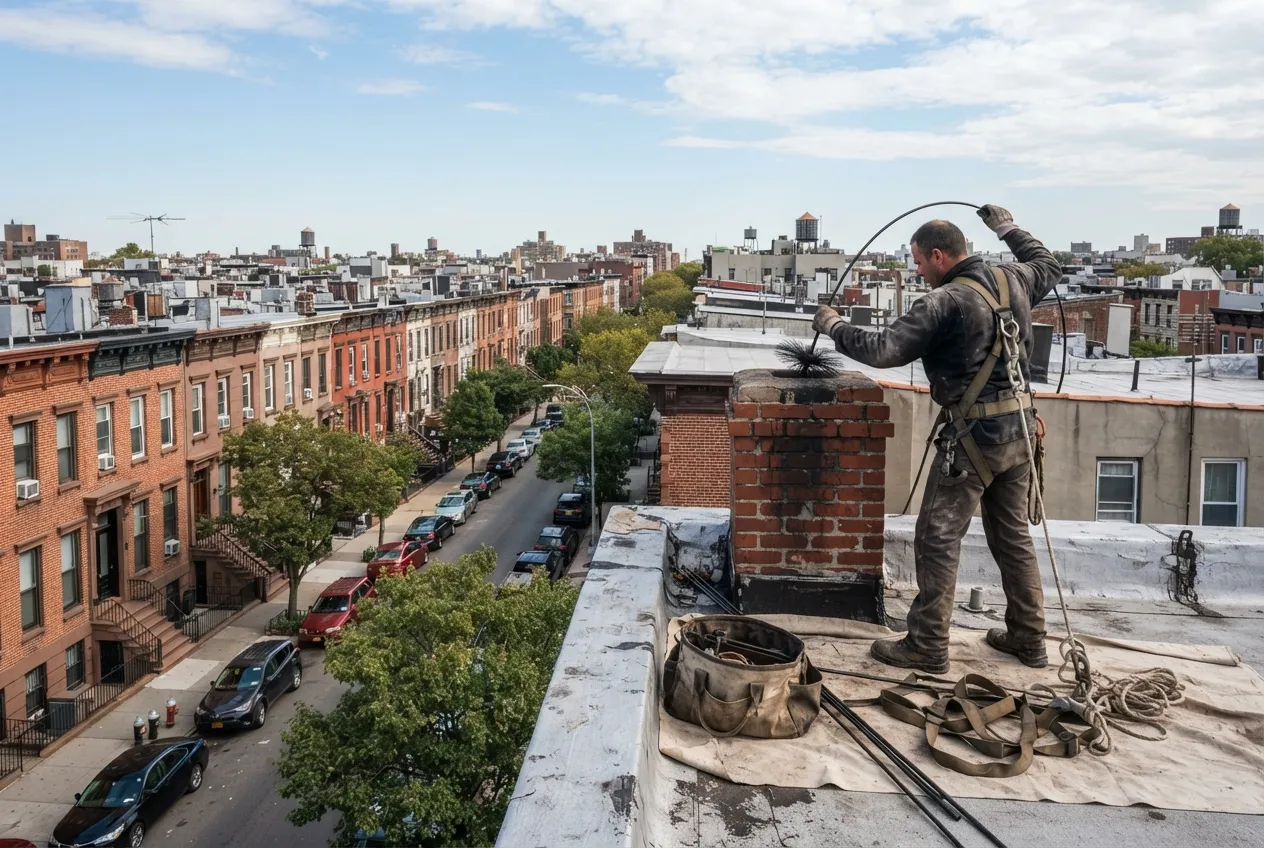
The short answer
Chimney repair in Gerritsen Beach usually involves masonry damaged by moisture, worn crowns, leaking flashing, missing caps, or flue liners that need replacing after a heating change. ApexHearth inspects the chimney first, shows you what it finds, and then repairs the problems so the chimney is safe to use again.
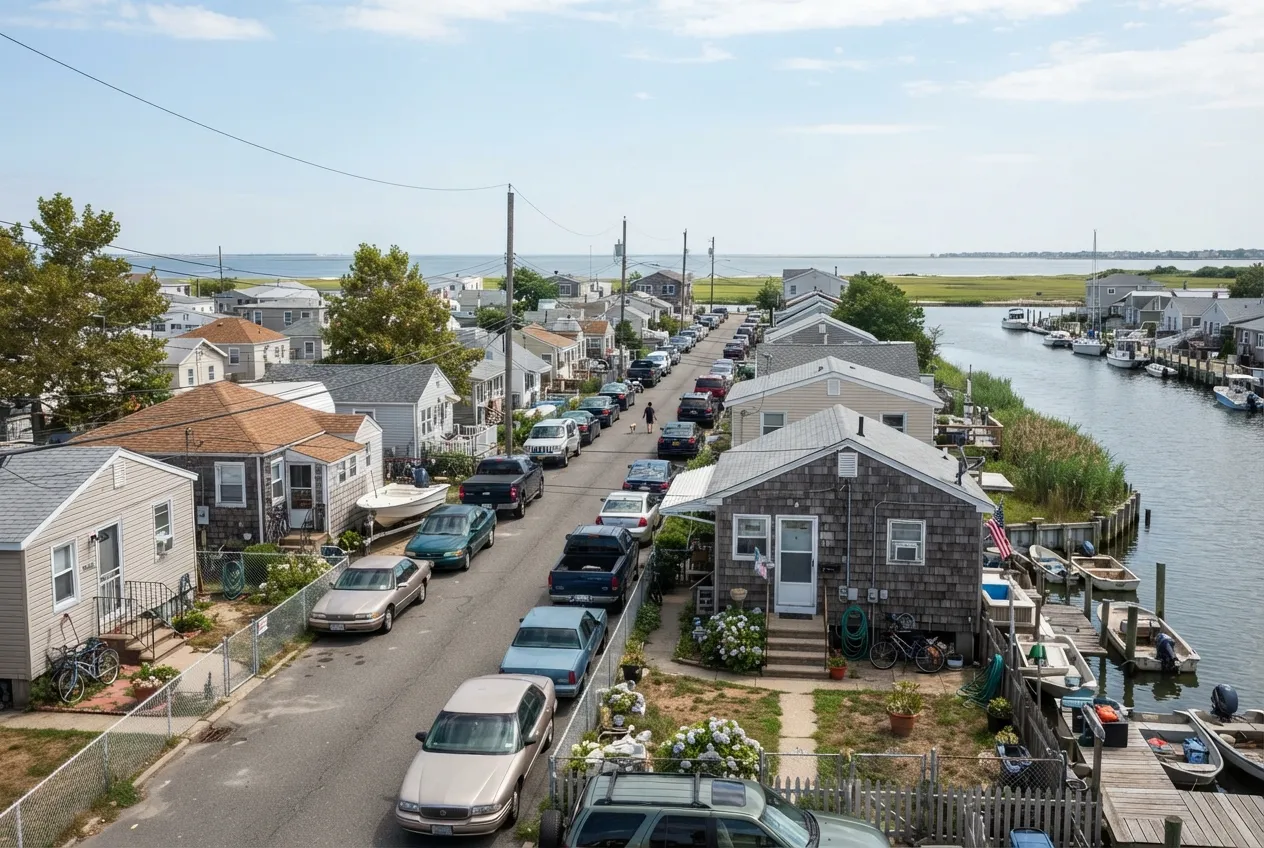
Gerritsen Beach is a waterfront neighborhood in southern Brooklyn (ZIP 11235), made up mostly of small detached homes, bungalows and attached houses on tight lots. Many of these chimneys have spent decades in damp, salty air and hard winter winds. That kind of exposure slowly wears down mortar, crowns and flashing. ApexHearth Chimney Services is based about 2 miles north in Brooklyn, so Gerritsen Beach is close by. Our certified technicians inspect the chimney first, explain what they find, and repair what actually needs fixing.
Why Chimneys in Gerritsen Beach Wear Down
Water is the main thing that damages a masonry chimney. In a neighborhood next to the water, the moisture comes from more than rain. Humid, salty air settles into brick and mortar, and winter freeze-thaw cycles open small cracks wider every year. Wind off the water drives rain sideways into joints and around flashing.
Many homes here are modest in size and were built close together. Their chimneys are often short and exposed above the roofline, and some have been patched several times over the years. Some homes have also had heating systems replaced or roofs redone. That work can leave flashing and flue connections that no longer fit the chimney properly.
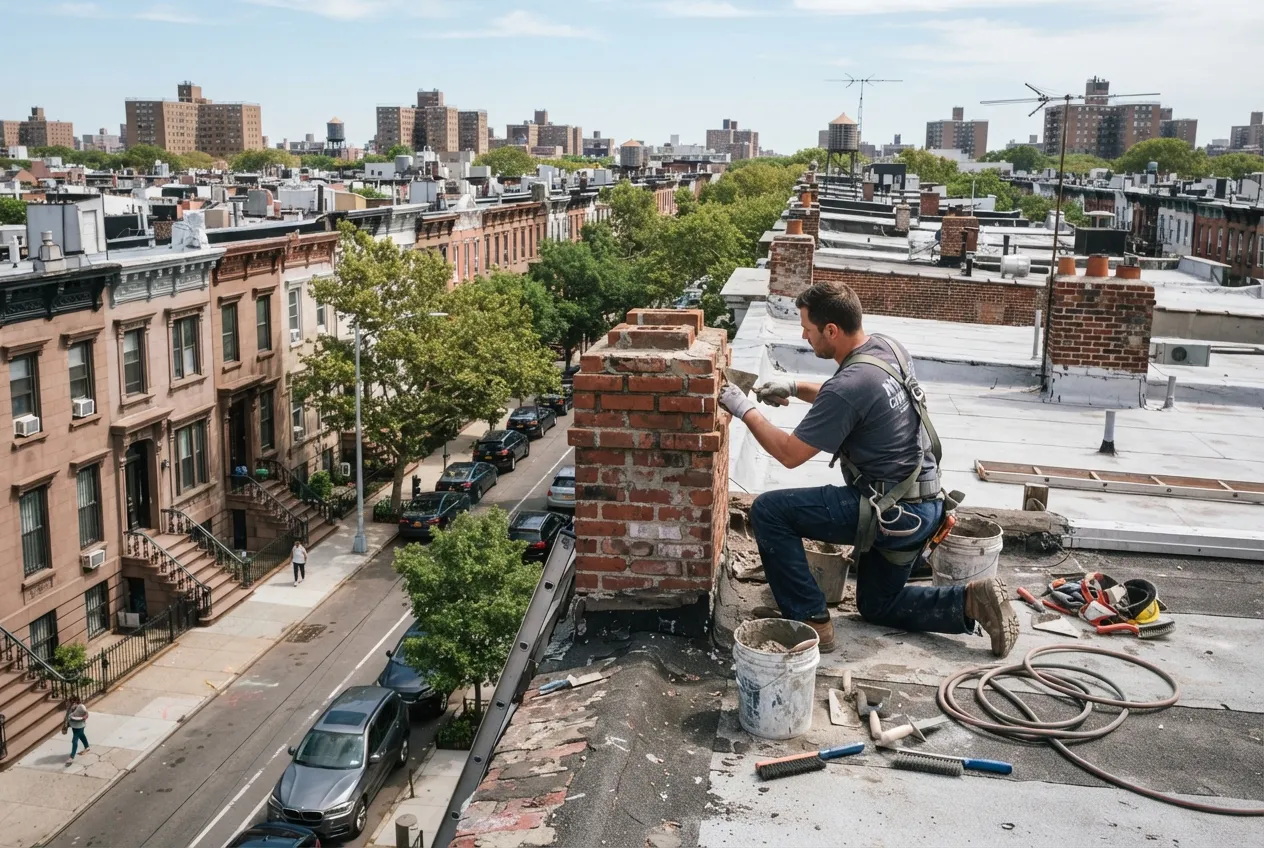
Common Chimney Repairs We Handle
Every repair starts with an inspection. That way we fix the cause of the problem, not just the stain on your ceiling. These are the repairs we see most often on homes in the area:
- Repointing: removing loose, eroded mortar and replacing it with new mortar
- Replacing spalled or cracked bricks, especially near the top of the stack
- Rebuilding or resealing cracked chimney crowns so water runs off instead of soaking in
- Repairing or replacing flashing where the chimney meets the roof
- Installing chimney caps to keep out rain, animals and debris
- Repairing damper and smoke chamber problems that affect how the fireplace drafts
- Relining flues that are cracked, deteriorated or the wrong size for the appliance
Oil-to-Gas Conversions and Flue Liners
Some Brooklyn homes have switched their boilers from oil to gas. When a New York City building makes that conversion, the chimney has to be evaluated as part of the work. A new liner is often needed. Gas exhaust produces acidic condensate, and over time it can corrode an unlined or old masonry flue from the inside.
If you are planning a conversion or have already finished one, we can check the flue and tell you whether it needs a liner. Signs of a problem include crumbling material at the base of the chimney, white staining on the brick, and moisture where the chimney passes through the house.
Time for your annual chimney check?
When to Schedule an Inspection
The NFPA 211 standard calls for chimneys, fireplaces and vents to be inspected once a year. Chimney professionals use three levels of inspection. A Level 1 inspection is for when nothing about the system has changed. A Level 2 inspection is for when something has changed, such as a new appliance or a different fuel, or when the home is being sold. A Level 3 inspection is for when a hidden hazard can only be reached by opening part of the chimney or the building.
New York City's heat season runs from October 1 through May 31. During that time, building owners must keep apartments heated to the city's minimum temperatures. If you own a home with rental units, a chimney problem that shuts down the boiler can become urgent quickly. Scheduling repairs in late spring or summer gives you time to fix things before the heat comes back on.
Nearby Areas We Serve
Besides Gerritsen Beach, we provide chimney repair in the nearby neighborhoods of Sheepshead Bay, Manhattan Beach, Madison, Marine Park and Mill Basin. The homes in these areas range from detached houses to rowhouses and small apartment buildings. In each case, we start with the same careful inspection before recommending any repair.
More services in Gerritsen Beach
- Chimney Sweep in Gerritsen BeachLocal service & repairs
- Chimney Inspection in Gerritsen BeachLocal service & repairs
- Air Duct Cleaning in Gerritsen BeachLocal service & repairs
- Chimney Liner Installation in Gerritsen BeachLocal service & repairs