
The short answer
A Gerritsen Beach chimney sweep removes creosote, soot and blockages from fireplace and heating flues so smoke and exhaust leave your home safely. The NFPA 211 standard calls for a yearly inspection, and many homeowners book the sweep for the same visit, ideally before heat season begins on October 1.
ApexHearth Chimney Services sweeps chimneys for homeowners in Gerritsen Beach, about 2 miles south of our Brooklyn office. Most homes here are smaller detached and attached houses, with some converted bungalows. Many have a fireplace that gets used on winter weekends, a boiler or furnace flue that runs all season, or both. Whatever is connected to your chimney, a sweep removes the soot, creosote and debris that build up inside it, and it gives our certified technicians a close look at the condition of the flue before the cold months set in.
What a Chimney Sweep Covers in a Gerritsen Beach Home
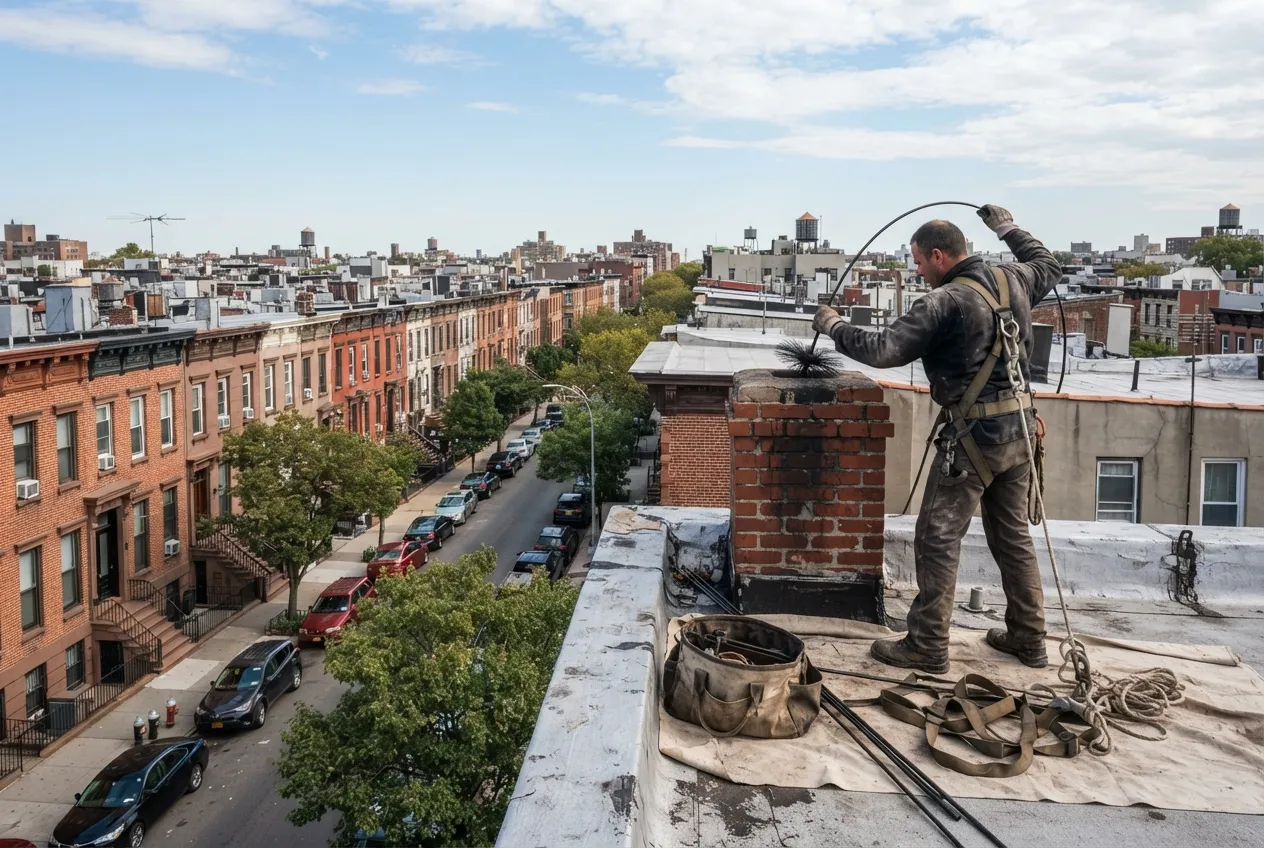
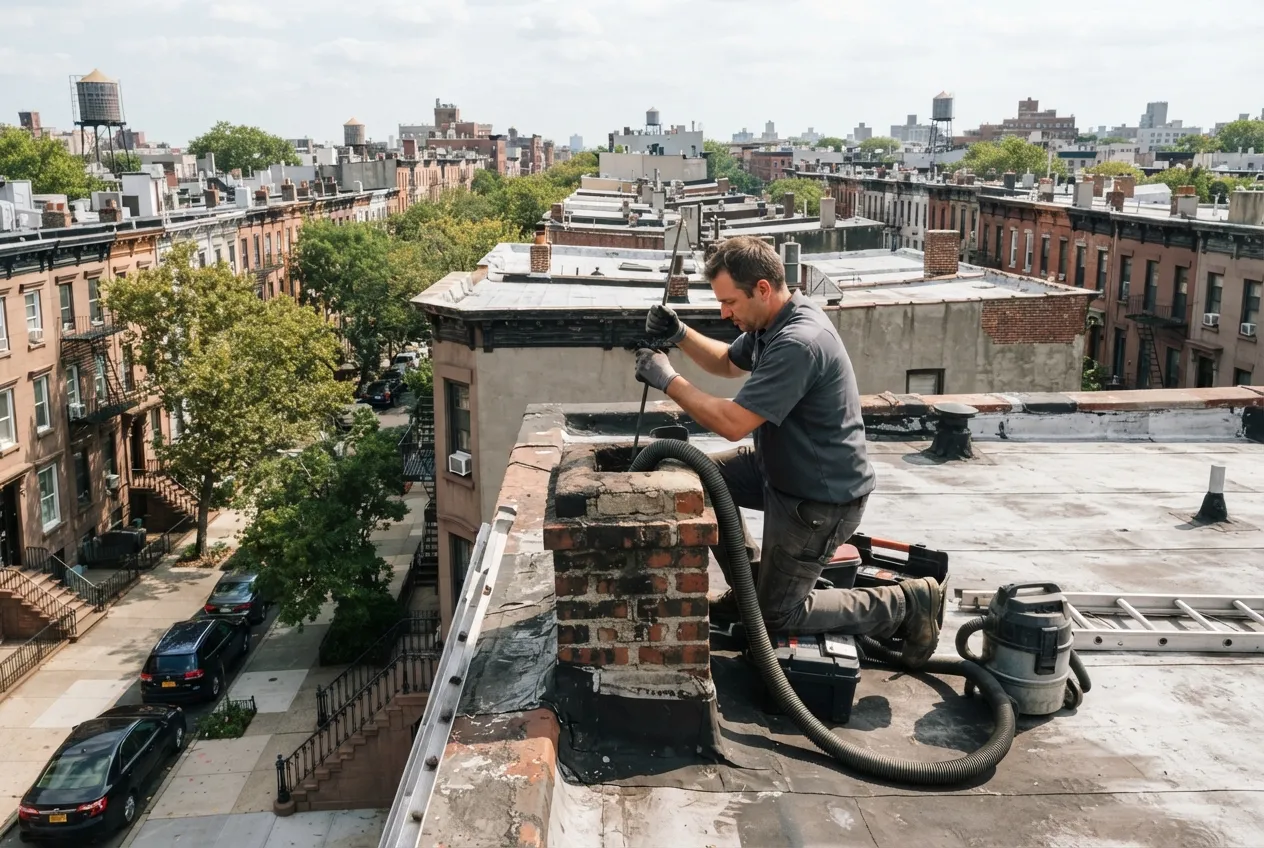
A sweep is more than running a brush up the flue. Our technicians set up drop cloths and a dust-control vacuum before they start, then clean the firebox, smoke chamber and flue with brushes sized to your chimney. On fireplace chimneys we pay close attention to creosote, the tar-like residue left by wood smoke, because thick or glazed creosote can ignite.
On heating flues we look for soot, loose mortar, fallen debris and anything that could restrict the flow of exhaust from your boiler, furnace or water heater. In small, tightly built homes, a partly blocked flue can push exhaust back into living space, so a clear path matters.
- Firebox, damper, smoke shelf and smoke chamber cleaning
- Full flue brushing with dust containment inside the home
- Removal of nests, leaves and fallen masonry
- Check of the chimney cap, crown and damper operation
- A plain-language report of what we found
Inspection Levels and How Often to Sweep
The NFPA 211 standard calls for chimneys, fireplaces and vents to be inspected once a year. Professionals use three inspection levels. A Level 1 inspection fits most yearly visits when nothing about the system has changed. A Level 2 inspection applies when something changes, such as a new appliance or a switch of fuel, or when the home is being sold. A Level 3 inspection is used when a hidden hazard can only be reached by opening part of the chimney or the building.
Whether you need a sweep every year depends on use. A fireplace burned often through the winter usually needs one annually, while a lightly used fireplace may need it less often. The yearly inspection tells you which applies to your home.
Oil-to-Gas Conversions and Chimney Liners
Some Gerritsen Beach homeowners have moved, or are planning to move, from an oil boiler to gas. When a New York City building converts its boiler from oil to gas, the chimney has to be evaluated as part of the work. A new liner is often needed, because gas exhaust produces acidic condensate that can corrode an unlined or poorly lined masonry flue.
If a conversion is on your list, we sweep the old oil flue, inspect its condition and tell you whether a liner is likely to be part of the job. Sweeping first also gives a clear view of the flue walls, which makes the evaluation more accurate.
Time for your annual chimney check?
Timing Your Sweep Around Heat Season
New York City's heat season runs from October 1 through May 31. Your heating flue works hardest during those months, so late summer and early fall are the best times to have it swept and inspected. A problem found in September can be fixed before you depend on the heat. The same problem found in January means repairs in the cold.
If you rent out part of your home, keep in mind that building owners must keep apartments heated to the city's minimum temperatures during heat season. Getting the flue checked early makes it easier to meet that obligation without a mid-winter shutdown.
Signs Your Chimney Needs Attention Now
Don't wait for a scheduled visit if you notice any of the following. Stop using the fireplace or call us before running the heat again.
- A strong smoky or campfire smell in the house, especially on humid days
- Smoke that drifts into the room instead of drawing up the flue
- Black flakes or chunks of creosote falling into the firebox
- Animal noises, nesting material or debris in the fireplace
- Water stains, rust on the damper or crumbling mortar near the chimney
More services in Gerritsen Beach
- Chimney Inspection in Gerritsen BeachLocal service & repairs
- Chimney Repair in Gerritsen BeachLocal service & repairs
- Air Duct Cleaning in Gerritsen BeachLocal service & repairs
- Chimney Liner Installation in Gerritsen BeachLocal service & repairs