The short answer
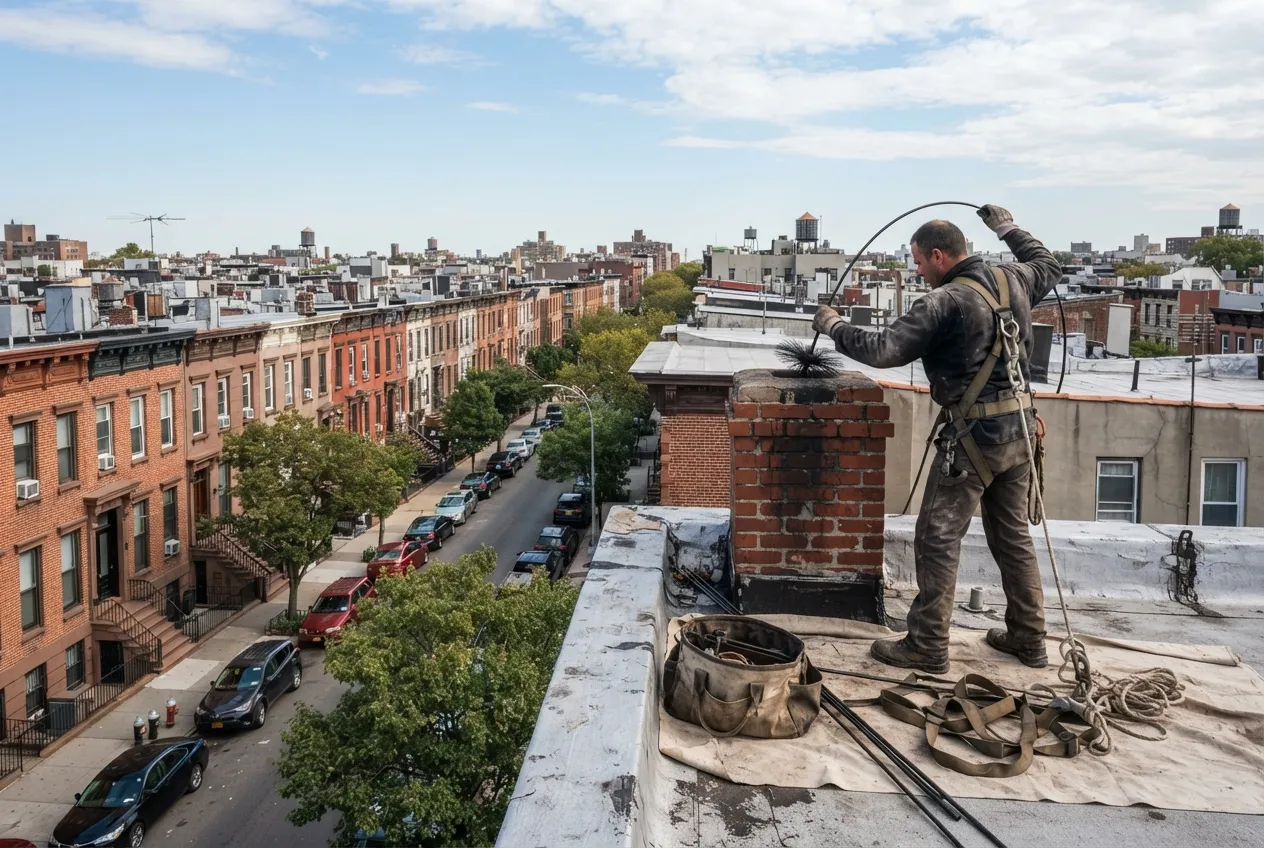
ApexHearth repairs chimneys in Marine Park (11234), including crowns, mortar joints, flashing, caps and flue liners. Every repair starts with an inspection based on the NFPA 211 levels, and we explain what needs fixing now and what can wait.
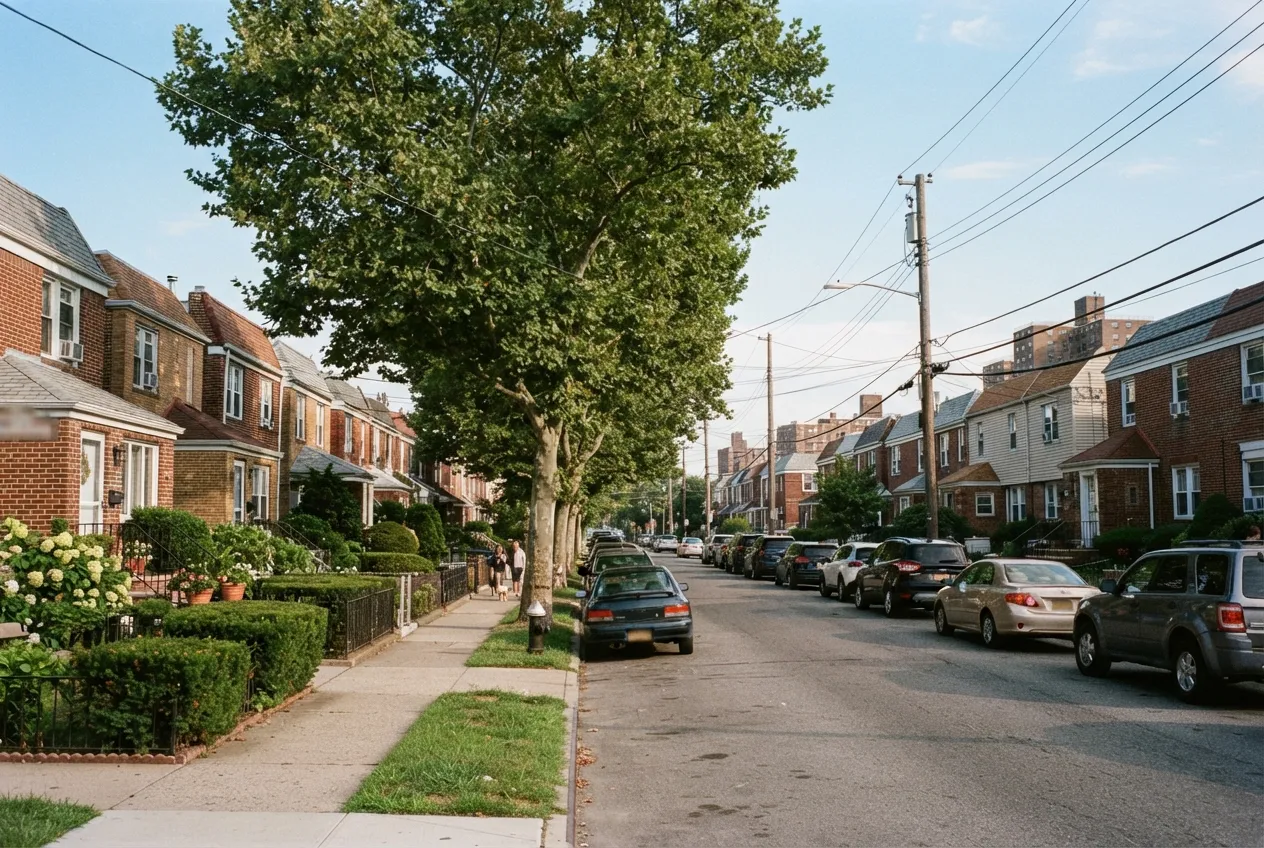
Most chimneys in Marine Park sit on brick detached and semi-detached homes, attached rowhouses and two-family houses that have been through many freeze-thaw winters. When mortar joints open up, a crown cracks or a flue liner starts to fail, water and exhaust go where they shouldn't. ApexHearth Chimney Services repairs chimneys throughout Marine Park (ZIP 11234), about a mile southeast of our Brooklyn office, so scheduling an inspection and any follow-up work is straightforward. Our certified technicians show you what they find before any repair begins.
Common chimney problems in Marine Park homes
Brick chimneys here take the full brunt of south Brooklyn weather: wind-driven rain, snow, and repeated freezing and thawing. Water that soaks into brick and mortar expands when it freezes. Over a few seasons, that pushes joints apart and loosens bricks near the top of the stack. On attached houses, a shared chimney or one that rises against a neighbor's wall can leak into both homes.
- Crumbling or missing mortar joints that let water into the masonry
- Cracked or deteriorated chimney crowns that let water run down inside the stack
- Spalling brick, where the face of the brick flakes or pops off
- Damaged or missing chimney caps that let in rain, debris and animals
- Failed flashing where the chimney meets the roof, a common cause of ceiling stains
- Cracked clay flue tiles or corroded metal liners
Oil-to-gas conversions and flue liners
Many Brooklyn homes that once heated with oil now run gas boilers or furnaces. When a New York City building converts its boiler from oil to gas, the chimney has to be evaluated as part of the work. A new liner is often needed, because gas exhaust produces acidic condensate that can corrode a masonry flue from the inside.
If you are planning a conversion, have the chimney looked at early so any liner work fits into your heating contractor's schedule. If your conversion happened years ago and the flue was never checked, watch for white staining on the outside brick, crumbled tile or debris at the base of the flue, and damp spots on walls near the chimney.
How we approach a chimney repair
Repair starts with an inspection. The NFPA 211 standard calls for chimneys, fireplaces and vents to be inspected once a year, and it uses three levels. A Level 1 inspection covers a chimney when nothing has changed. A Level 2 inspection applies when the system changes, such as a new appliance or a switch of fuel, or when the home is being sold; we typically use a camera to see inside the flue. A Level 3 inspection is for situations where a hidden hazard has to be reached by opening part of the chimney or building.
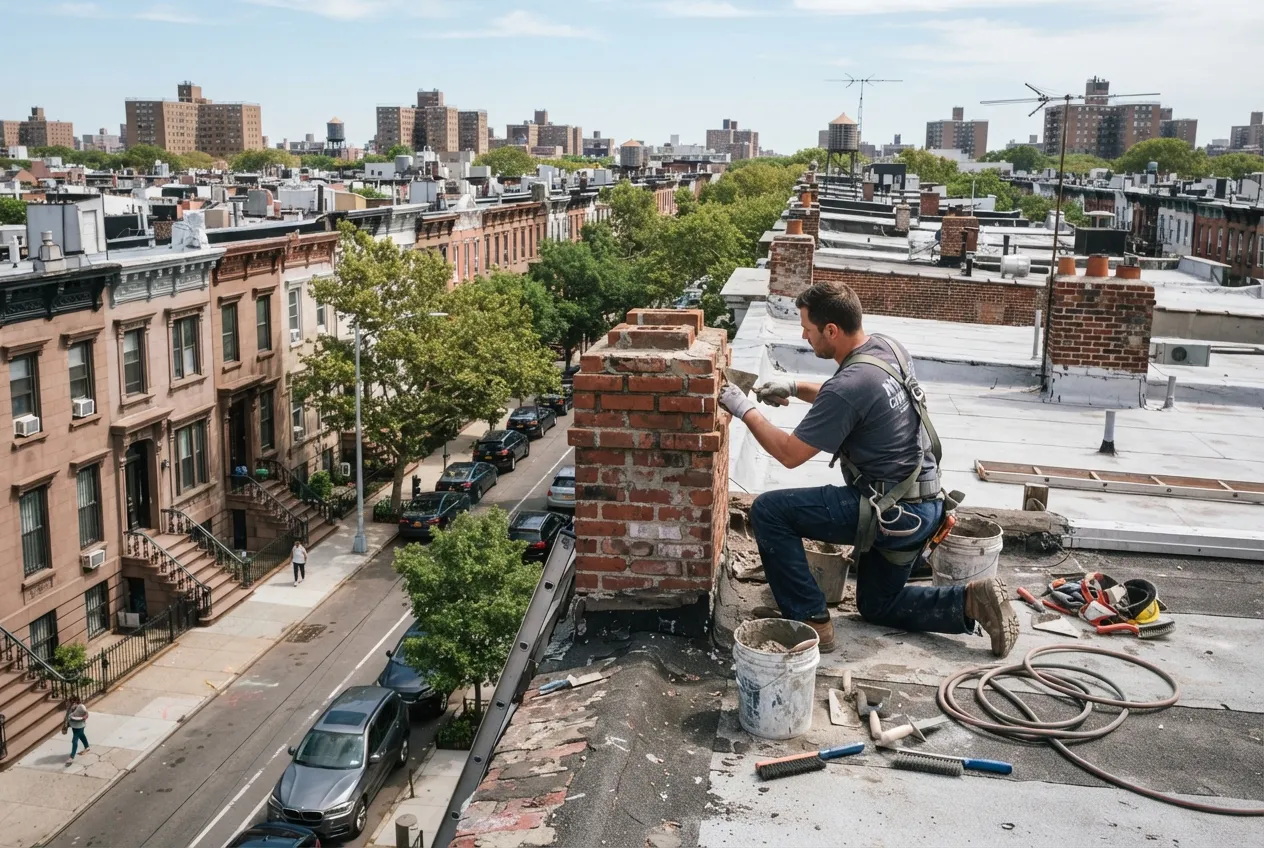
After the inspection, we explain what we found, show you photos and lay out your repair options. Some problems call for a targeted fix, like replacing a cracked crown, resealing flashing or repointing the top courses of brick. Others, like a deteriorated flue, may mean relining the chimney. We tell you which issues affect safety and which can reasonably wait.
Time for your annual chimney check?
Timing repairs around heat season
New York City's heat season runs from October 1 through May 31. If you own a two-family home or small rental building in Marine Park, that is the stretch when you must keep tenants' apartments heated to the city's minimum temperatures, so a chimney problem that shuts down the boiler can't sit. Scheduling inspection and masonry work in late spring or summer gives you room to handle larger repairs before the heat is needed, and mortar and crown work goes best in mild, dry weather.
That said, if you notice smoke backing up, a strong exhaust smell or water coming in around the chimney in the middle of winter, don't wait for a better season. Make sure your carbon monoxide detectors are working, shut down the appliance if you suspect a venting problem, and contact us.
Serving Marine Park and nearby neighborhoods
Along with Marine Park, we repair chimneys in nearby Mill Basin, Bergen Beach, Flatlands, Madison and Canarsie. Housing across these neighborhoods is similar, with plenty of brick detached homes, semi-detached houses and rowhouses, so the problems we find and the fixes they need tend to be similar too.
More services in Marine Park
- Chimney Sweep in Marine ParkLocal service & repairs
- Chimney Inspection in Marine ParkLocal service & repairs
- Air Duct Cleaning in Marine ParkLocal service & repairs
- Chimney Liner Installation in Marine ParkLocal service & repairs