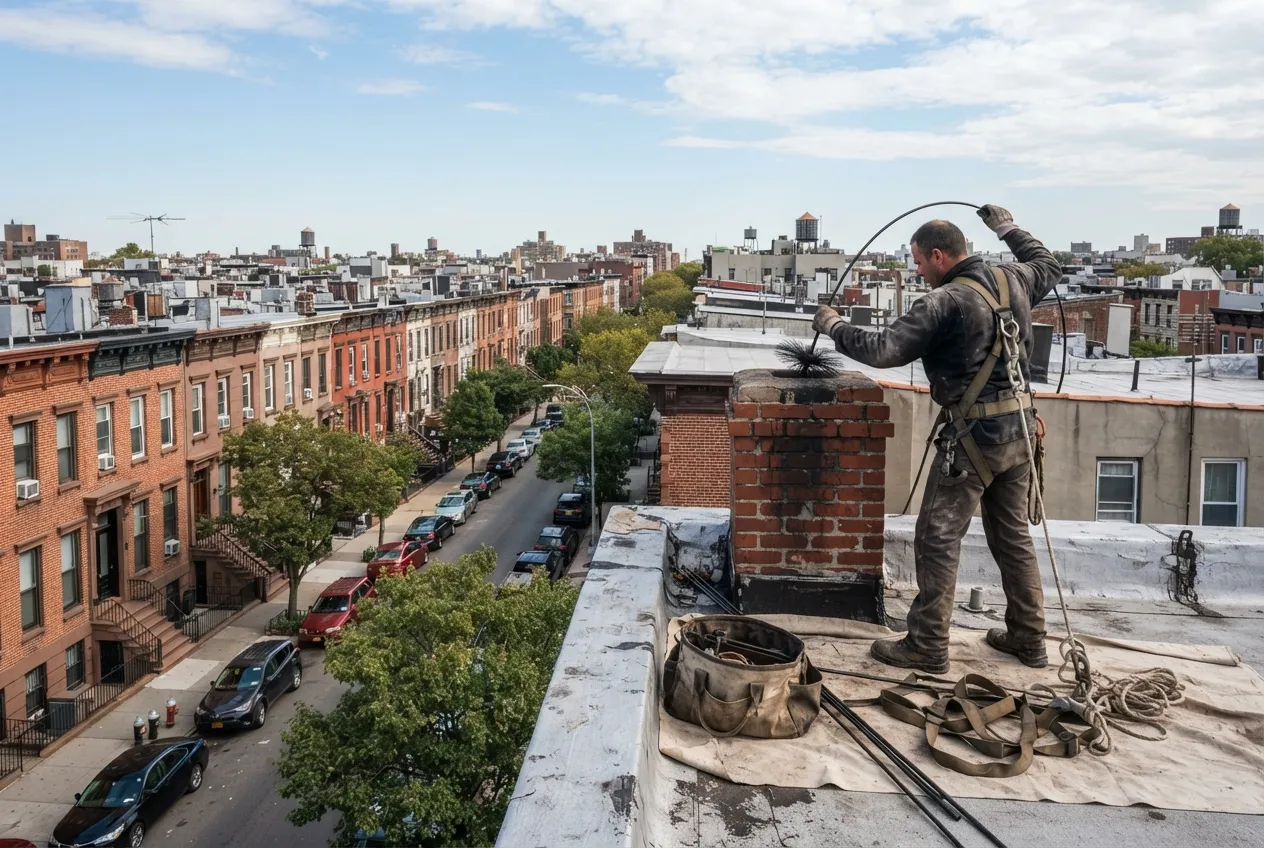
The short answer
Chimney repair in Flatlands usually starts with an inspection to find the cause of leaks, loose brick or draft problems. Common fixes include repointing, crown and cap repair, flashing work and new flue liners. Liners are often needed after an oil-to-gas boiler conversion. Scheduling repairs before New York City's heat season starts on October 1 avoids rushed work in cold weather.
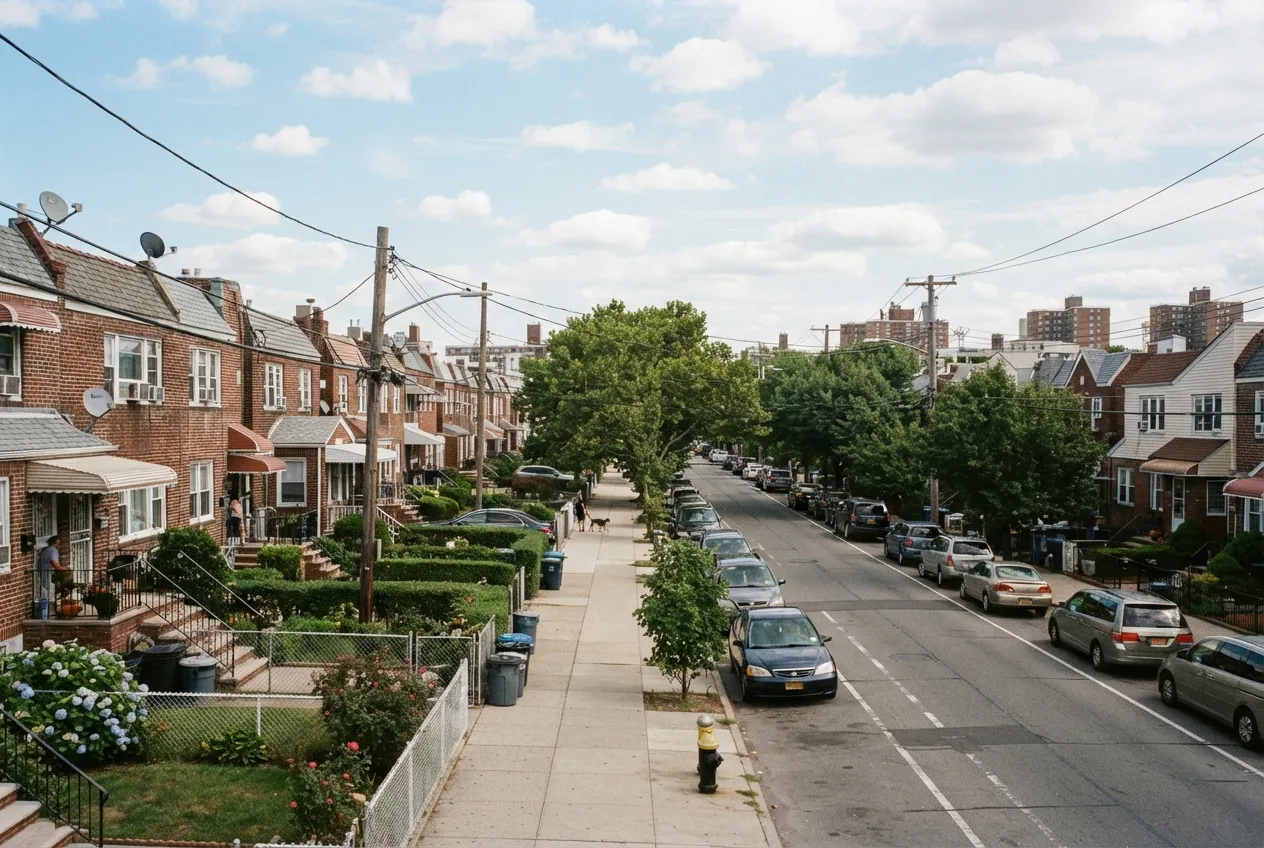
Flatlands has a mix of attached brick rowhouses, semi-detached homes, detached houses and some small apartment buildings. Many of these chimneys have been through decades of freeze-thaw winters, salty coastal air and changes in heating systems. ApexHearth Chimney Services repairs chimneys throughout Flatlands and ZIP code 11210, about a mile north of our Brooklyn office. Our certified technicians start by finding out why a chimney is failing, then fix that cause, whether the problem is crumbling mortar, a cracked crown, leaking flashing or a flue liner that no longer suits your boiler or furnace.
Chimney problems we see on Flatlands homes
Most chimneys in the neighborhood are brick, and brick chimneys tend to wear in the same places. Water is usually behind the damage. It gets into worn mortar joints or a cracked crown, freezes in winter and pushes the masonry apart a little more each year. On attached homes, a leak at the chimney can show up as a stain on a shared wall or a top-floor ceiling, well away from the chimney itself.
Signs it is time for a closer look include:
- Mortar that is sandy, recessed or missing between bricks
- Loose, cracked or flaking (spalling) bricks near the top of the stack
- A cracked or crumbling concrete crown, or a missing chimney cap
- Water stains on ceilings or walls next to the chimney
- White powdery deposits (efflorescence) on interior or exterior brick
- Rust, debris or pieces of clay tile falling into the fireplace or boiler cleanout
Inspection first, then repair
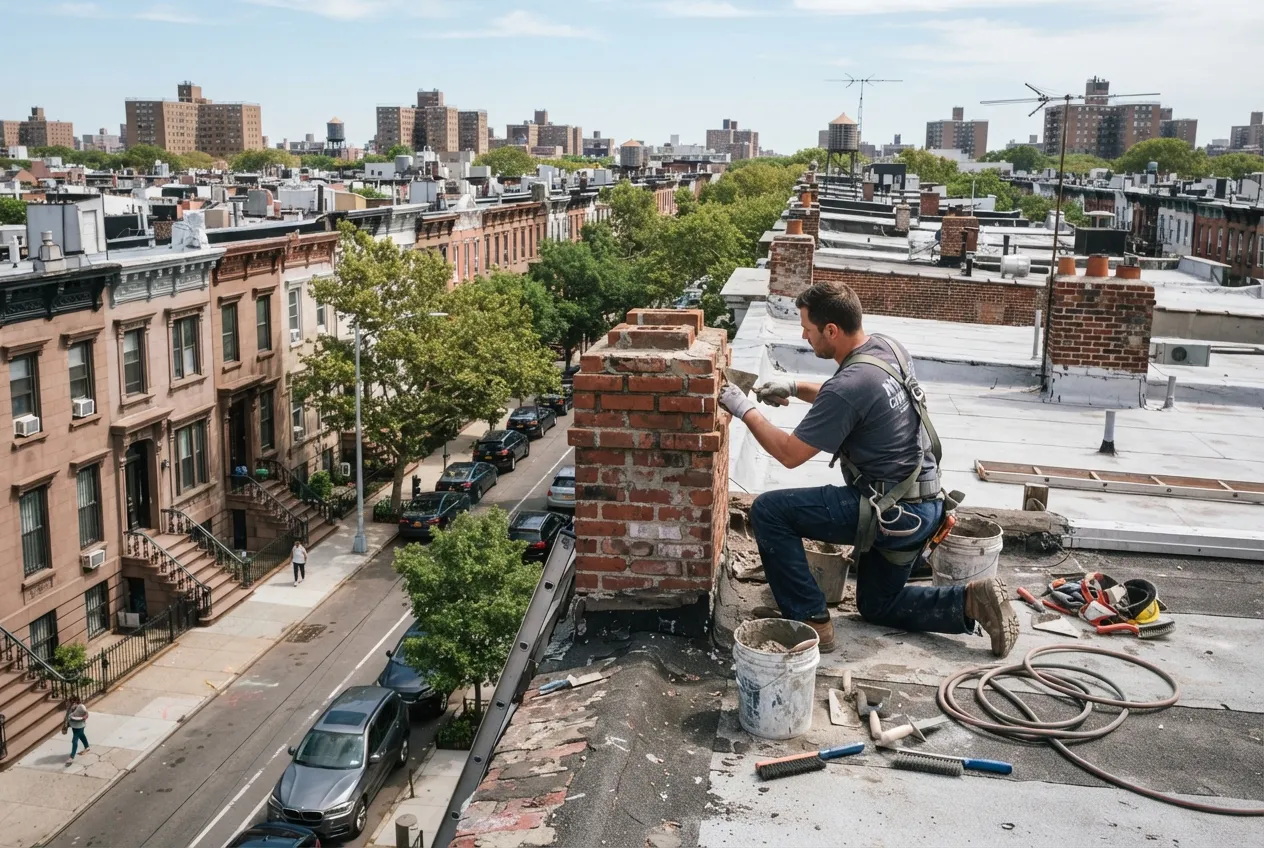
The NFPA 211 standard calls for chimneys, fireplaces and vents to be inspected once a year. We follow its three inspection levels so the repair plan rests on what is actually there. A Level 1 inspection covers a system where nothing has changed. A Level 2 inspection is used when the system changes, such as a new appliance or a switch in fuel, or when the home is being sold. A Level 3 inspection is needed only when a hidden hazard has to be reached by opening part of the chimney or building.
After the inspection we explain what we found, show you photos where we can, and tell you which repairs affect safety and which can be planned for later.
Oil-to-gas conversions and new flue liners
Many Flatlands homes and small buildings have switched, or plan to switch, from oil heat to gas. When a New York City building converts its boiler from oil to gas, the chimney has to be evaluated as part of the work. A new liner is often needed. Gas exhaust produces acidic condensate, and that condensate can corrode a masonry flue that was built for oil.
We check the existing flue's size and condition against the new appliance and recommend a liner when one is needed. We then install it so the boiler or water heater vents properly. If you are planning a conversion, bring us in early so the chimney work fits your heating contractor's schedule.
Time for your annual chimney check?
Timing repairs around heat season
New York City's heat season runs from October 1 through May 31. During those months, building owners must keep apartments heated to the city's minimum temperatures. For owners of two-family homes and small apartment buildings, a chimney problem that shuts down the boiler in January is a serious issue. Masonry work also goes better in mild weather, because mortar needs time to cure before it freezes.
Late spring and summer are the easiest times to schedule repointing, crown rebuilding and liner work. If a problem turns up during the heating months, we focus first on making the system safe to run and handle larger masonry work when the weather allows.
What a repair visit looks like
We protect the floors and the fireplace or boiler area before starting. Exterior work on rowhouses and attached homes often means working from the roof, so we look at access and neighboring roofs ahead of time. Repairs are matched to the existing brick and mortar as closely as practical. We finish with cleanup and a walkthrough of what was done.
More services in Flatlands
- Chimney Sweep in FlatlandsLocal service & repairs
- Chimney Inspection in FlatlandsLocal service & repairs
- Air Duct Cleaning in FlatlandsLocal service & repairs
- Chimney Liner Installation in FlatlandsLocal service & repairs