The short answer
A chimney sweep clears soot, creosote, debris and nesting material from your flue so smoke and exhaust leave the house the way they should. The NFPA 211 standard calls for chimneys to be inspected once a year, and in Flatlands the most practical time to have the chimney swept and inspected is before New York City's heat season starts on October 1.
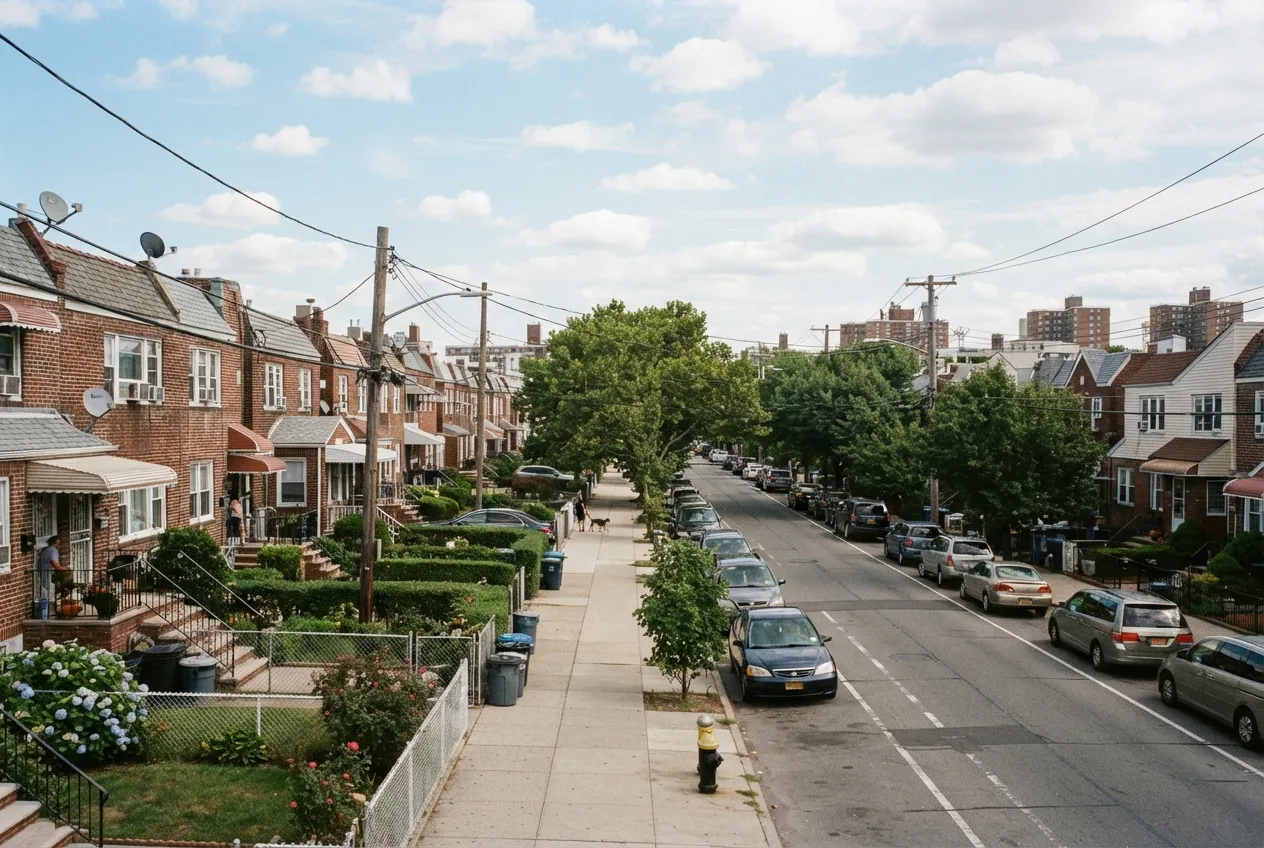
Flatlands is mostly a neighborhood of houses: detached and semi-detached homes, attached rowhouses, and a mix of small and larger apartment buildings. Many of them have a masonry chimney serving a boiler, a fireplace, or both. Our office is about a mile south of Flatlands, so a sweep here doesn't mean waiting on a truck to cross the borough. This page covers what a chimney sweep involves for Flatlands homes in the 11210 ZIP code, when to schedule one, and what we check while we're on your roof and in your basement.
What a Chimney Sweep Removes
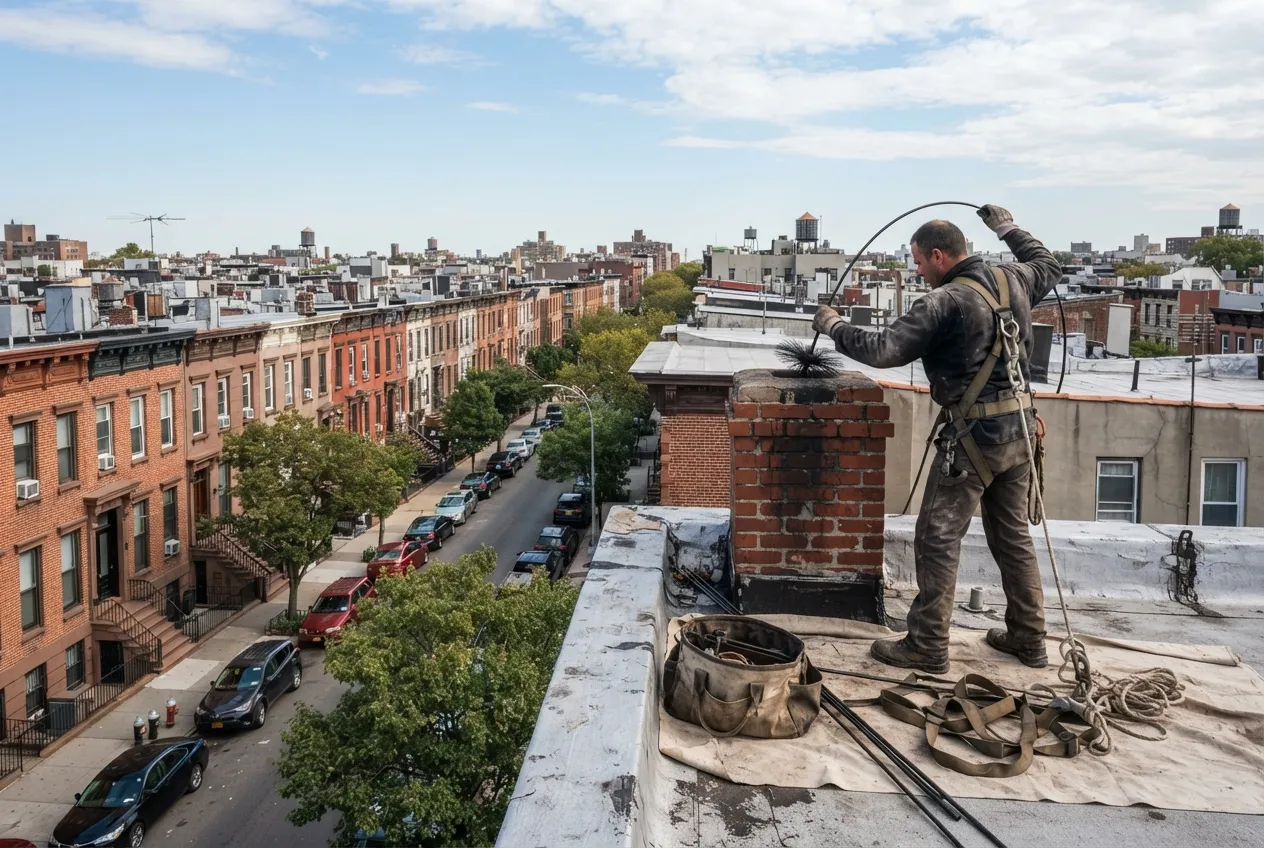
A chimney sweep clears the flue of what builds up during normal use. In a wood-burning fireplace, that means soot and creosote, a tar-like residue that can catch fire inside the flue. In a chimney that vents a gas or oil boiler or water heater, it means soot, scale, flaking mortar and loose debris that can narrow the passage and push exhaust back into the house.
Birds, leaves and nesting material are another common blockage, especially in chimneys without a cap. A partly blocked heating flue may not show any obvious signs from inside the house, which is why we look at the whole path from the appliance connection to the top of the chimney.
- Brushing the flue from the top, the bottom, or both, depending on access
- Cleaning the firebox, damper area and smoke chamber on fireplaces
- Clearing debris from the base of the chimney and the cleanout door
- Checking the cap, crown and damper for damage or missing parts
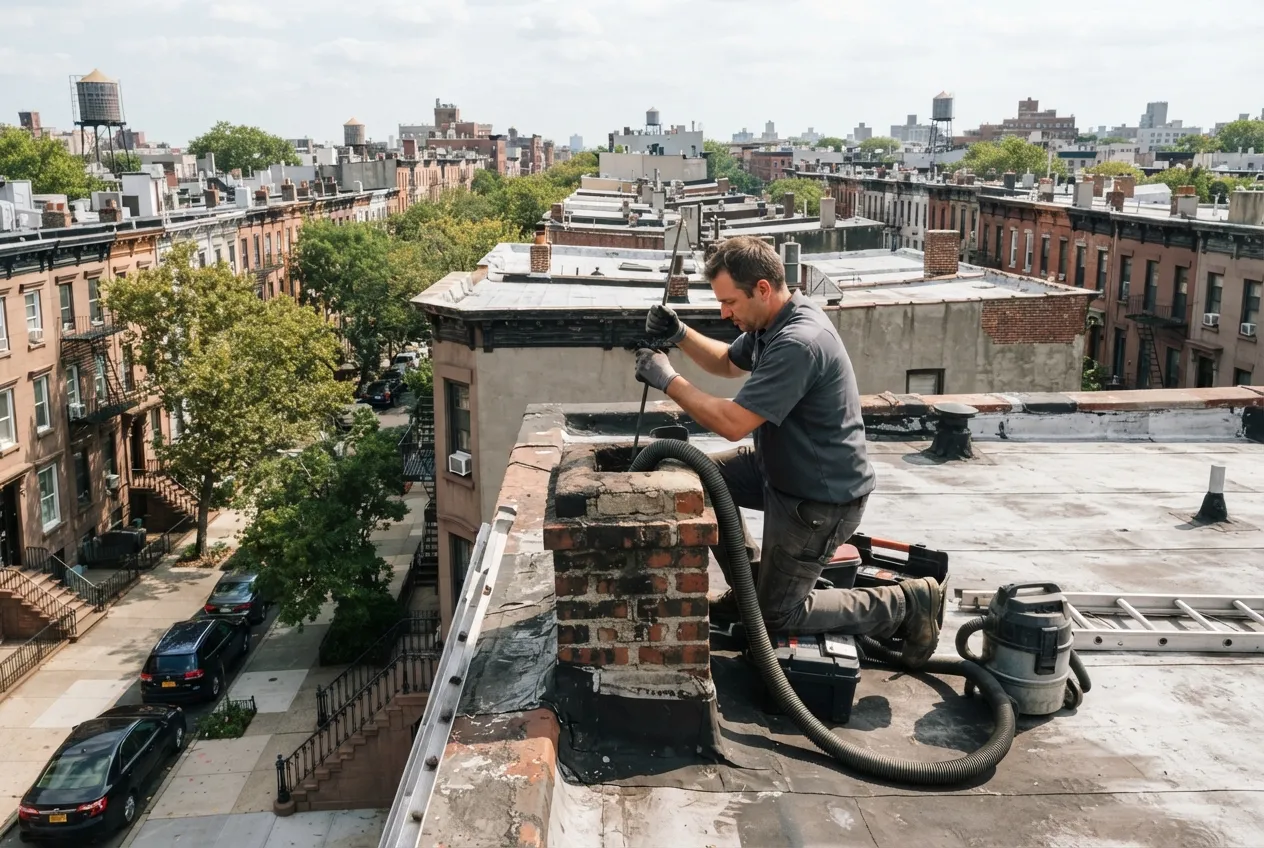
- Covering floors and furnishings and using a filtered vacuum to keep soot out of the room
Fireplaces and Boiler Flues in Flatlands Homes
Many Flatlands houses have two kinds of chimney use at once: a fireplace upstairs and a flue in the basement venting the heating system. They wear differently. A fireplace collects creosote based on how often you burn and what you burn. A heating flue runs quietly for months at a time and tends to get ignored until something goes wrong, such as a soot backup, a smell in the basement, or a boiler that shuts down.
Attached rowhouses and semi-detached homes share walls with neighbors, and chimney problems don't always stay on one side. A cracked flue or a blockage is worth catching early, before it becomes a problem for the household next door as well.
When to Schedule a Sweep
The NFPA 211 standard calls for chimneys, fireplaces and vents to be inspected once a year. Sweeping is done when the inspection shows buildup or blockage, and for a fireplace you use regularly, that usually means every year.
Timing matters in New York City. Heat season runs from October 1 through May 31, and building owners must keep apartments heated to the city's minimum temperatures during that time. If you own a two-family house or a small building in Flatlands and rent out units, a heating flue problem in January is more than an inconvenience. Booking your sweep in late summer or early fall gives time to handle any repairs before the boiler starts running every day.
Time for your annual chimney check?
Converting From Oil to Gas
Some older Flatlands homes and buildings still heat with oil, and many have switched or are planning to switch to gas. When a New York City building converts its boiler from oil to gas, the chimney has to be evaluated as part of the work. A new liner is often needed, because gas exhaust produces acidic condensate that can corrode a masonry flue that was built for oil.
A change of fuel or a new appliance calls for a Level 2 inspection, which goes beyond the basic visual check. If a conversion is in your plans, we can sweep the old oil flue, inspect it, and tell you plainly whether the existing flue can be used or needs a liner.
What to Expect on the Day
Our certified technicians start by asking how you use the chimney and whether anything has changed since the last service. Then we set up drop cloths, sweep the flue, and inspect the parts we can reach. Most homes only need a Level 1 inspection. If we find something that calls for a closer look, we explain why before doing anything further.
Before we leave, we walk you through what we found, including anything that needs attention now and anything to keep an eye on. Along with Flatlands, we serve Marine Park, Mill Basin, Bergen Beach, East Flatbush and Canarsie.
More services in Flatlands
- Chimney Inspection in FlatlandsLocal service & repairs
- Chimney Repair in FlatlandsLocal service & repairs
- Air Duct Cleaning in FlatlandsLocal service & repairs
- Chimney Liner Installation in FlatlandsLocal service & repairs