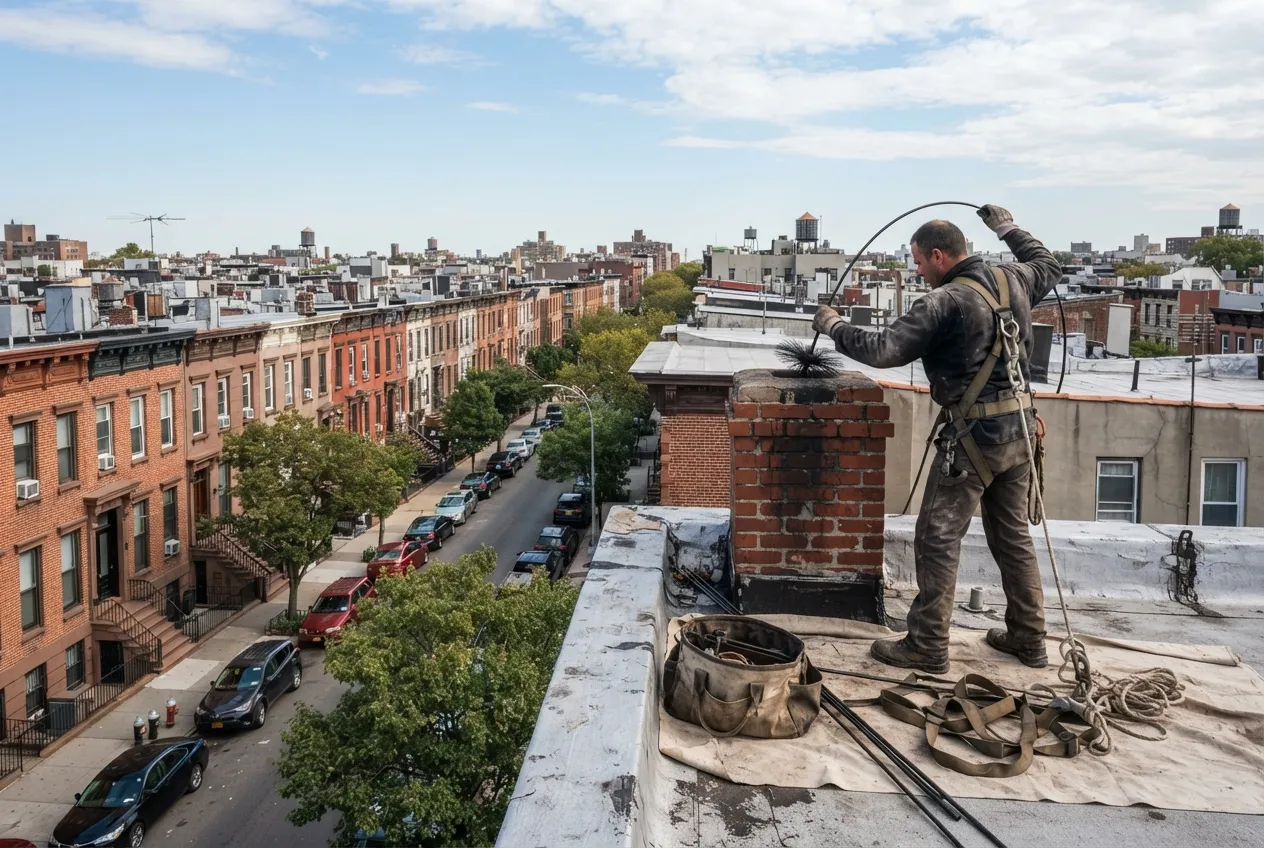
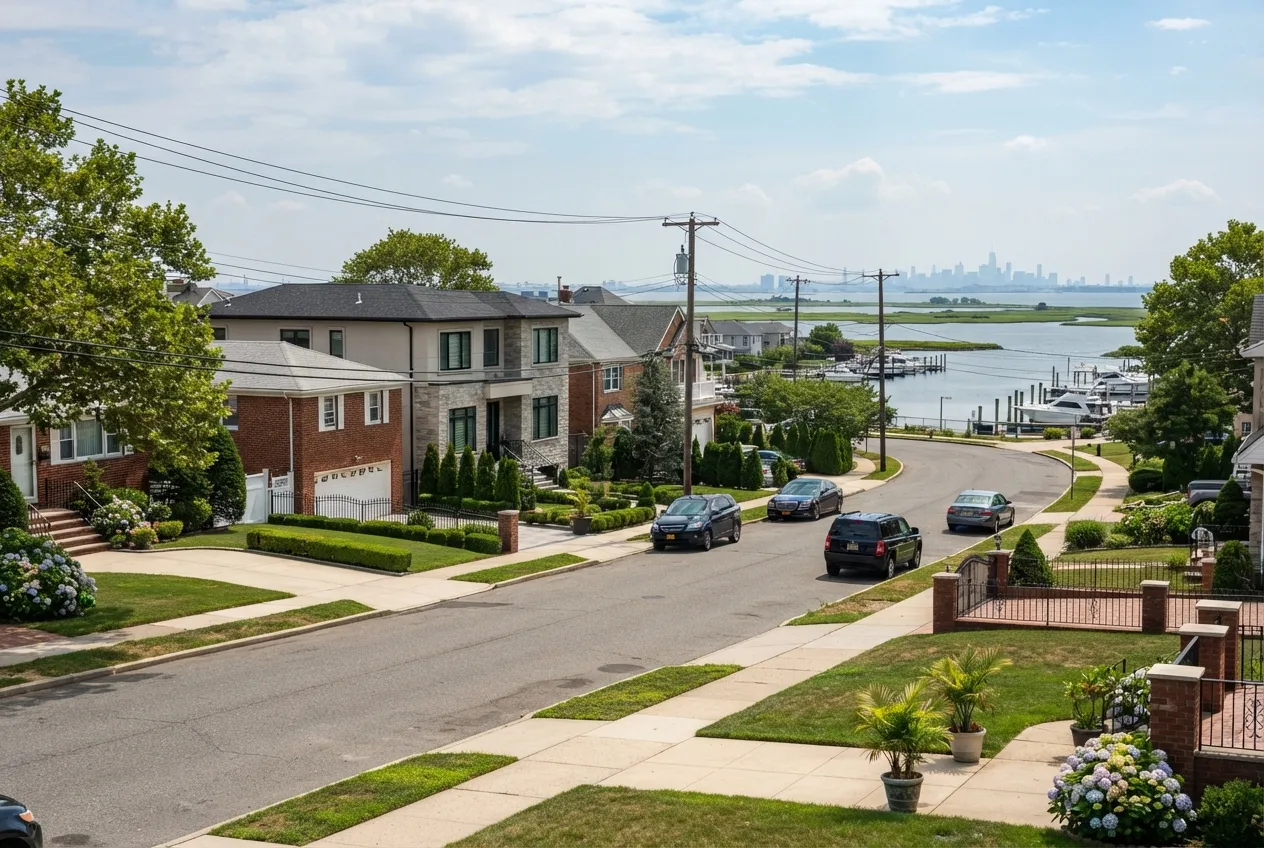
The short answer
ApexHearth repairs chimneys in Mill Basin, Brooklyn, including masonry, crowns, flashing, caps, dampers and flue liners. Every repair starts with an inspection so we fix the cause of the damage, and we try to finish work before the heating season puts your chimney under its heaviest load.
Mill Basin homes see a lot of weather. Freeze-thaw cycles, wind-driven rain and damp air near the water all wear on brick, mortar, crowns and flashing. ApexHearth Chimney Services repairs chimneys across Mill Basin and the 11234 ZIP code, about a mile southeast of our Brooklyn office. Our certified technicians start with an inspection, explain what they found in plain terms, and fix the problem that is actually causing the damage, not just the symptom you can see from the sidewalk.
What chimney damage looks like in Mill Basin homes
Most of the neighborhood is detached and semi-attached houses, many with masonry chimneys serving fireplaces, boilers or both. Some chimneys run up an exterior wall and take the full force of wind and rain. Others rise through the roof, where a failed seal can let water into the attic or the ceiling below long before anyone notices the chimney itself.
Water is behind most of the repairs we do. Moisture soaks into brick and mortar, freezes, expands and pushes the masonry apart a little more each winter. Being close to the water means more humidity and more wind-driven rain, which can speed this up on exposed sides of a house.
- Crumbling or recessed mortar joints
- Brick faces flaking or popping off (spalling)
- Cracked or missing concrete crown at the top
- White, chalky staining on the brick
- Water stains on ceilings or walls near the chimney
- Rusted damper, or a damper that no longer seals
- Bits of tile or masonry falling into the firebox or cleanout
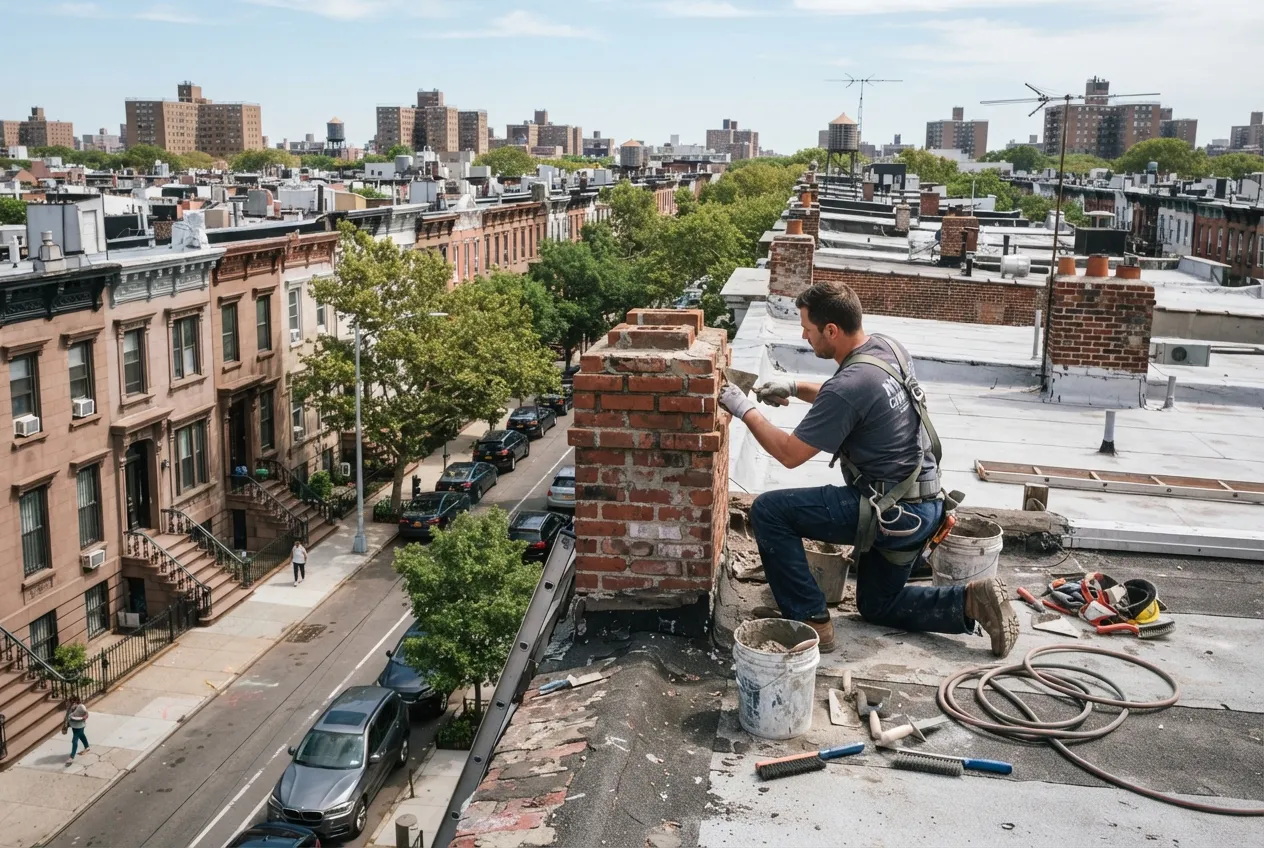
Chimney repairs we handle
We match the repair to what the inspection shows. A chimney with a few bad joints needs different work than one with a failed crown and a leaking roof line, and we will tell you which one you have.
- Tuckpointing: grinding out failed mortar and repacking the joints
- Replacing damaged brick and rebuilding sections above the roof when needed
- Rebuilding or resealing the chimney crown
- Repairing or replacing flashing where the chimney meets the roof
- Installing chimney caps to keep out rain, debris and animals
- Damper repair and top-sealing damper installation
- Flue liner repair and new liner installation
- Firebox and smoke chamber repair
Liners and oil-to-gas conversions
Many Brooklyn homes have switched boilers from oil to gas, and some Mill Basin owners are still planning that change. When a building in New York City converts from oil to gas, the chimney has to be evaluated as part of the work. A new liner is often needed, because gas exhaust produces acidic condensate that can corrode an unlined or clay-lined masonry flue over time.
If you are converting, have the chimney looked at early so liner work does not hold up your new boiler. If you already converted and never had the flue checked, tell us. Signs of liner trouble include debris in the cleanout, staining on the brick, or a damp, musty smell near the chimney.
Time for your annual chimney check?
How a repair visit works
Every job starts with an inspection. The NFPA 211 standard calls for chimneys, fireplaces and vents to be inspected once a year, and it describes three levels. A Level 1 inspection fits when nothing has changed. A Level 2 inspection applies when the system changes, such as a new appliance or a switch of fuel, or when the home is sold. A Level 3 inspection is used when a hidden hazard can only be reached by opening part of the chimney or building.
After the inspection, we show you what we found, with photos where possible, and explain which repairs are urgent and which can wait. Once you approve the work, our certified technicians protect the area around the fireplace and the roof, make the repair, and clean up when they finish.
Timing repairs around the heating season
New York City's heat season runs from October 1 through May 31. For homes with a boiler venting through the chimney, that is when the flue works hardest. Late spring and summer are usually the easiest times for masonry and crown work, because mortar cures better in mild weather and you are not depending on the heat.
We also serve nearby Marine Park, Bergen Beach, Flatlands, Madison and Canarsie, so if neighbors notice similar problems on houses of the same age, the same advice applies.
More services in Mill Basin
- Chimney Sweep in Mill BasinLocal service & repairs
- Chimney Inspection in Mill BasinLocal service & repairs
- Air Duct Cleaning in Mill BasinLocal service & repairs
- Chimney Liner Installation in Mill BasinLocal service & repairs