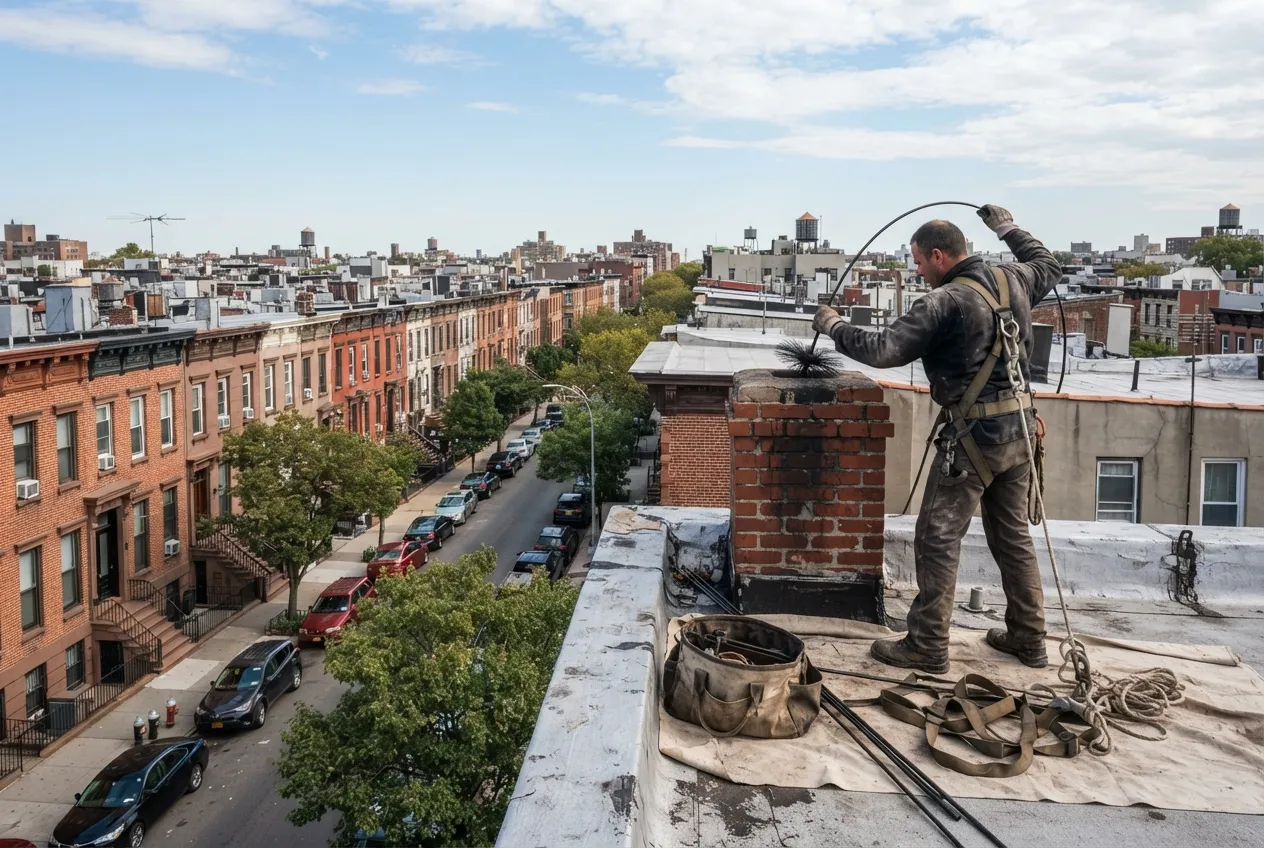
The short answer
A chimney in Mill Basin should be inspected once a year, as the NFPA 211 standard recommends. Inspect it sooner if you've changed appliances or fuel, are buying or selling the home, or suspect damage. ApexHearth's certified technicians inspect fireplace and heating-appliance chimneys across Mill Basin and nearby Brooklyn neighborhoods.
Most Mill Basin homes rely on a chimney every day, often without anyone thinking about it. Wood-burning and gas fireplaces use one, and so do the boilers, furnaces and water heaters that send exhaust up a masonry flue all winter. ApexHearth Chimney Services inspects chimneys throughout Mill Basin (ZIP 11234), about a mile southeast of our Brooklyn office. Our certified technicians check the parts of the system you can't easily see from the living room or the basement. Afterward, we tell you plainly what we found and what, if anything, needs attention.
What a Chimney Inspection Covers
The NFPA 211 standard calls for chimneys, fireplaces and vents to be inspected once a year. Chimney professionals use three levels of inspection, and the right one depends on what's going on with your home.
For most Mill Basin homeowners, the yearly visit is a Level 1 inspection. We move up to Level 2 or Level 3 only when the situation calls for it.
- Level 1: A check of the readily accessible parts of the chimney, flue and connected appliance. This fits when nothing about the system has changed since the last inspection.
- Level 2: A more thorough inspection, usually including a camera run through the flue. It's called for when the system changes, such as a new appliance or a switch of fuel, or when the home is being sold.
- Level 3: Used when a hidden hazard has to be reached by opening part of the chimney or the building. It's reserved for serious concerns that can't be confirmed any other way.
Chimneys in Mill Basin Homes
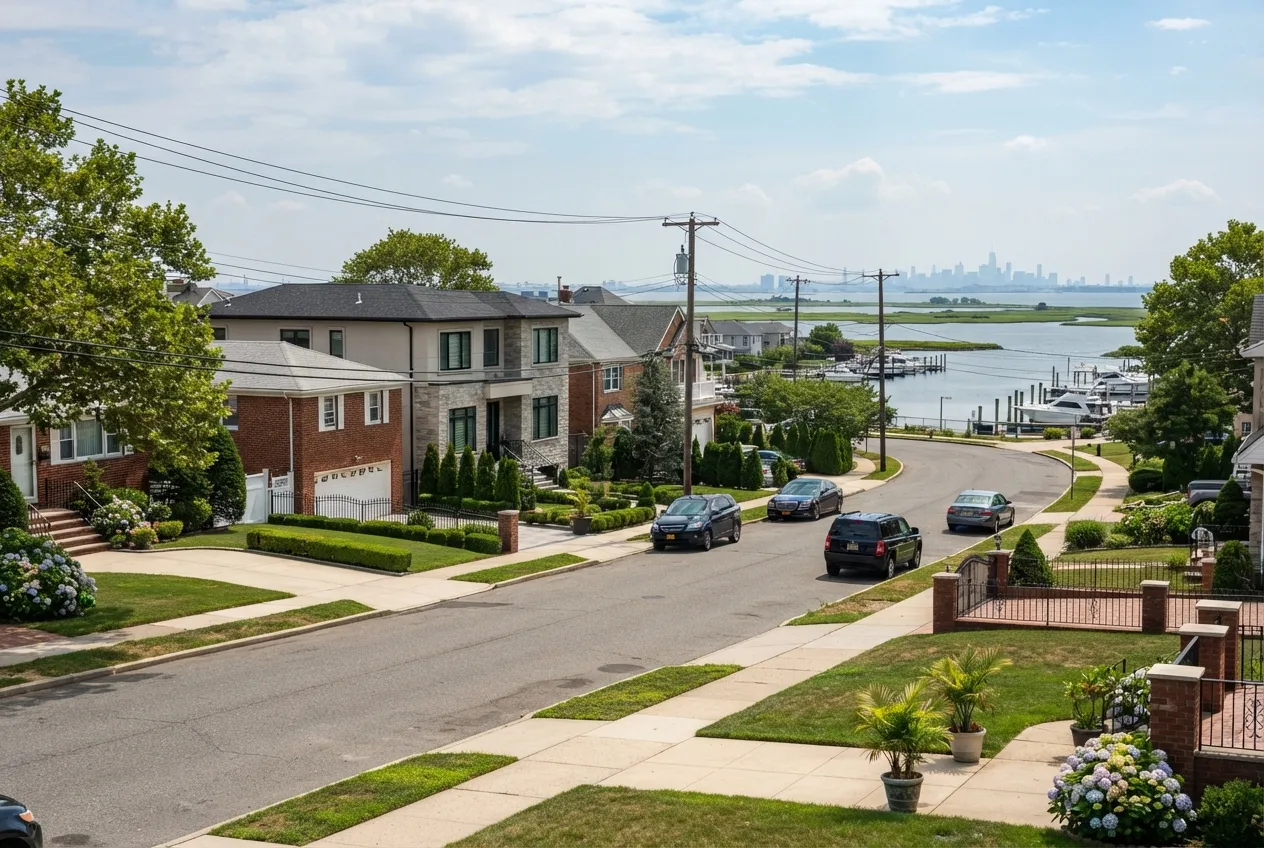
Mill Basin is mostly detached and semi-detached houses, with some attached homes mixed in. Many have a fireplace in the main living area and a separate flue serving the boiler or furnace in the basement. Others have one masonry chimney shared by several appliances. Each flue needs to be checked on its own, because a problem in the heating flue won't show up when you look into the fireplace.
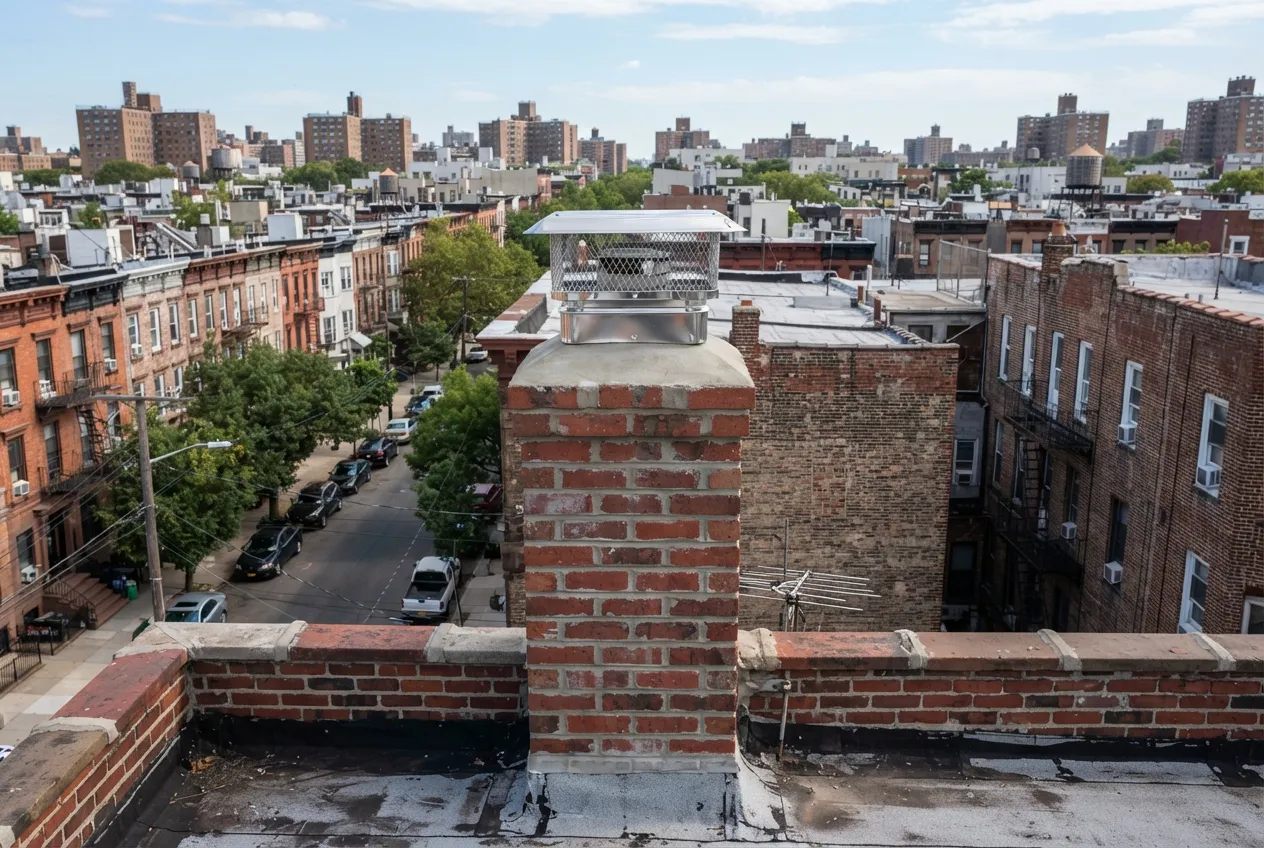
On these homes, we look closely at the crown and cap, the mortar joints above the roofline, and the flashing where the chimney meets the roof. These are the spots where water usually gets in. Inside, we check the flue liner for cracks, gaps and deterioration. We look for soot or creosote buildup, blockages from debris or nesting animals, and appliance connectors that are loose or poorly pitched.
Oil-to-Gas Conversions Need a Chimney Check
Many Brooklyn homes have switched or are planning to switch their boilers from oil to gas. When a New York City building converts from oil to gas, the chimney has to be evaluated as part of the work. Gas exhaust produces acidic condensate that can corrode a masonry flue, so a new liner is often needed.
If you're planning a conversion, have the chimney inspected before the work is scheduled so you know whether a liner is part of the job. If your boiler was already converted and nobody looked at the flue, a Level 2 inspection will show the liner's condition and whether it suits the new equipment.
Time for your annual chimney check?
When to Schedule Your Inspection
New York City's heat season runs from October 1 through May 31. For most of those months, the boiler and its chimney are working hard. Late summer and early fall are good times to inspect, because any repairs can be handled before you depend on the heat. If you use a fireplace, the same timing lets you start the season knowing the flue is clear.
Don't wait for the yearly visit in these situations. Call sooner if you notice a smoky or exhaust smell indoors, water stains near the chimney, or pieces of masonry or tile at the base of the flue. Call sooner, too, if a heavy storm may have damaged the cap or crown.
What to Expect During the Visit
A technician will ask how you use the fireplace and which appliances vent into the chimney. They'll then inspect from inside the home and, when it's safe and needed, from the roof. Drop cloths protect your floors, and the appliances should be off and cool when we arrive.
Afterward, we walk you through what we saw, in plain language. We separate what needs prompt attention from what can be monitored and what's in good shape. We also serve neighboring Marine Park, Bergen Beach, Flatlands, Madison and Canarsie.
More services in Mill Basin
- Chimney Sweep in Mill BasinLocal service & repairs
- Chimney Repair in Mill BasinLocal service & repairs
- Air Duct Cleaning in Mill BasinLocal service & repairs
- Chimney Liner Installation in Mill BasinLocal service & repairs