The short answer
The NFPA 211 standard calls for chimneys, fireplaces and vents to be inspected once a year, including chimneys that only vent a gas boiler or water heater. Flatbush homes and buildings that changed appliances, switched from oil to gas, or are being sold need a more detailed Level 2 inspection.
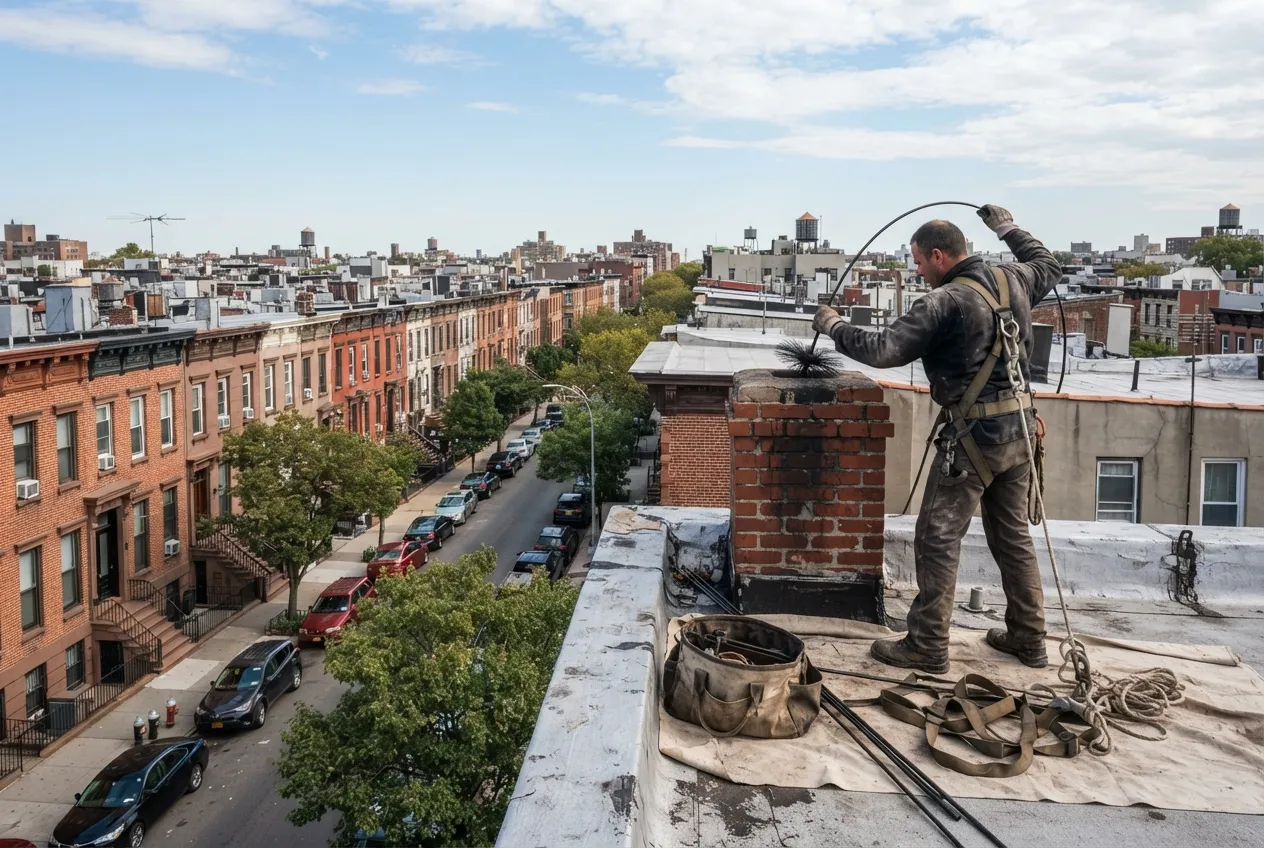
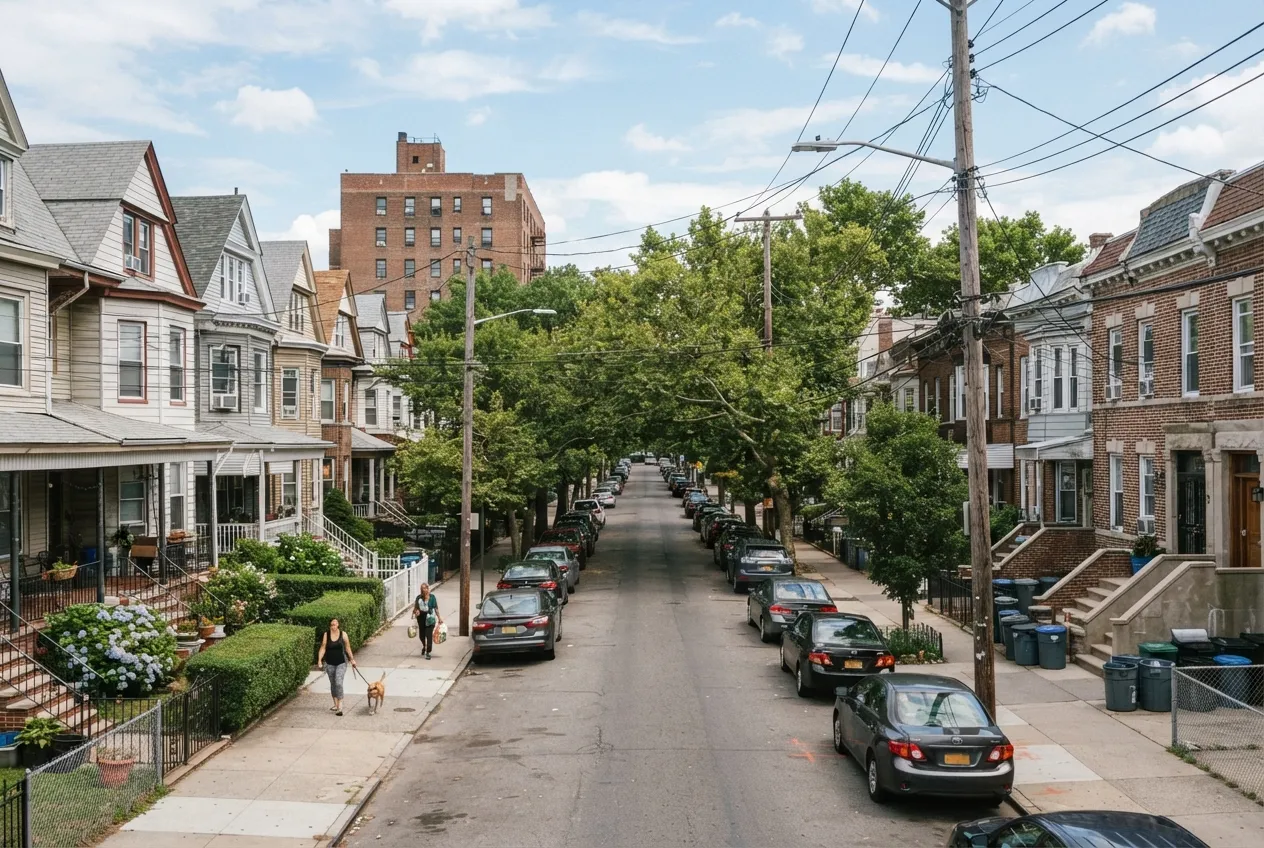
Flatbush has a wide mix of housing: detached homes, attached rowhouses, brownstones, and pre-war apartment buildings whose boiler chimneys serve every unit. Many of these chimneys are decades old, and some now vent appliances they were never built for. ApexHearth Chimney Services inspects chimneys, fireplaces and heating vents across Flatbush and the 11226 ZIP code. Our certified technicians tell you, in plain language, what condition your system is in, what needs attention now, and what can safely wait.
Why Flatbush Chimneys Need a Yearly Inspection
The NFPA 211 standard calls for chimneys, fireplaces and vents to be inspected once a year. That applies whether you burn wood in a living room fireplace or only use the chimney to vent a boiler or water heater in the basement. A flue you never look at can still crack, shift, or fill with debris.
In older Brooklyn masonry, problems tend to be slow and hidden. Mortar joints wear away, clay flue tiles crack, water seeps in around the roofline, and birds or squirrels nest at the top. A yearly inspection catches these issues before smoke or carbon monoxide finds another way into your home.
Which Inspection Level Your Home Needs
Not every inspection is the same. Chimney professionals use three levels, and the right one depends on what has changed in your home or building.
If you are buying or selling a house in Flatbush, plan for a Level 2 inspection so both sides understand the chimney's condition before closing.
- Level 1: For a system that has not changed and is used the same way as before. We examine the accessible parts of the chimney, flue, firebox and appliance connections.
- Level 2: For when the system changes, such as a new boiler, furnace or water heater or a switch of fuel, or when the home is sold. This is a more thorough look, usually including a camera run through the flue.
- Level 3: For when a hidden hazard is suspected and the only way to reach it is to open part of the chimney or the surrounding structure. We explain exactly why before recommending this.
Oil-to-Gas Conversions and Your Chimney
Many Flatbush apartment buildings and larger houses were built to heat with oil. When a New York City building converts its boiler from oil to gas, the chimney has to be evaluated as part of the work.
A new liner is often needed. Gas exhaust produces acidic condensate, and over time that moisture can corrode an old masonry flue from the inside. We inspect the flue before or during a conversion and tell you whether the existing lining is suitable or a new liner should go in.
If your building already converted and nobody looked closely at the chimney, that is a good reason to schedule an inspection now.
Time for your annual chimney check?
What We Check During an Inspection
Every inspection covers the full path the exhaust travels, from the appliance or firebox to the top of the chimney.
Afterward, you get a clear written summary of what we found and what we recommend, so you can plan any repairs with confidence.
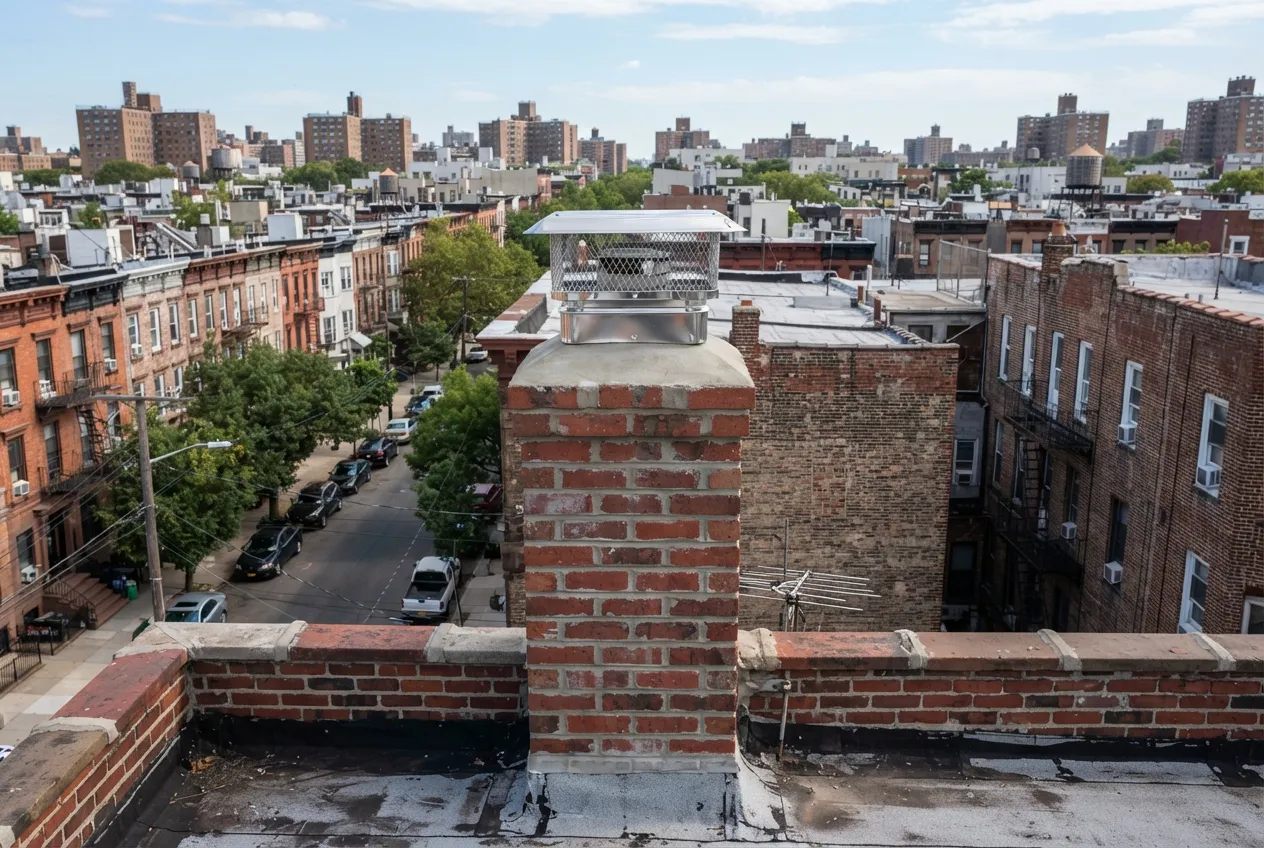
- Chimney crown, cap and flue top for cracks, gaps and nesting animals
- Exterior brick and mortar joints, including where the chimney meets the roof
- Flue lining for cracks, missing sections, creosote buildup or blockages
- Firebox, damper and smoke chamber on wood-burning fireplaces
- Connector pipes from boilers, furnaces and water heaters
- Signs of water entry, such as staining, rust or flaking brick
Timing Your Inspection Around Heat Season
New York City's heat season runs from October 1 through May 31, and building owners must keep apartments at the city's minimum temperatures the whole time. If a chimney problem forces a boiler shutdown in midwinter, tenants can go without heat while repairs are arranged.
Late summer and early fall are the easiest times to inspect, because there is room to fix anything we find before the boiler runs every day. If you missed that window, an inspection during the season is still worthwhile. For fireplaces, schedule one before your first fire of the year.
Serving Flatbush and Nearby Neighborhoods
Flatbush is about two miles northwest of our Brooklyn office, so it is a short trip for our technicians. We work throughout the 11226 ZIP code and in nearby Midwood, East Flatbush, Flatlands, Madison and Marine Park, inspecting chimneys on single-family homes, multi-family rowhouses and apartment buildings alike.
More services in Flatbush
- Chimney Sweep in FlatbushLocal service & repairs
- Chimney Repair in FlatbushLocal service & repairs
- Air Duct Cleaning in FlatbushLocal service & repairs
- Chimney Liner Installation in FlatbushLocal service & repairs