The short answer
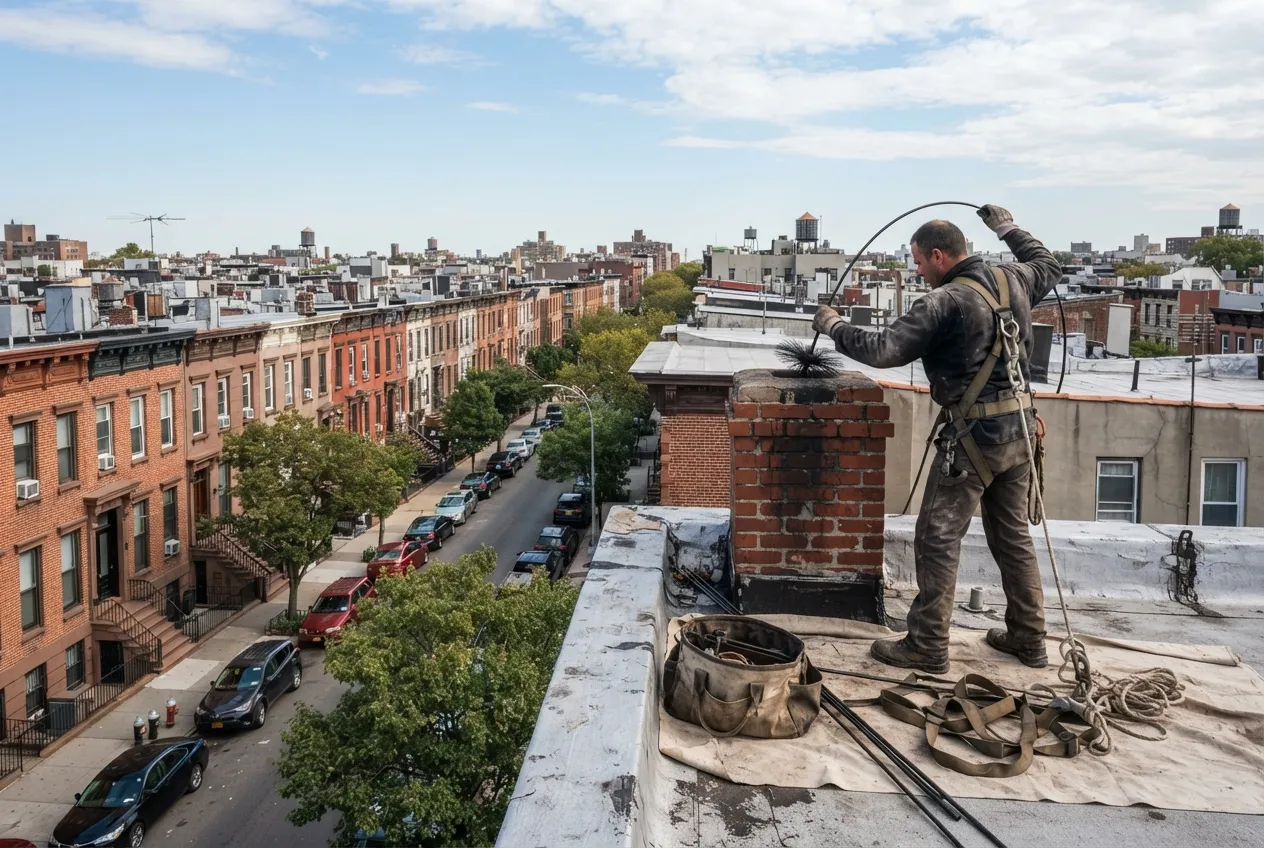
Midwood homeowners should have their chimney inspected once a year, as the NFPA 211 standard calls for, ideally before New York City's heat season starts on October 1. Our certified technicians choose the inspection level that fits your home, check everything from the appliance connection to the crown, and explain what needs attention.
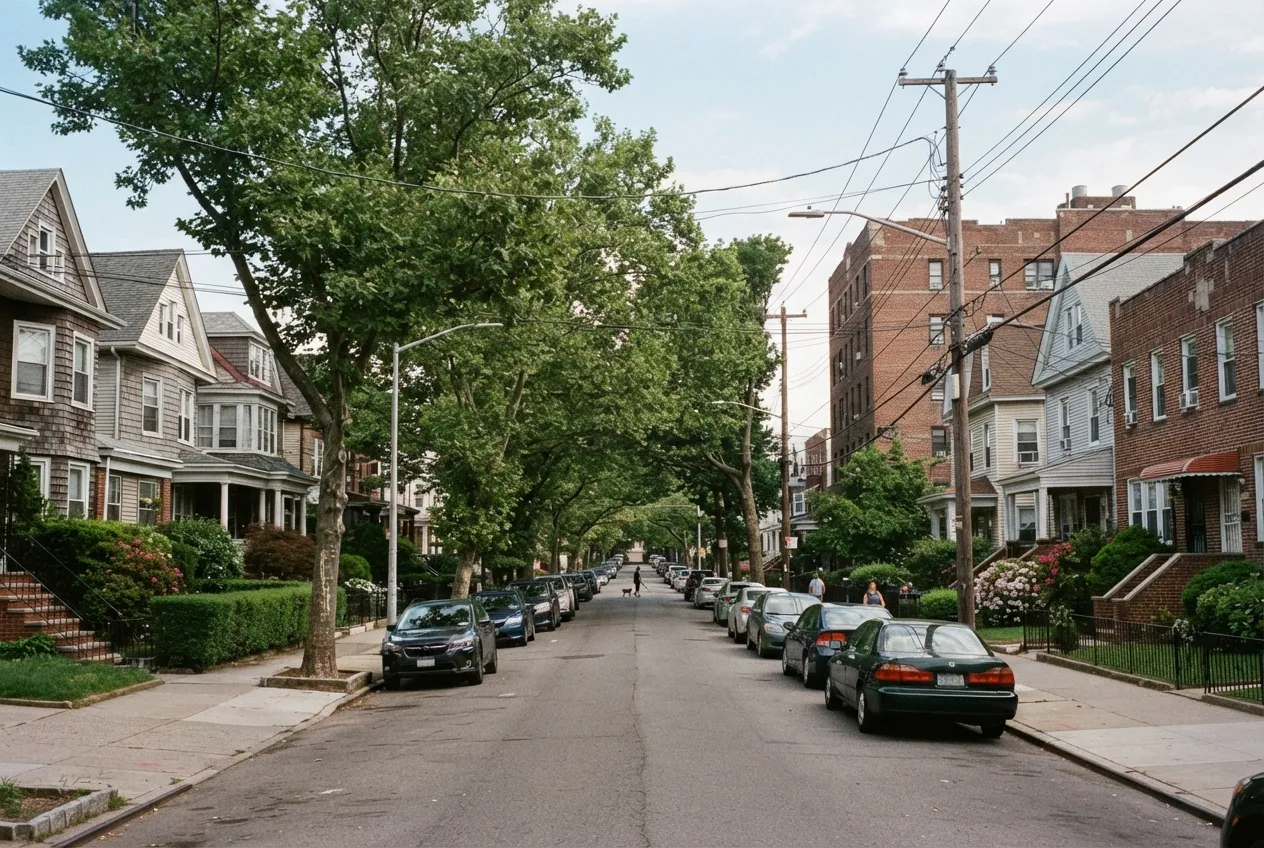
Midwood homes run on a mix of fireplaces, oil and gas boilers, and water heaters, and many of them vent through a masonry chimney. Our certified technicians inspect chimneys in Midwood's detached homes, attached rowhouses and pre-war apartment buildings throughout ZIP codes 11204 and 11230. We look at the whole venting system, not just the part you can see from the street. Afterward, we explain what we found in plain terms and separate urgent safety problems from items you can plan and budget for over time.
Why Midwood chimneys need a yearly inspection
The NFPA 211 standard calls for chimneys, fireplaces and vents to be inspected once a year. That applies whether you light a fire every weekend or your chimney only carries exhaust from a boiler in the basement. A chimney can look fine from the sidewalk while the flue inside is cracked, partly blocked or coated with creosote.
Timing matters in New York City. Heat season runs from October 1 through May 31, and building owners must keep apartments heated to the city's minimum temperatures during those months. That means a boiler and its chimney work almost every day for most of the year. If you own a two-family house or a small apartment building in Midwood, a blocked or damaged flue in January can force you to shut down heat that tenants depend on. An inspection before or early in the season gives you time to make repairs on your own schedule.
Choosing the right inspection level
Chimney professionals use three inspection levels. We recommend the one that fits your situation and explain why before any work begins.
- Level 1: For a chimney in regular use that hasn't changed. We check the accessible parts of the chimney, the flue and the appliance connection for soundness, blockages and buildup.
- Level 2: When the system changes, such as a new boiler, a switch of fuel, or when the home is sold. This is a more detailed look, usually including a camera run through the full length of the flue.
- Level 3: When a suspected hidden hazard can only be reached by opening part of the chimney or the building. We recommend this only when earlier findings point to it.
What we check during a Midwood chimney inspection
Many Midwood homes have tall masonry chimneys that serve both a fireplace and heating equipment. Our technicians follow the system from the appliance to the top of the stack.
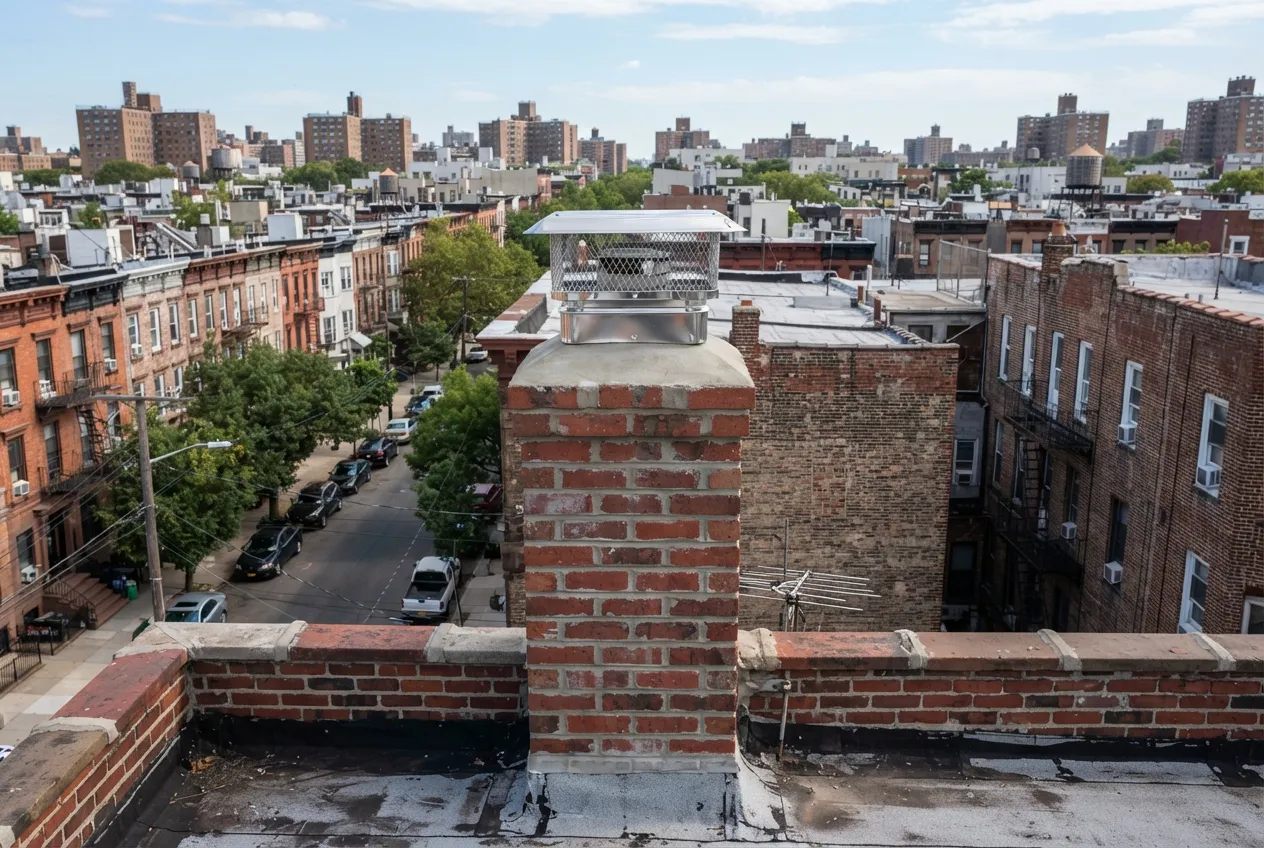
- Chimney crown, cap and screen, for cracks, rust and missing pieces
- Flashing where the chimney meets the roof, a common source of leaks into upper floors
- Exterior brick and mortar joints, for crumbling, gaps and spalling
- Flue liner condition, including cracked clay tiles, gaps between sections, or no liner at all
- Creosote and soot buildup in fireplace flues
- Firebox, damper and smoke chamber
- Connector pipes from boilers and water heaters, and how they enter the chimney
- Blockages from nests, fallen debris or collapsed liner tile
Time for your annual chimney check?
Inspections when you convert from oil to gas
Many Brooklyn owners are moving their boilers from oil to gas. When a New York City building makes that switch, the chimney has to be evaluated as part of the work. Gas exhaust produces acidic condensate that can corrode a masonry flue, so a new liner is often needed.
If you're planning a conversion, schedule a Level 2 inspection early in the process. Knowing the condition and size of your existing flue ahead of time helps you and your heating contractor plan the job, and it reduces the chance of delays after the old burner has already been removed.
What older Midwood chimneys tend to show
Many chimneys in Midwood have been in service for decades and have outlasted several heating systems. Age alone doesn't make a chimney unsafe, but older masonry can develop problems that build slowly and stay hidden until something fails. These are among the issues we look for most closely:
- Mortar that has washed out of joints near the top of the stack
- Original clay liners that have cracked, shifted or separated
- Flues sized for an old oil burner that no longer match newer, more efficient equipment
- Water entering through a worn crown or flashing and damaging the chimney from the inside
Serving Midwood and nearby neighborhoods
Midwood is about 2 miles west of our Brooklyn office, so getting a technician to your home is straightforward. We also inspect chimneys in the neighboring areas of Flatbush, Madison, Flatlands, Marine Park and Mill Basin. If you own property in more than one of these neighborhoods, we can plan the visits together.
More services in Midwood
- Chimney Sweep in MidwoodLocal service & repairs
- Chimney Repair in MidwoodLocal service & repairs
- Air Duct Cleaning in MidwoodLocal service & repairs
- Chimney Liner Installation in MidwoodLocal service & repairs