The short answer
ApexHearth Chimney Services sweeps, inspects, repairs and relines chimneys and cleans air ducts and dryer vents throughout Kensington, Brooklyn (ZIP 11218), about three miles from our office. Kensington's older masonry chimneys and freeze-thaw winters make a yearly inspection and timely repairs especially worthwhile.
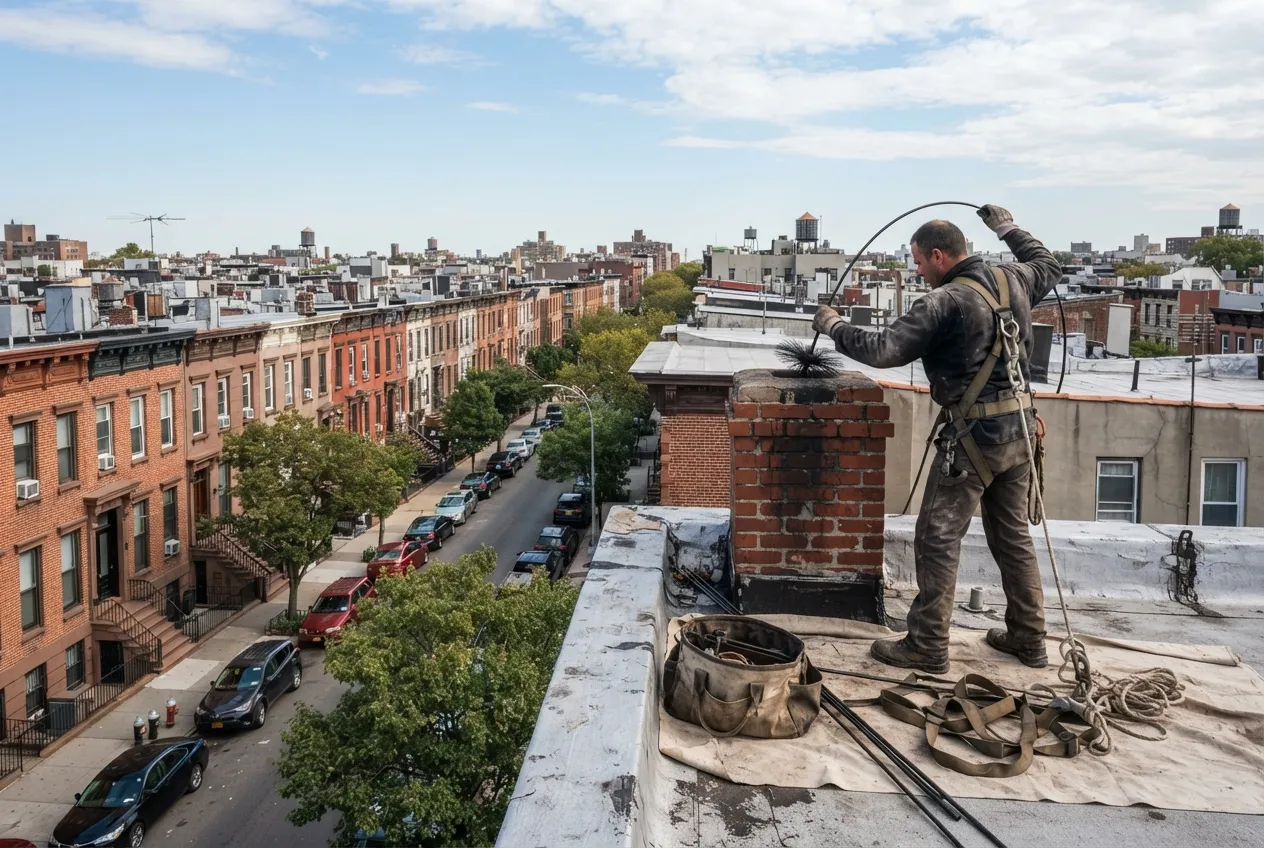
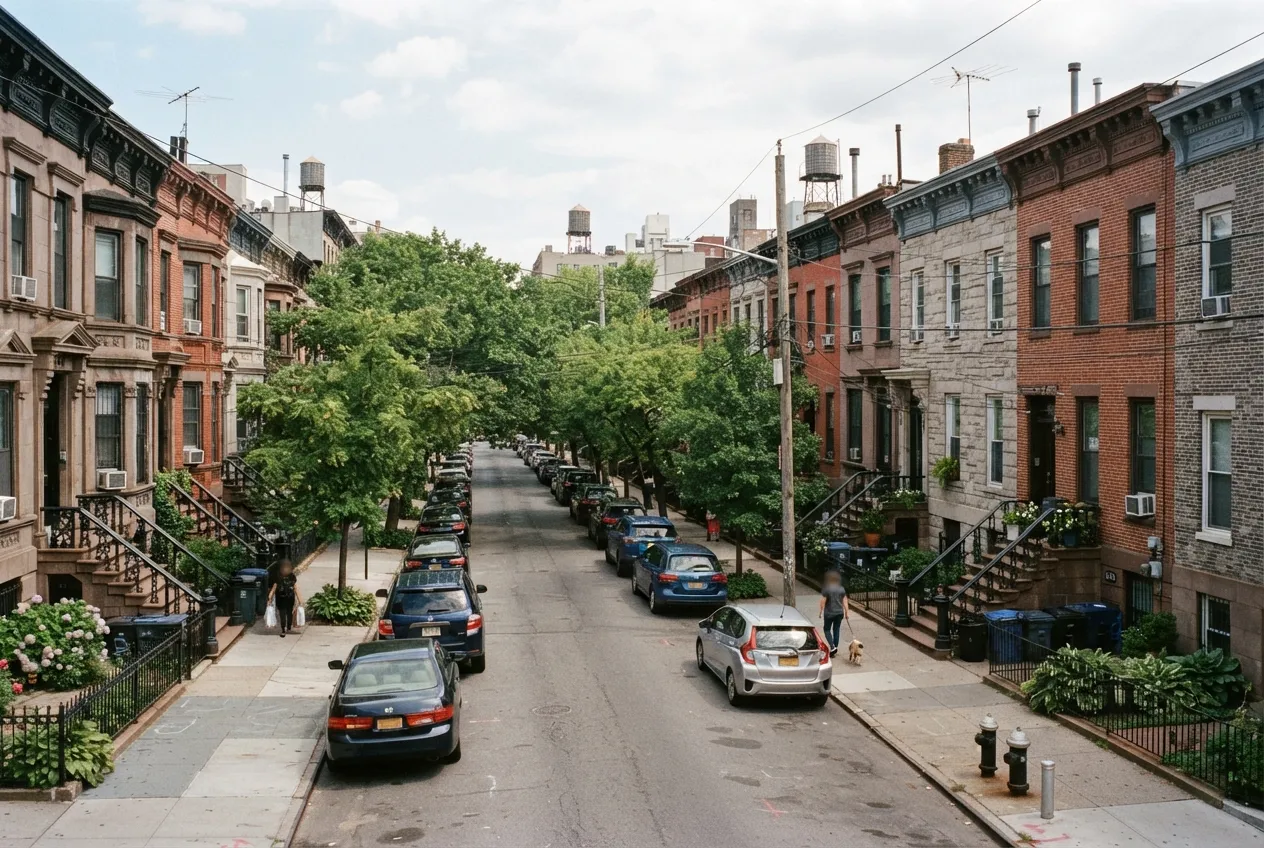
Kensington is about three miles northwest of our Brooklyn office, so our crews work in the 11218 ZIP code regularly. The neighborhood mixes pre-war apartment buildings, attached rowhouses and detached houses, and each type raises its own chimney and venting questions. Some homes still burn wood in an original masonry fireplace. Many more rely on a boiler or furnace that sends exhaust up a flue nobody has looked at in years. ApexHearth's certified technicians sweep, inspect, repair and reline chimneys, and clean air ducts and dryer vents, for homeowners and building owners across Kensington.
What Kensington's Housing Means for Your Chimney
Older masonry chimneys are common in Kensington. Many were built for coal or oil and later connected to gas equipment, so the clay tile or bare brick inside may not suit the appliance using it today. Attached rowhouses often share walls with the house next door. A cracked flue in one of them can let smoke or exhaust gases travel where they shouldn't. Detached houses usually have taller, more exposed chimneys that take the full force of wind and rain.
Apartment buildings add another layer. A single chimney may serve a central boiler that runs for months without a break, so a blockage or failing liner affects every unit, not just one household.
Brooklyn Weather and Masonry Wear
New York winters bring repeated freeze-thaw cycles. Water soaks into brick and mortar, freezes, expands and pushes the joints apart. Over a few seasons this shows up as crumbling crowns, loose bricks, flaking brick faces and leaks around the flashing. Humid summers and heavy coastal storms keep masonry damp. An uncapped flue lets rain, leaves and nesting animals straight in.
For waterproofing we use breathable sealers. They shed rain but let trapped moisture vapor escape, which suits old brick better than coatings that seal the surface shut. A properly sized chimney cap or chase cover closes the top of the chimney against water and wildlife.
Yearly Inspections and Oil-to-Gas Conversions
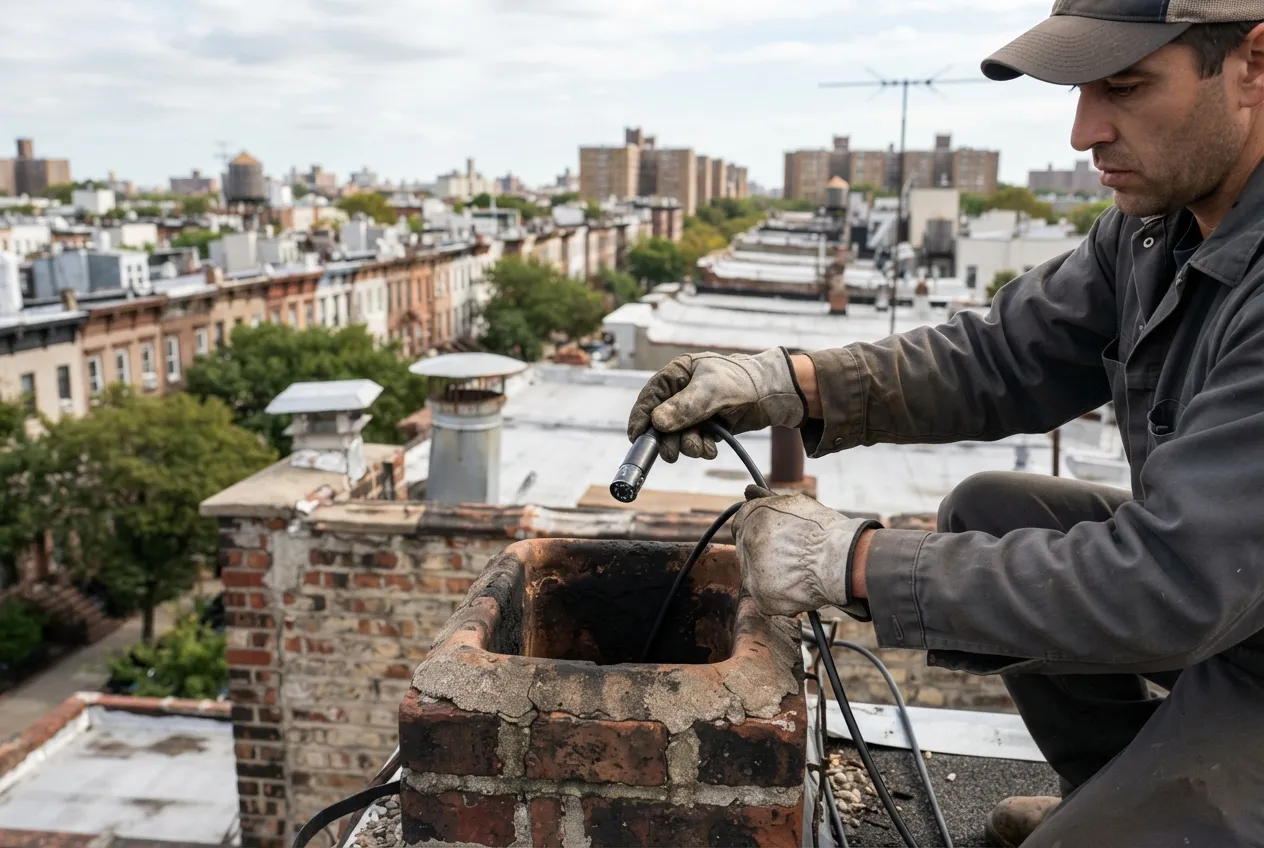
The NFPA 211 standard calls for chimneys, fireplaces and vents to be inspected once a year. A Level 1 inspection covers a system that hasn't changed. A Level 2 inspection applies when something does change, such as a new appliance, a switch in fuel or the sale of the home. A Level 3 inspection is reserved for hidden hazards that can only be reached by opening part of the chimney or building.
Many Kensington buildings have converted, or are planning to convert, their boilers from oil to gas. In New York City the chimney has to be evaluated as part of that work. A new liner is often needed, because gas exhaust produces acidic condensate that can corrode a masonry flue.
The city's heat season runs from October 1 through May 31, and building owners must keep apartments at the city's minimum temperatures during that time. Scheduling inspections and liner work before October helps avoid shutting down heat when tenants depend on it.
Time for your annual chimney check?
Services We Offer in Kensington
Every service below is available throughout Kensington. We also work in nearby Flatbush, Midwood, East Flatbush, Flatlands and Madison.
- Chimney sweep: removes creosote, soot and debris from the flue
- Chimney inspection: Level 1, 2 or 3, matched to your situation
- Chimney repair: repointing, crown repair and flashing fixes
- Chimney liner installation: stainless steel liners sized for gas, oil or wood appliances
- Chimney cap and chase cover: keeps rain, debris and animals out
- Chimney waterproofing: breathable sealers for brick and mortar
- Fireplace and damper repair: restores a tight seal and safe operation
- Chimney rebuilding: partial or full rebuilds when the masonry is too far gone
- Air duct cleaning: for visible mold, pests or heavy dust buildup
- Dryer vent cleaning: clears lint from the dryer to the outside exit
Air Ducts and Dryer Vents
According to the U.S. Fire Administration, failure to clean is the leading factor contributing to clothes dryer fires in homes. In rowhouses and apartments, dryer vents often run long distances through walls or up to the roof. That makes lint buildup easy to miss. Signs include clothes that take longer to dry, a hot laundry room, or a burning smell.
We follow the U.S. EPA's guidance on air duct cleaning: it makes sense when there is substantial visible mold growth, signs of vermin, or excessive dust and debris. The EPA notes that duct cleaning has not been shown to prevent health problems. It also advises caution with chemical treatments and with very cheap advertised offers. We'll tell you plainly whether your ducts need cleaning.
ZIP codes we serve
- 11218