The short answer
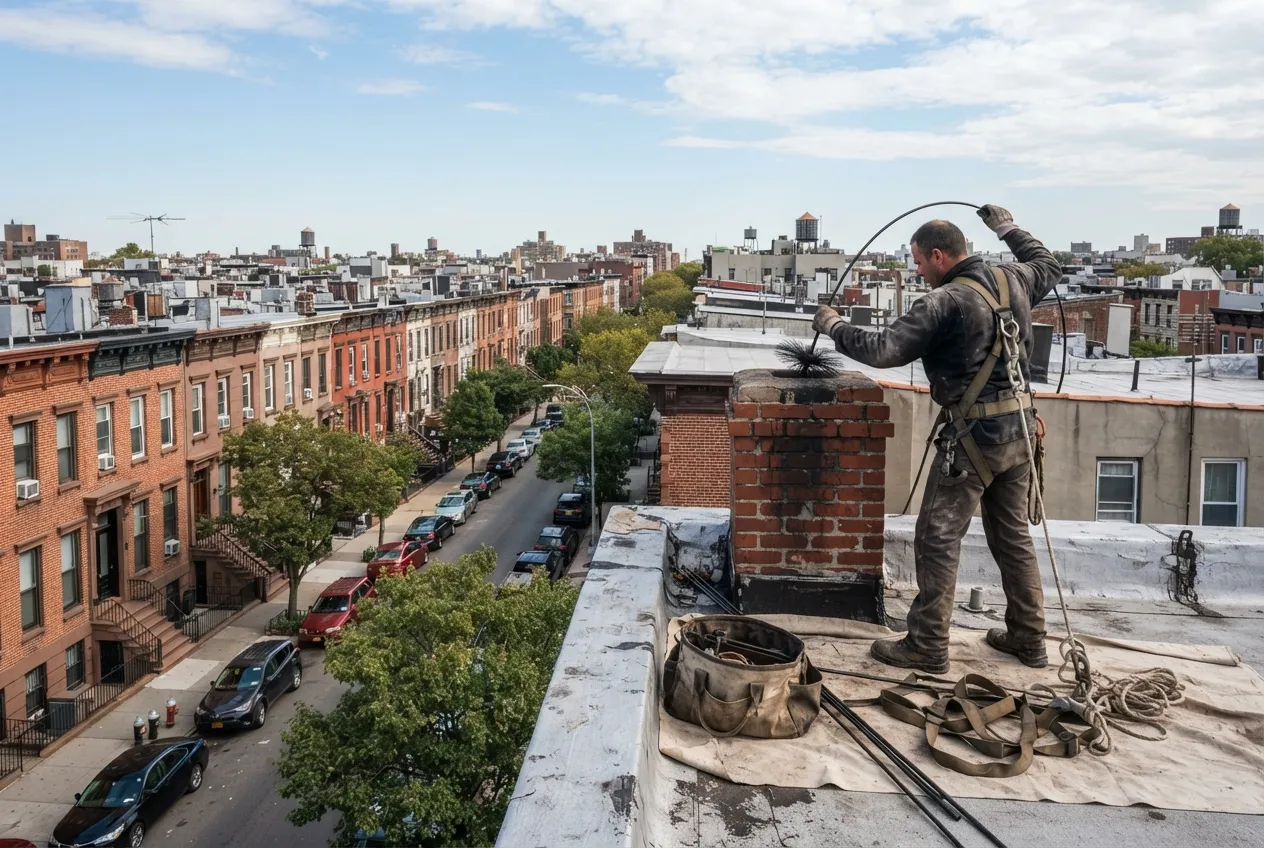
ApexHearth sends certified technicians to sweep fireplace and boiler chimneys in Canarsie, Brooklyn, clearing soot, creosote and debris so exhaust vents safely. The NFPA 211 standard calls for a yearly inspection, and late summer or early fall is the easiest time to schedule before heat season starts.
Canarsie homes rely on their chimneys more than many owners realize. A lot of houses here vent a boiler or water heater through a masonry chimney, and some still have a working fireplace. ApexHearth Chimney Services sends certified technicians to Canarsie, about 2 miles northeast of our Brooklyn office. They sweep flues, remove soot and creosote, and check that exhaust is leaving the house the way it should. We work throughout ZIP code 11236 and in nearby Flatlands, East Flatbush, Marine Park, Mill Basin and Bergen Beach.
What a chimney sweep covers in a Canarsie home
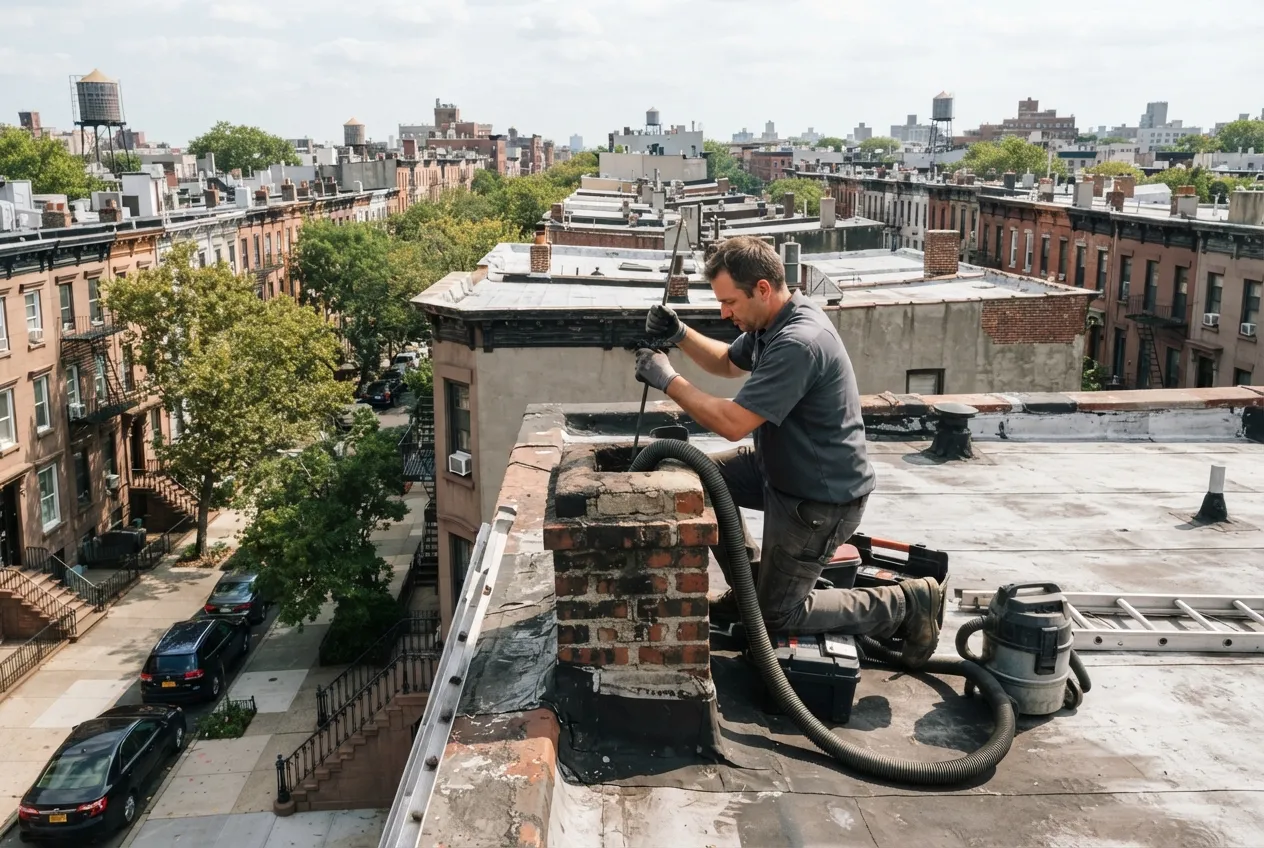
A sweep involves more than running a brush up the flue. Our technicians first look at the firebox or appliance connection, the damper, the smoke chamber and the flue itself. Then they clean the parts that need it. We lay down drop cloths and use a vacuum system to keep soot contained while we work.
Afterward we explain what we found in plain terms. That includes how much buildup there was, whether the flue liner looks sound, and anything that should be watched or repaired. You get a clear picture of the chimney's condition, not just a cleaner flue.
- Removing soot and creosote from fireplace flues
- Clearing debris, nests and loose masonry from the flue
- Cleaning the smoke chamber and smoke shelf
- Checking the damper, chimney cap and crown
- Looking at the connection where a boiler or water heater vents into the chimney
Chimneys in Canarsie's houses
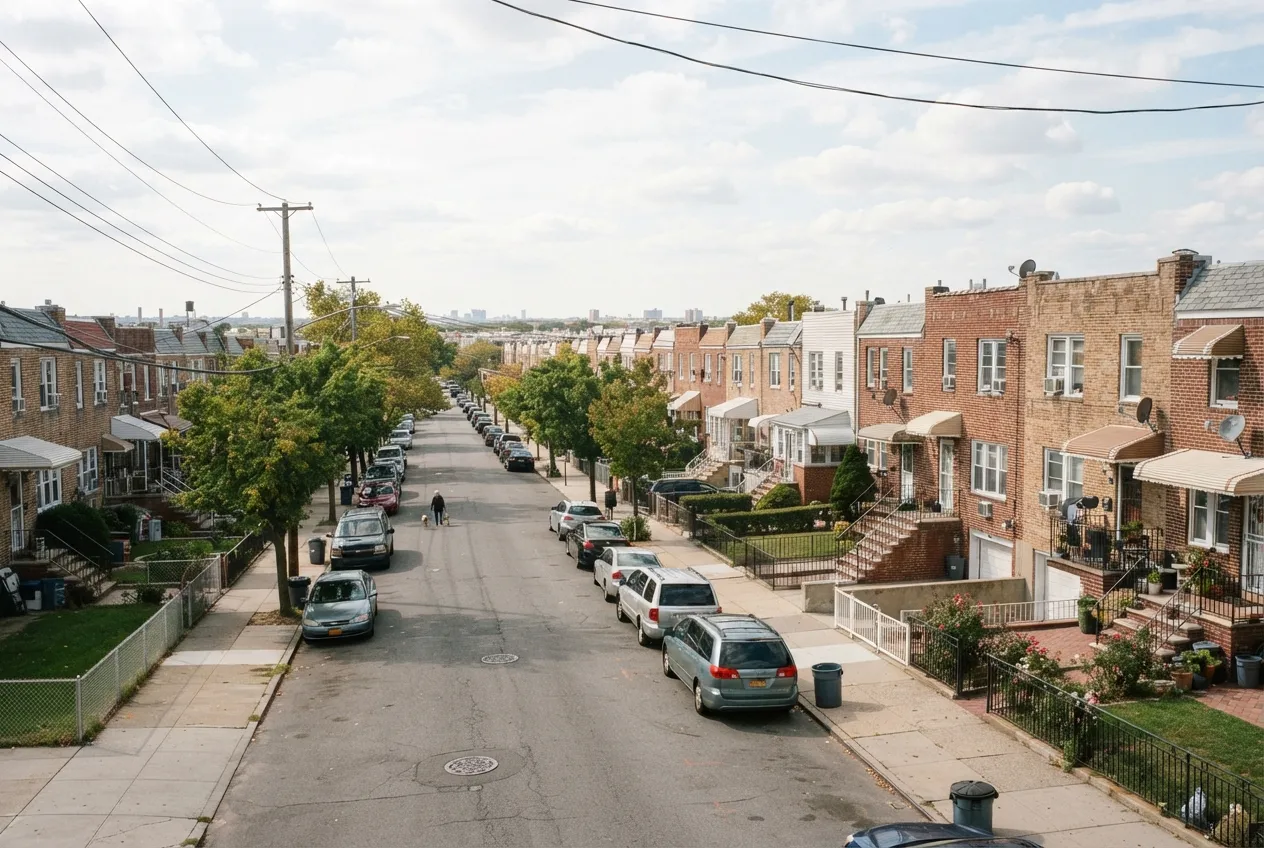
Canarsie's housing includes attached and semi-detached brick homes, rowhouses and detached houses, along with some apartment buildings. In many of these homes the chimney serves the heating system rather than a fireplace. It runs warm all winter even if nobody has lit a fire in years.
A chimney that serves a boiler can collect soot, scale and debris that restrict the draft. When exhaust can't rise freely, it can spill back into the basement or living space. A sweep clears the path. The inspection that goes with it shows whether the flue is still in good shape for the appliance it serves.
Timing your sweep around heat season
New York City's heat season runs from October 1 through May 31. During that stretch, building owners must keep apartments heated to the city's minimum temperatures. If you own a two- or three-family house with tenants, your boiler has to be ready for those months, and so does the chimney that carries its exhaust.
Late summer and early fall are the easiest times to schedule, before the heating system runs every day. If a sweep turns up a problem, you still have time to fix it before you need steady heat. Fireplace owners benefit from the same timing, because the flue is clean before the first fire of the season.
Time for your annual chimney check?
Sweeping, inspections and oil-to-gas conversions
The NFPA 211 standard calls for chimneys, fireplaces and vents to be inspected once a year. A Level 1 inspection fits most routine visits, when nothing about the system has changed. A Level 2 inspection is called for when something does change, such as a new appliance or a switch of fuel, or when the home is being sold. A Level 3 inspection is needed only when a hidden hazard has to be reached by opening part of the chimney or building.
Fuel switches come up often in Brooklyn. When a New York City building converts its boiler from oil to gas, the chimney has to be evaluated as part of the work. A new liner is often needed, because gas exhaust produces acidic condensate that can corrode a masonry flue. If you're planning a conversion, a sweep and inspection beforehand gives you and your heating contractor a clear view of the flue.
Signs your Canarsie chimney needs attention
Any of the signs below is worth a visit. If smoke comes into the house or your carbon monoxide alarm sounds, stop using the appliance and have the system checked before you use it again.
- A smoky or musty smell from the fireplace, especially on humid days
- Smoke that drifts into the room instead of going up the flue
- Black flakes or crumbled masonry in the firebox or at the base of the chimney
- Animal noises or nesting material in the chimney
- Water stains on walls or ceilings near the chimney
- A heating contractor mentions poor draft or soot at the boiler
More services in Canarsie
- Chimney Inspection in CanarsieLocal service & repairs
- Chimney Repair in CanarsieLocal service & repairs
- Air Duct Cleaning in CanarsieLocal service & repairs
- Chimney Liner Installation in CanarsieLocal service & repairs